A River's Last Stand: How Hungarian Workers Kept the Lights On When the Danube Nearly Died
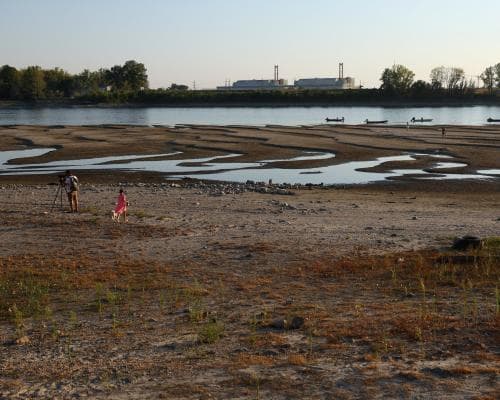
At 1:30 in the morning, Hungary was holding its breath. The Danube had fallen so low that the cooling water for the Paks Nuclear Power Plant—the country's only nuclear facility, supplying a third of its electricity—was barely a whisper away from running dry. Prime Minister Péter Magyar later said they were 'within millimetres' of having to shut down the entire plant. Millimetres. A fraction of a ruler's width between a functioning grid and a national blackout. Then, as if the river itself decided to spare them, the water level stopped falling. By dawn, it had risen a centimeter and a half—enough for the last turbine to keep spinning, but only at a fragile 10% capacity.
This is not a story about a billionaire swooping in with a check. It's a story about a nation's collective grit—engineers, government officials, and grocery store managers—cooperating in real time to prevent a disaster that would have cascaded across southeastern Europe. The crisis began weeks ago, when a brutal drought and heatwave—temperatures pushing 40°C (104°F)—turned the Danube into a trickle of its former self. For a nuclear plant, water is life. It cools the reactors, and without it, the physics of fission become a nightmare of overheating and potential meltdown. The Paks facility had to slash output to just over a tenth of its normal capacity, a desperate measure to keep the core safe while the river gasped for breath.
But here's where the story gets human. Energy Minister István Kapitány didn't just pray for rain; he launched a coordinated campaign to lower national energy consumption during peak hours. And the response was astonishing. Lidl, the global grocery chain, became an unlikely hero: it shifted its bread-baking shifts to off-peak times, turned off its drink refrigerators—even as shoppers sweltered in the heat—and restricted electric car charging in its parking lots to before 5 p.m. These are small, almost mundane adjustments, but multiplied across thousands of businesses and homes, they shaved enough demand to keep the grid secure. This wasn't corporate philanthropy in the traditional sense; it was civic survival, a shared sacrifice for the common good.
The stakes extended beyond Hungary's borders. In Romania, the Cernavodă Nuclear Power Plant faced the same existential threat. There, engineers got creative: they detonated a controlled explosion to divert the Danube's flow toward the plant's cooling intakes. The water rose by two centimeters—just enough to buy a few more days. Plans were already in motion to sink old barges to further redirect the current. It's a scene straight out of a post-apocalyptic novel, yet it's the new reality of climate adaptation. These aren't grand philanthropic gestures; they're the unglamorous, urgent acts of keeping civilization's lights on when nature turns hostile.
What does this mean for the culture of giving? It expands the definition. Philanthropy isn't only about writing checks to build hospitals or fund scholarships. It's about collective action in a crisis—the minister who coordinates, the engineer who calculates, the cashier who turns off a fridge. The Paks plant's near-miss is a wake-up call: as climate change intensifies, our most critical infrastructure will face unprecedented stress. The generosity that matters now is the generosity of attention, of flexibility, of shared sacrifice. It's a mother loading her dishwasher at midnight, a baker starting his shift at 3 a.m., a nation rethinking its energy habits overnight.
For the givers here—the unnamed workers at Paks, the managers at Lidl, the Romanian engineers with their barges and explosives—the reward isn't a plaque or a tax deduction. It's the quiet knowledge that they kept the lights on for millions. They didn't just prevent a shutdown; they demonstrated that communities can mobilize with astonishing speed when the alternative is unthinkable. In a world obsessed with billionaires and grand foundations, this is the real philanthropy: the ordinary, extraordinary effort to protect what we all share. The Danube may have dipped to a record low, but the human spirit, it seems, found a way to rise.