The Silver Arrow's Second Act: How Mercedes and a Teenage Prodigy Are Rewriting F1's Luxury Lexicon
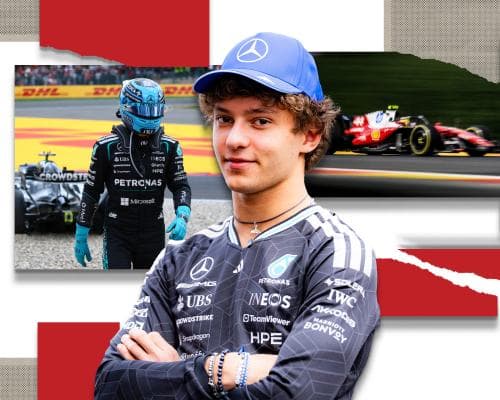
The first thing you notice isn't the roar. It's the silence that follows. When a Mercedes-AMG F1 car crosses the line at Spa-Francorchamps, the crowd doesn't just cheer—they exhale. This is the sound of inevitability. Eight wins from eleven rounds. A 72-point lead in the constructors' championship. And at the center of it all, a 19-year-old who drives like he's been doing this for decades. This isn't just a season; it's a statement. The kind that belongs in a private collection, not just a trophy cabinet.
Mercedes came into this year as favorites, and they have done something rare in the ultra-competitive world of Formula 1: they made dominance look effortless. The W16—their latest silver arrow—is a marvel of hybrid engineering. While rivals like Ferrari and Red Bull have had moments of brilliance, the Mercedes power unit, particularly its electrical deployment system, operates in a different league. In clean air, when the hybrid element can work at maximum efficiency, the car becomes a phantom. It doesn't just accelerate; it vanishes. This is the kind of performance that whispers, not shouts—a philosophy that resonates deeply with the clients we know, who value understatement over ostentation.
But the true story of this season is not just the machine. It's the boy behind the wheel. Kimi Antonelli, all of 19 years old, has stepped into the cockpit with a composure that borders on the supernatural. Five consecutive wins, another at Spa, and a fearless approach that team principal Toto Wolff describes perfectly: "I would rather rein in a charger than take a stick to a donkey." Antonelli is a charger. He has been impetuous, overeager on occasion—but that is the price of brilliance at this age. His talent is raw, but his execution is polished. He is the human equivalent of a bespoke timepiece: intricate, precise, and destined to appreciate in value.
For collectors and connoisseurs, this season offers a rare convergence. The Mercedes F1 team is not just winning; they are curating a legacy. The car itself is a piece of engineering art, a testament to what happens when billions in R&D meet obsessive attention to detail. Every component, from the combustion chamber to the hybrid battery, is a study in balance. And Antonelli? He is the ultimate limited edition. A driver who, at an age when most are still learning the trade, is already writing his chapter in the sport's history. The market for F1 memorabilia—cars, helmets, race-worn suits—has never been hotter, and this season's artifacts will be the crown jewels of any serious collection.
What this signals about luxury taste is subtle but profound. The ultra-wealthy have always gravitated toward the pinnacle of human achievement—be it a Patek Philippe Grandmaster Chime or a Bugatti La Voiture Noire. But there is a growing appreciation for the ephemeral: the moment, the season, the driver who embodies a new era. Mercedes and Antonelli represent a shift from brute force to intelligent design, from aggression to artistry. It is the difference between a sledgehammer and a scalpel. And in a world where status is increasingly defined by discernment, that distinction matters.
Looking ahead, the question isn't whether Mercedes will win another title—they almost certainly will. The question is what comes next. Antonelli is still a teenager. The car will evolve. The regulations will shift. But for now, we are witnessing something rare: a perfect alignment of machine, man, and moment. It is the kind of story that belongs in the pages of The Curated Life not because it is fast, but because it is fine. And in the world of the ultra-wealthy, fine always wins.