Tennis's $1.4B Integrity Market Just Got a Four-Year Warning Shot
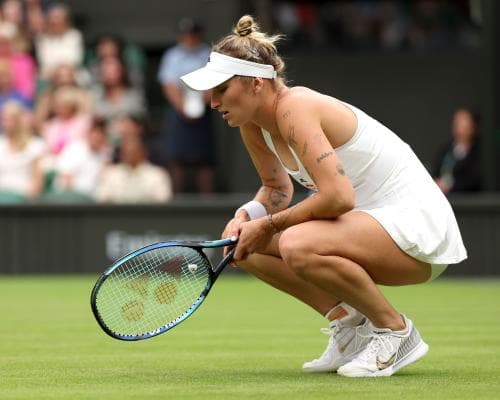
It was the text that did it. Not the refusal itself, not the 8pm knock on the door, not even the 58-page tribunal decision that followed. No, it was the casual, venomous aside Marketa Vondrousova fired off to her boyfriend the moment a doping control officer arrived at her flat: “So like here is ringing some cunt from the doping.” That single line, preserved in the official record, turned a messy anti-doping dispute into a masterclass in how the world's most valuable athletes can torch their own marketability in a single, arrogant moment. Vondrousova, the 2023 Wimbledon champion, is now banned for four years—a career sentence at 27—and the tennis establishment is quietly reeling.
For the money crowd, this isn't just a sports story. It's a $1.4 billion industry recalibration. Tennis's global sponsorship market, estimated at over $1 billion annually, runs on the clean, polished image of its stars. Vondrousova's ban—announced by the International Tennis Integrity Agency on June 22—sends a shockwave through that ecosystem. She's not a serial cheat; she's a player who, by her own admission, was irritated, scared, and uninformed. The tribunal's verdict wasn't that she doped, but that she refused to be tested, and then signed a document acknowledging that refusal despite being warned of the consequences. That's not a doping scandal; it's a behavioral one. And for sponsors, behavioral risk is now the new doping risk.
Let's get into the mechanics, because the details matter. Vondrousova was at her flat at 8pm, outside her designated one-hour whereabouts window, when the officer arrived. Under the anti-doping code, athletes must provide a 60-minute slot each day where they're available for testing. Outside that window, they can refuse—but only if they follow strict protocols. Vondrousova didn't. She was told there could be severe consequences if she refused, but she signed anyway. The tribunal's 58-page reasoned decision, released just over a week ago, paints a picture of a player who was “arrogant” and “ignorant” of basic rules. The text to her boyfriend wasn't fear; it was disdain. That's the kind of detail that ends up in legal filings, not PR spin, and it's devastating.
The rarity angle here is stark. In the last decade, only a handful of top-100 players have been banned for whereabouts violations, and none with a Grand Slam title since Maria Sharapova's meldonium saga in 2016. But Sharapova's case was about a substance; Vondrousova's is about process. That distinction is crucial for investors and brand managers. A doping ban for a banned substance is one thing—it's a clear, if tragic, line. A ban for refusing a test is a different beast: it signals a failure of judgment, not just chemistry. And in the endorsement market, judgment is the most valuable asset an athlete owns. Vondrousova's career earnings, estimated at over $10 million in prize money alone, are now frozen. Her Nike and Yonex deals? Likely in jeopardy. The financial fallout isn't just her lost prize money; it's the ripple effect on tournament insurance, broadcast narratives, and the next generation of players who watch this and think, “What if that were me?”
This is where the story gets interesting for wealth builders. The Vondrousova case is a textbook example of what actuaries call a “tail risk”—a low-probability, high-impact event that no one prices in until it happens. For sports funds, private equity groups, and family offices that have poured billions into athlete stakes (think of the $2 billion-plus in sports-backed securitizations in recent years), this is a wake-up call. The value of a tennis star isn't just their ranking; it's their compliance record, their temperament, and their ability to navigate a regulatory maze that's getting more complex by the day. The ITIA is under pressure to be more aggressive, and it is. Testing windows are shrinking, officers are more persistent, and the penalties for non-compliance are harsher. That's a structural shift, not a blip.
What does this signal for the broader market? Two things. First, the cost of athlete compliance is about to rise. Expect more players to hire dedicated anti-doping counsel, more agents to build in “whereabouts management” as a line item in contracts, and more insurers to demand behavioral clauses in endorsement deals. Second, the reputational premium on “clean” athletes is about to spike. In a world where every misstep is amplified, the value of a player who never misses a window, never signs a refusal, and never texts a slur is going to be bid up. That's a contrarian play for sponsors: back the boring ones.
For Vondrousova, the future is bleak. She's appealing the ban, but the evidence is damning. She'll be 31 when it ends, and tennis doesn't wait. But her case will outlive her return. It's now the benchmark for how not to handle a doping test, and it's a reminder that in the high-stakes game of athlete wealth, the smartest capital is patient, diversified, and—above all—compliant. The next time a star knocks on your door at 8pm, answer it. Your net worth may depend on it.