Behind the Velvet Rope: The Mayfair Casino Where Waiters Say the Tip Jar Is Rigged
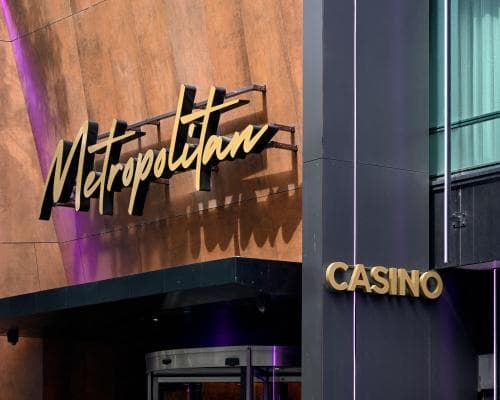
Picture this: You’ve just dropped five figures on a magnum of Krug and a tasting menu in a private dining room off Park Lane. The service was impeccable — discreet, anticipatory, the kind that makes you feel like the only person in the room. You leave a 12.5% service charge on your black Amex, assuming it flows straight to the people who refilled your water glass without being asked. That is the fantasy. The reality, according to a former waiter at the Metropolitan Mayfair, is far murkier.
The Metropolitan Mayfair is not just any casino. It sits in the heart of London’s most exclusive gambling district, part of the Metropolitan Casinos group — itself owned by Silver Point Capital, a US investment firm that runs seven UK venues and four in Egypt. This is a world where high rollers sip champagne at felt tables and the staff move like ghosts. But one ghost has stepped into the light. A former waiter, who spent five years on the floor, has filed a complaint with the London employment tribunal. His grievance? That cash tips he received directly were forced into a pool shared with managers — including senior management who never touched a plate or poured a drink. He also claims the distribution of the 12.5% service charge on food and drinks was opaque to the point of being invisible. Payslips, he says, did not break down how the service charge was calculated or whether card tips were even shared at all.
Let’s talk about the numbers, because in this world, numbers are the only truth that matters. The tips and service charge at a venue like the Metropolitan can amount to thousands of pounds a day. For frontline staff — waiters, bartenders, sommeliers — that pool often makes up the bulk of their earnings. The October 2024 UK legislation was supposed to change the game: employers must now distribute 100% of service charges and card tips to workers, in a “fair and transparent manner.” Employees have the legal right to know how tips are allocated. But the former waiter says the Metropolitan refused to provide any details of its distribution method. Meanwhile, the government’s own draft guidance, issued last week, suggests companies only need to consult workers on tipping policy — “ideally achieving broad agreement.” The Unite union, representing thousands of hospitality workers, called the draft weak. Its general secretary, Sharon Graham, put it bluntly: “Workers should have control over their own tips, pure and simple. Most customers assume they do anyway. Giving managers control, even letting them keep a slice for themselves, is clearly unfair.”
This is about more than a single waiter’s paycheck. It cuts to the heart of what luxury service actually means. When you pay a premium at a Mayfair casino, you are buying more than a martini or a blackjack hand. You are buying the assurance that every detail has been curated, every gesture rewarded. That implicit contract breaks if the person who remembers your name and your preferred vintage doesn’t get the full benefit of your gratitude. The conflict reveals a tension between old-world hospitality — where tips were a personal, cash-based bond between guest and server — and the new operational reality of corporate-owned venues, where managers oversee spreadsheets and profit margins. The waiter claims managers took an equal share of cash tips. That would be like a gallery owner taking a cut of the curator’s commission. It feels less like fairness and more like a tax on intimacy.
What does this signal about the luxury market in 2025? It signals a shift. The ultra-wealthy are increasingly scrutinizing not just what they buy, but how the people behind the product are treated. A growing cohort of high-net-worth diners and gamblers now ask, “Does the staff get the full service charge?” before signing the bill. This is not charity; it is a value judgment. A house that shortchanges its waitstaff is a house that might cut corners elsewhere — on wine storage, on security, on the quality of the chips. Reputation in this sector is everything, and a tribunal claim, even one still in process, stains the velvet. The Metropolitan Mayfair’s parent company, Silver Point Capital, is no stranger to high-stakes investments. But this is a different kind of bet: one on transparency. If the casino wins the tribunal, it may keep its current system. If it loses, the entire industry will have to rewrite the rules of gratuity.
Looking forward, expect the conversation to move from the back office to the boardroom. The October 2024 law is just the opening hand. The real game will be played in how brands choose to interpret “fair and transparent.” Some will see compliance as a checkbox. Others — the smart ones — will see it as a differentiator. Imagine a private member’s club that publishes its tip distribution policy in its welcome packet. Imagine a casino where the service charge is itemized on your receipt with a note: “100% of this goes to your server.” That is the kind of detail that builds loyalty among people who can go anywhere. The waiter who brought this case may not get his full share of the past five years. But he has done something rare: he has pulled back the curtain on a world that thrives on discretion. The question now is whether the people behind the curtain will choose to be seen — or stay in the shadows.
The Experience
For those who insist on knowing where every pound goes, book a private dining experience at a member’s club that publishes its gratuity policy — or ask your concierge to vet the venue’s tip practices before you reserve.