Trump's DOJ Deploys Election Monitors to Minnesota — The Real Signal for Political Risk Investors
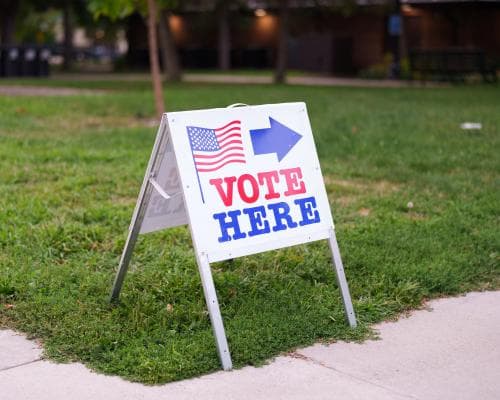
There's a new kind of volatility in Minnesota, and it isn't in the equity markets. On Tuesday, the Department of Justice confirmed it has boots on the ground in Hennepin and Ramsey counties — the state's two most populous — monitoring polling sites during the primary elections. Roughly 20 staffers from the Civil Rights Division's Voting Section and the local US attorney's office are deployed. On paper, the stated goal is to ensure 'free and fair elections.' But for anyone watching how political capital converts into financial risk, the subtext is far more interesting.
This isn't a routine check-in. Minnesota has been in the Trump administration's crosshairs since the president returned to the White House. The North Star State was the site of a deadly immigration enforcement operation that killed two US citizens earlier this year. And in a separate, more financially pointed move, the administration has paused more than $500 million in Medicaid payments to Minnesota over alleged fraud. That's not a rounding error — it's a deliberate squeeze on the state's fiscal arteries. When the federal government withholds half a billion dollars, it ripples through hospital budgets, county health programs, and municipal bond spreads. The polling monitors are the political tip of a very financial spear.
For investors, the mechanics matter more than the politics. Federal election monitoring is rare, and targeting a specific state's largest counties is a statement. Hennepin County includes Minneapolis, home to the state's financial and corporate corridors. Ramsey County includes St. Paul, the capital. These are not rural outposts; they are the economic engines of the state. When the DOJ sends a team into those precincts, it signals that the administration is willing to apply federal pressure where the money lives. The $500M Medicaid pause already demonstrated that — it's a direct hit to the state's healthcare funding stream, which supports a meaningful share of the local economy.
The financial angle here is about the weaponization of administrative process. The DOJ's press release frames this as standard protocol, but the timing and target are anything but. Minnesota has become a test case for how far a federal administration can go in using its regulatory and law enforcement powers to influence state-level governance. For wealth builders with exposure to Minnesota municipal debt, healthcare REITs, or state-backed infrastructure projects, this is a risk factor that won't show up in a standard credit rating. It's a political overlay on top of the balance sheet — and it's moving in one direction.
What does this signal for the broader market? The wealthy are increasingly pricing in 'political jurisdiction risk.' States that find themselves on the wrong side of the federal administration are seeing their borrowing costs creep up, their federal funding streams get scrutinized, and their regulatory environments become less predictable. Minnesota's situation is a case study in how a single political conflict can cascade into a financial one. The $500M Medicaid pause is already a data point; the election monitors are the confirmation that this is a sustained strategy, not a one-off.
Looking forward, the key is to watch the secondary effects. If the DOJ's presence leads to contested results, legal challenges, or delays in certifying the primary, expect volatility in Minnesota-based assets. More importantly, watch whether other states become targets. The playbook is now public: apply federal pressure, pause funding, deploy monitors. For investors, the smart move is to map which states are politically aligned and which are not, then adjust exposure accordingly. Minnesota is the canary in the coal mine, and the canary is looking stressed.
This isn't about taking sides — it's about understanding the mechanics of power and money. The DOJ deploying 20 staffers to two counties is a small operational detail, but it's a massive signal. It tells you that the administration views Minnesota as a battleground, and it's willing to use every lever at its disposal. For anyone managing capital, that's a risk factor worth more than a passing glance. The market hasn't priced this in fully yet. That's the opportunity — and the warning.