The M-Word Heard Round the Paddock: Oscar Piastri’s Hungarian Meltdown and the Price of Patience
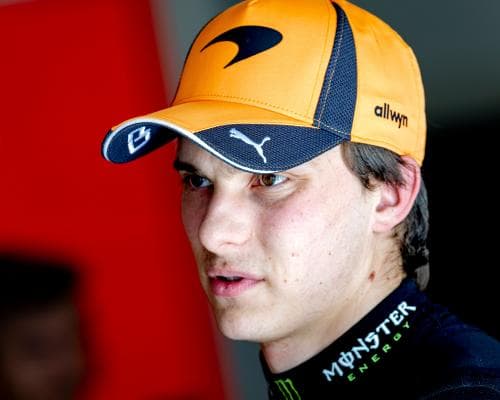
The word hung in the air like burnt rubber after a lock-up. “Mate, just don’t fucking talk to me now.” It was the M-word — that deceptively polite Australian epithet — that sent a shiver through the paddock at the Hungarian Grand Prix. Oscar Piastri, the 24-year-old prodigy who a year ago looked destined to be Formula One’s next world champion, had just watched victory evaporate in a haze of pit-stop miscommunication and backmarker chaos. His radio transmission, bleeped for broadcast but unmistakable in its venom, wasn’t mere frustration. It was the sound of a driver realizing that the car beneath him — a machine honed by hundreds of engineers, funded by millions in sponsorship, and polished by the finest carbon-fiber craftsmen in Woking — had betrayed him. Or, more precisely, that the humans orchestrating his race had.
This is not a story about a tantrum. It is a story about the razor-thin margin between glory and grievance in the most expensive sport on earth. Piastri’s Hungarian weekend began with promise: teammate Lando Norris on pole, Piastri third after penalties shuffled the grid, and a freshly upgraded McLaren MCL39 that felt, by all accounts, like a scalpel. On the first lap, Piastri executed a pass so clean — diving inside Norris at Turn 1 on a track notorious for its reluctance to yield overtakes — that it seemed to announce a new order. For a brief, sun-drenched hour, the Australian led his first Grand Prix in nearly a year, and McLaren appeared poised for its first win of the 2026 season. Then the pit stops happened. The team called Norris in first, covering off a threat from behind, but leaving Piastri out in traffic. When he finally pitted, he emerged behind his teammate, stuck behind a Williams that had no business holding up a car of that caliber. The gearbox failure that followed — a mechanical death rattle that left him stranded trackside — was almost merciful. It ended the agony.
What makes Piastri’s outburst resonate beyond the usual paddock drama is the context of craftsmanship and expectation. A Formula One car is the most refined object in automotive engineering: a hybrid power unit that spins to 20,000 rpm, a monocoque woven from carbon fiber lighter than a bicycle frame, and software that adjusts brake bias faster than a human can blink. McLaren’s recent upgrades — new front-wing vanes, revised floor tunnels, and a reworked diffuser — represent months of computational fluid dynamics and wind-tunnel hours that cost more than a Manhattan penthouse. When that machine performs flawlessly but the human element falters, the dissonance is almost unbearable. Piastri’s sarcastic “Nice of you guys to factor that one in by the way, thanks” was not just petulance. It was the sound of a perfectionist watching a $20 million operation stumble over something as quotidian as a pit-stop window.
For collectors and observers of the ultra-luxury automotive world, Piastri’s plight is a mirror held up to the nature of desire. The hypercars that fill private garages in Monaco and Beverly Hills — the Pagani Utopias, the Koenigsegg Gemeras, the Ferrari Daytona SP3s — are objects of obsession precisely because they promise control. You press a pedal, you turn a wheel, and the machine obeys. Racing, by contrast, is a collaboration with chaos. Piastri is currently seventh in the driver’s championship, a far cry from the title favorite he was twelve months ago. Meanwhile, teenage sensation Kimi Antonelli — all of 19, with the kind of unearned confidence that comes from never having known failure — leads the standings. The market for F1 memorabilia reflects this volatility: a signed Piastri helmet from his 2024 win streak might fetch $15,000 today; a race-worn overall from Hungary, with the radio transcript attached, could be worth double in a decade if he recaptures his form. But form, like a fine watch, is a matter of maintenance.
What Piastri’s moment signals about luxury taste is something the editors of this desk have long understood: the truly discerning collect not just objects, but narratives. A driver who suffers publicly, who curses his crew on live radio, who lets the mask slip — that is a story with texture. It is the difference between a Patek Philippe that sits in a safe and one that was worn through a divorce, a boardroom coup, and a sunrise on the Amalfi Coast. Piastri’s frustration is not a weakness; it is a patina. The question is whether McLaren can restore the luster. Team principal Andrea Stella, a man whose calm demeanor could sell meditation apps, will need to rebuild trust with a driver who now knows that even a perfect car can be undone by a bad call. The upgrades are real. The pace is there. But in a sport where milliseconds separate the podium from the pit lane, the margin for emotional error is even smaller.
Looking ahead, the second half of the season will test both Piastri’s resilience and McLaren’s ability to manage two thoroughbred egos. The Australian has the raw speed — he proved that in Hungary, outdragging Norris on a track where overtaking is a myth. But speed without trust is like a V12 without fuel: impressive, but going nowhere. For the collectors watching from the grandstands — or from the leather-clad lounges of their private jets, tracking lap times on a tablet — Piastri’s trajectory is a reminder that the most valuable assets in life are those that have been tested by fire. A car that has never been crashed is a car that has never been pushed. A driver who has never sworn at his crew is a driver who has never cared enough to break. The M-word, in the end, is just the sound of ambition colliding with reality. The question is whether that collision will forge a champion or a cautionary tale. Either way, it will be a hell of a story to tell over a bottle of Château Margaux.