The Glutton of the Pyrenees: Tadej Pogacar’s Solo Raid on the Tourmalet
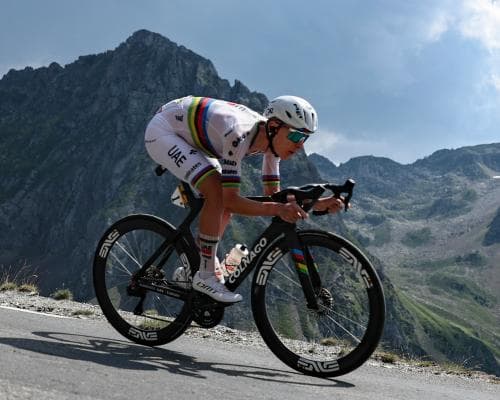
The air at the top of the Col du Tourmalet is thin, sharp, and tastes of limestone dust. On a July afternoon, under the unblinking gaze of President Macron and the towering cliffs of the Cirque de Gavarnie, Tadej Pogacar became the sole inhabitant of that rarefied space. He rode alone. Not because he had to, but because he could. The 2026 Tour de France stage six had become a private procession, a one-man show staged at 2,115 metres above sea level.
For the ultra-wealthy traveller who has heli-skied in the Alps and summitted Kilimanjaro before breakfast, the Pyrenees offer a different kind of altitude: one measured in legacy and suffering. Pogacar’s ascent of the Tourmalet was not a climb; it was a declaration. His rivals — Jonas Vingegaard, Remco Evenepoel, the French hope Paul Seixas — were reduced to specks in his rearview mirror. By the time he crossed the finish line in Gavarnie-Gèdre, his lead had swollen to nearly three minutes. Vingegaard didn’t even bother to sprint. The message was clear: some places are reserved for those who operate on another plane.
What makes this moment so intoxicating for the luxury traveller is the access it implies. The Tourmalet is not a hotel; it is a proving ground. Pogacar’s ride was a masterclass in pacing, aerodynamics, and sheer will — the same qualities that define a bespoke expedition to the Pamirs or a private descent of the Stelvio Pass. He later compared himself to Usain Bolt and Novak Djokovic, athletes who have redefined the boundaries of their crafts. For those who book the penthouse suite at the Hôtel de Paris or charter a yacht for the Monaco Grand Prix, this is the sporting equivalent: a front-row seat to greatness, except the seat is a saddle and the view is a winding ribbon of asphalt disappearing into the clouds.
The numbers are staggering. Pogacar now has 23 Tour de France stage wins, 11 of them in the Pyrenees. If Eddy Merckx was the Cannibal, Pogacar is the Glutton — a nickname he earned not by hoarding trophies but by devouring the hopes of his competitors. His lead at La Mongie ski station was under half a minute; by the time he reached the finish, it had ballooned. This is not just athleticism; it is a kind of alchemy, turning oxygen debt into a commodity more precious than gold. For the kind of traveller who values rarity, this is the ultimate limited edition: a champion who makes the impossible look inevitable.
This signals a shift in how the wealthy experience sport. Gone are the days of passively watching from a corporate box. The new luxury is immersion — standing at the side of the road on the Tourmalet, feeling the wind from Pogacar’s wheels, breathing the same thin air. Private heli-transfers to the best viewing points, champagne picnics on the Col d’Aubisque, and a guide who can narrate the history of every hairpin turn. The Tour de France has become a movable feast for the connoisseur, and the Pyrenees are its most exclusive tasting menu.
Where do the wealthy go next? They follow Pogacar. To the Alps for the high mountain stages, to Paris for the Champs-Élysées finale, and to the gravel roads of the Strade Bianche for a taste of Tuscan grit. But for now, the epicentre is the Hautes-Pyrénées, where a 27-year-old Slovenian has turned a bicycle race into a work of art. The season is summer; the price is a private villa in Gavarnie with a chef and a masseuse; the journey is whatever it takes to witness the Glutton feast again.