The 40°C Classroom: Why the UK’s Heatwave Is a Multi-Billion-Dollar Innovation Gap
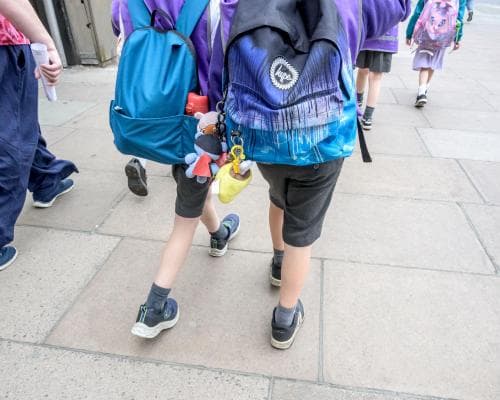
The scene is surreal: children lying on classroom floors, covered in wet paper towels, calling for their parents. Teachers fainting. Trays of water under desks for foot-soaking. This isn’t a dystopian novel — it’s a British primary school in July 2022, as temperatures inside some classrooms breached 40°C. The UK, a nation famed for its grey skies and mild summers, is suddenly confronting an infrastructure built for a climate that no longer exists.
This is not a weather story. It’s an innovation story. The UK’s school estate — much of it Victorian-era buildings with single-glazed windows, poor insulation, and concrete playgrounds that radiate heat — was never designed for 40°C days. And as climate change accelerates, these will become the new normal. The government’s own climate advisers have recommended installing air conditioning in all schools within 25 years. But that’s a Band-Aid. The real opportunity lies in rethinking how we cool, shade, and insulate entire building stocks — and the deep-tech world is starting to pay attention.
The technology gap here is staggering. Most schools lack even basic shading: blinds, reflective films, or external louvres. Air conditioning is rare, expensive to retrofit, and energy-intensive — a poor fit for a net-zero future. What’s needed is a suite of innovations: passive radiative cooling materials that shed heat without electricity; smart window coatings that switch from transparent to reflective on command; AI-driven building management systems that learn occupancy patterns and pre-cool rooms before students arrive. These aren’t sci-fi — startups like SkyCool Systems (radiative cooling panels) and View Inc. (dynamic glass) already have commercial products. The UK school market, with over 20,000 buildings, represents a multi-billion-dollar retrofit opportunity.
Capital is starting to flow. In the US, the Department of Energy’s Advanced Building Construction initiative is funding modular, high-performance retrofits. In Europe, climate-tech VCs are pouring money into ‘building-as-a-service’ models where schools pay no upfront cost but share energy savings. The UK government’s Public Sector Decarbonisation Scheme has allocated £1.4 billion, but it’s a drop in the bucket. The real money will come when billionaires and institutional investors realise that climate-resilient schools are not just a moral imperative — they’re a massive, recurring revenue stream. Think of it as the ‘school retrofit REIT’ — an asset class that generates predictable returns from energy savings and carbon credits.
The competitive landscape is still fragmented. Incumbents like Siemens and Johnson Controls offer building automation, but their solutions are too expensive and complex for a typical primary school. Startups are moving faster. In the UK, Kensa Contracting is deploying ground-source heat pumps for schools. In California, a company called 75F is using IoT sensors and machine learning to optimise HVAC in real time. The winner will be the firm that can package these technologies into a simple, low-cost, subscription-based retrofit that a headteacher can approve without a PhD in thermodynamics.
What this signals for the sector is a shift from reactive to proactive infrastructure. The old model — build once, maintain rarely — is dead. The new model treats buildings as living systems that must adapt to a warming world. For deep-tech investors, this is a $100 billion global market hiding in plain sight: retrofitting every school, hospital, and public building for climate resilience. The UK’s 40°C classrooms are not a bug — they’re a feature, a flashing red warning that the future is already here. The question is not whether we will retrofit, but who will build the tools to do it at scale.
Forward-looking, the next decade will see the rise of ‘climate-proofing-as-a-service’ — where private capital retrofits public buildings in exchange for long-term energy savings and carbon offset revenues. The schools that today’s children are suffering in will become the testbeds for tomorrow’s material science, AI, and robotics. The wet paper towels are a symbol of failure — but also of a trillion-dollar opportunity. The race is on to turn those towels into smart glass, those foot baths into passive cooling, and those exhausted teachers into data points for the next generation of resilient design.
More in INNOVATION