England’s Housing Boom Is Colliding With a Water Crisis — and No Algorithm Can Fix It
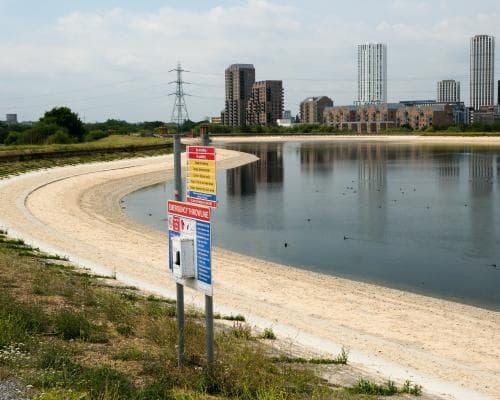
The chalkstreams of Hampshire are dying of thirst, and the government wants to build a thousand new homes a year on their doorstep. That is the strange, almost surreal tension at the heart of Britain’s housing boom: the more we build, the less water there is to drink. This week, the Environment Agency declared half of England in serious drought — for the second consecutive year — while Labour’s “build, baby, build” agenda targets the very regions where the taps are running dry. It is a collision between two of the 21st century’s most pressing demands: shelter and survival.
At the centre of this standoff is a simple, brutal fact, articulated by Paul Harvey, the Independent leader of Basingstoke and Deane council: “We cannot magic up more water.” His council has been ordered to deliver more than 1,000 houses annually in Hampshire, a county where the water cycle study shows demand from new homes may outstrip sustainable supply. Across Hampshire, Kent, Hertfordshire, Essex and Cambridgeshire, the same story repeats: climate-driven drought, crumbling Victorian infrastructure, and a housing target that assumes water will simply appear. It will not.
This is not a problem that technology can solve with a clever app or a smarter grid. The water industry has underinvested for decades — leaking pipes lose billions of litres a day, and reservoirs are not being built. The Environment Agency warns of dire consequences for the economy, environment and wildlife, yet the political imperative to build homes remains relentless. The tension is now existential: you cannot have a roof over your head if there is nothing to drink.
The deeper issue is that water is a finite, physical resource, and the UK is treating it as an infinite one. In the fenlands of East Anglia, over-extraction has brought the peat soils to the edge of collapse; in Hampshire, chalkstreams — some of the rarest habitats on Earth — are being artificially maintained with pumps. This is not a future problem; it is a present one. And it is getting worse. The government’s own climate projections show hotter, drier summers and more erratic rainfall, meaning the gap between water supply and demand will widen precisely as the housing targets ramp up.
The market is beginning to notice. Water utilities, already under fire for sewage spills and executive bonuses, now face a new reputational and financial risk: they cannot connect new homes without water, and they cannot get water without massive capital investment. That investment is not coming fast enough. Private equity firms circling the sector see a stranded asset, not a growth story. Meanwhile, local councils are caught between Westminster’s mandates and their own environmental limits, with no clear path forward.
What this signals for the sector is a reckoning. The era of “build, baby, build” is over in its naive form; the new era must be “build, but only where the water is.” That means rethinking where homes go, how they are designed, and what infrastructure is built first. It also means embracing radical efficiency — greywater recycling, rainwater harvesting, and water-neutral developments — not as green extras, but as survival prerequisites. The technology exists; the political will does not.
The forward-looking bet, then, is not on more concrete, but on smarter water. Companies and investors who pivot to water-positive infrastructure — from leak-detection AI to decentralised treatment systems — will find themselves at the centre of the next great infrastructure boom. The UK has a chance to lead, but only if it stops pretending that water is a minor inconvenience. The housing crisis is real, but so is the water crisis. They are the same crisis, and ignoring one will doom the other.
In the end, this is a story about limits — and about what happens when a nation’s ambition outruns its natural resources. The homes will be built, or they will not. But the water will decide. And no amount of political rhetoric can change that. The future belongs to those who build with the river, not against it.
More in INNOVATION