The $500 Gratin: Why the World’s Elite Are Rediscovering the Art of the Unhurried Summer Meal
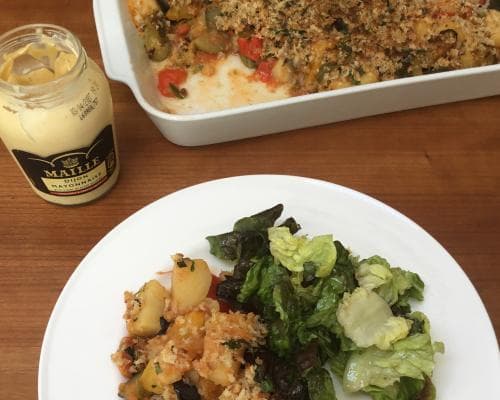
Imagine this: you’ve traded the Roman pavement, soft and sticky under a heatwave, for a Dorset garden that smells of salt and mint. The house is dark, cool, and old. The July produce is superb — almost indecently abundant. Berries, cherries, peas, runners, beans. But the real stars are the humble ones: aubergines, courgettes, tomatoes, potatoes. This is not a recipe. This is a statement of intent.
For those who own the calendar rather than fill it, summer is not a season to rush. It is a season to simmer. And the dish that captures this ethos better than any truffle-laced confit is the ratatouille and potato gratin. The template here draws from two titans of gastronomic literature: Jane Grigson’s Vegetable Book and Robert Carrier’s Great Dishes of the World. But the real secret comes from a French friend: cook the aubergine separately. Deep-fry it, if you dare — by far the tastiest option — or bake it, or air-fry it. This step ensures the aubergine holds its shape, offering distinct, velvety chunks rather than a muddy stew. It is a lesson in patience that the ultra-wealthy understand intimately: the best results come from respecting each ingredient’s individual character.
The numbers here are not financial, but they are no less telling. Four servings. One large aubergine. One onion. Three big tomatoes. A single potato. The cost of ingredients might total $15 at a farmers’ market. But the time investment — the slow, lid-on simmer, the uncovered reduction, the final lively stir to chase away any wateriness — is a luxury few can afford. The word “ratatouille” itself comes from the Provençal tatouiller, meaning “to handle repeatedly” or “to stir in water,” and ratouiller, meaning “to stir up the mud at the bottom.” That mud is the soul of the dish. It demands that you swirl the spoon deeply, so the vegetables don’t clump and stick. It is a ritual, not a chore.
What signals wealth in 2025 is not the price tag on a plate. It is the provenance of the produce, the heritage of the technique, and the willingness to let a dish rest for ten minutes so the juices reabsorb into a velvety whole. This gratin’s topping — soft breadcrumbs, grated cheese, minced herbs, olive oil — turns under the grill into a crusty, golden crown. It is the kind of detail that separates a competent cook from a connoisseur. Serve it with sausages, grilled cheese, slices of roast chicken, or simply a green salad. Even better: let it sit at room temperature, where it becomes more velvety, more integrated, more itself.
This dish is a quiet rebellion against the tyranny of the instant. In a world where billionaires can summon a private jet in minutes, the true marker of status is the ability to wait. To stir. To taste the tomatoes raw and decide whether they need a pinch of sugar or a jot of red-wine vinegar. The ratatouille and potato gratin is not a trend. It is a tradition, lovingly updated, that says more about your palate than any Michelin star ever could.
Looking ahead, the luxury market is shifting from the ostentatious to the elemental. The next great status symbol is not a watch or a yacht — it is a kitchen garden, a cool dark house in Dorset, and the time to make a dish that demands nothing less than your full attention. The gratin is the future. And it is delicious.
The Experience
Book a private culinary retreat in the English countryside where a Michelin-trained chef will guide you through this exact recipe using heirloom vegetables from your own garden.
More in FOOD