The Olivier Salad: How a 19th-Century Chef’s Accidental Masterpiece Became the Ultimate Status Symbol
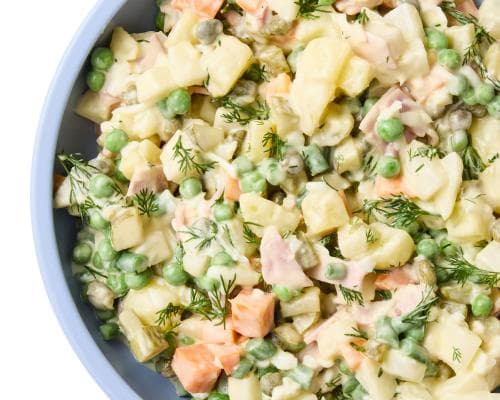
It began as a secret. In the 1860s, a Belgian-born chef named Lucien Olivier, working at the Hermitage restaurant in Moscow, refused to reveal the ingredients of his signature dish. Wealthy patrons would beg, bribe, and scheme for the recipe. He took it to his grave. Today, that dish—known to most of the world as Russian salad—still carries a quiet whiff of the forbidden. It’s called salade Olivier, and for the ultra-wealthy, it’s not just comfort food. It’s a conversation about provenance, precision, and the art of doing something simple so well that it becomes legendary.
Here’s the core truth: Olivier’s original was never meant to be democratic. He used grouse, crayfish tails, capers, and a proprietary mayonnaise that he made fresh daily. The version you’ll find in a supermarket deli case—cubed potatoes, peas, and mayo—is a ghost. The real thing is a study in restraint and hierarchy. The recipe I’m sharing here, adapted from the chef’s known methods, calls for waxy potatoes, carrots, turnip, green beans, gherkins, capers, and a choice of ham, pressed tongue, or cooked chicken. Each vegetable is cooked separately, because in a dish with so few elements, every texture must be impeccable. The mayonnaise is made from scratch: one egg, Dijon mustard, white-wine vinegar, and a blend of groundnut oil with a splash of extra-virgin olive oil. No shortcuts. No jars. That’s the first rule of the club.
Why does this matter to someone who can buy anything? Because rarity isn’t always about diamonds or vintage Bordeaux. Sometimes it’s about a dish that demands your time. The preparation takes 40 minutes of active work, plus 15 minutes of cooking. You peel, boil, chill, dice, and fold. You taste the pickling liquid from the gherkins and adjust the mayonnaise’s acidity. You decide whether to include the optional hard-boiled egg or to swap turnip for extra potatoes. This is not a recipe for a busy assistant. It’s a ritual for the person who values the process as much as the plate. In a world of private chefs and three-Michelin-star tasting menus, making your own Olivier salad signals a different kind of wealth: the wealth of attention.
What this dish signals about taste is even more telling. The ultra-wealthy have long gravitated toward things that require insider knowledge—a wine that doesn’t score 100 points, a tailor who never advertises, a salad that most people get wrong. Olivier salad is a litmus test. Serve it with a bland, store-bought mayo, and you’ve revealed yourself. Serve it with a homemade emulsion, perfectly cooked vegetables, and a scatter of fresh dill, and you’ve announced that you understand the difference between eating and dining. The luxury market has caught on: high-end delis in London, Paris, and New York now offer “Olivier-style” salads at premium prices, sometimes with lobster or truffle oil. But the cognoscenti know that the real luxury is making it yourself, in your own kitchen, with your own hands.
Looking forward, this dish is a quiet rebellion against the era of speed. As the world accelerates, the people who can afford to slow down—who can spend an hour on a salad—are the ones who truly own their time. Olivier salad is not for the impatient. It’s for the collector who has everything and still wants to learn a secret. And the secret, as always, is that the best things are not for sale. They’re made.
The Experience
Book a private culinary masterclass in your home kitchen with a chef trained in 19th-century French-Russian techniques, and learn to craft the definitive salade Olivier from scratch.