The Empire Shifts: Why Elon Musk’s Tesla Bet on Robots and AI Matters More Than Its Missed Earnings
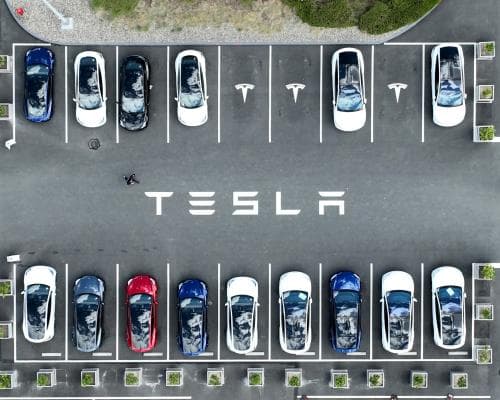
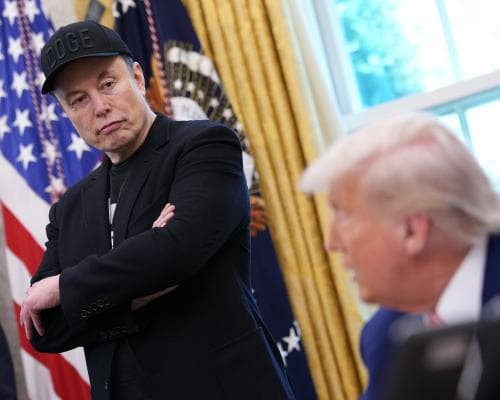
Elon Musk stands at a rare inflection point—one where a 40% profit miss barely registers as a tremor. Tesla just reported earnings of 31 cents per share, far below Wall Street’s 51-cent forecast. Revenue hit $28.23 billion, beating expectations, but the stock dipped anyway. For the ultra-wealthy, this isn’t a crisis. It’s a signal. The automaker that once electrified the world is now taking a backseat to something far more audacious: a fleet of humanoid robots, autonomous taxis, and artificial intelligence that could rewrite the rules of ownership itself.
Here’s the context that matters to anyone with a portfolio built on vision, not just quarterly sheets. Tesla’s vehicle sales are no longer the engine of its valuation. Instead, Musk is betting the house on Optimus—a bipedal robot that he claims will be “the biggest product of all time”—and Robotaxi, a driverless service that just expanded to Tampa and Orlando. The numbers tell the story: while Tesla’s stock has fallen 14% this year, SpaceX, Musk’s rocket and AI company, had the largest stock market debut in history last month, briefly making him the world’s first trillionaire. The center of gravity has shifted. The old Tesla—the one that sold cars—is now a side chapter in a much larger narrative about autonomous intelligence.
But what does a robot that doesn’t yet exist mean for the ultra-wealthy? Craftsmanship, rarity, and heritage have long been the currencies of luxury. A hand-stitched leather interior, a bespoke yacht, a limited-edition Patek Philippe. Musk is offering something different: exclusivity through technology that hasn’t been scaled. The Optimus robot, still in development and facing Chinese competitors, is not a product you can buy today. It’s a promise. And for those who understand the value of being first, that promise is intoxicating. The price? Unclear. But in the world of high-net-worth individuals, scarcity is the ultimate luxury. A robot that can fold laundry, fetch wine, or patrol a compound? That’s not a gadget—it’s a status marker for a future where human labor becomes optional.
This pivot signals a deeper shift in how the ultra-wealthy think about value. Traditional luxury is about objects—watches, cars, homes. The new luxury is about systems: AI that manages your estate, robots that anticipate your needs, autonomous vehicles that eliminate the friction of time. Tesla’s Robotaxi service, currently operating in parts of Austin, Dallas, Houston, and Miami, is a beta test for a world where you don’t own a car—you own access to a fleet that drives itself. For a billionaire, that’s not convenience; it’s a new kind of asset. The fact that Musk has repeatedly missed his own deadlines—millions of self-driving cars on US roads remain a fantasy—only adds to the allure. The ultra-wealthy know that real breakthroughs don’t arrive on schedule. They arrive when they’re ready, and they’re worth the wait.
Look at the market forces driving this. Tesla’s sales in Europe surged because of electric vehicle subsidies and gas prices spiking from the US-Iran war. But in the US, tax subsidies ended, and cheaper Chinese automakers are eating into margins. The old model—sell more cars, make more money—is becoming obsolete. That’s why Musk is pushing Optimus and Robotaxi so hard. He’s not just selling a product; he’s selling a vision of the future where wealth is measured not by what you own, but by what you control. On the earnings call, he cautioned that the robot faces “one of the hardest things to solve”—making an autonomous humanoid that can do tasks. That’s exactly the kind of challenge that attracts the world’s most ambitious capital.
So what’s next? For the ultra-wealthy, the opportunity is to get in early on a technology that could redefine labor, transportation, and leisure. Imagine a summer home in the Hamptons where a robot handles the maintenance while your autonomous Tesla shuttles guests from the airport. That’s not science fiction—it’s the roadmap Musk is building, one missed earnings report at a time. The stock may wobble, but the vision is steady. As Musk himself said, Optimus could “end poverty.” Hyperbole? Perhaps. But in a world where the richest man on Earth is betting his empire on robots and AI, the smart money is paying attention—not to the quarterly numbers, but to the shape of what’s coming.
The Experience
For a private briefing on how to position your portfolio for the AI and robotics shift, schedule a consultation with our luxury investment desk. Access is by invitation only.