The Unforgiving Beauty of the Tour de France Femmes: Where Champions Are Forged in Heat and Stone
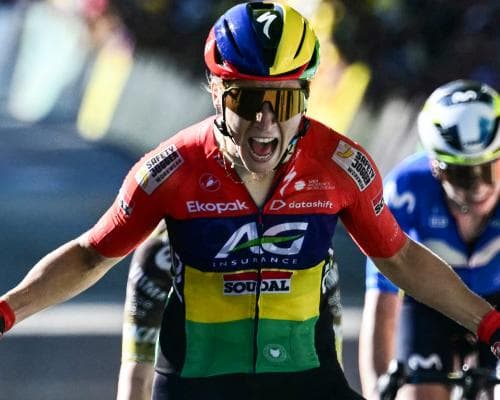
There is a particular kind of silence that falls over a cycling peloton when the road tilts upward and the air turns to glass. It is not a peaceful silence, but a taut, electric one, broken only by the scrape of cleats and the ragged breath of women pushing their bodies to the very edge of what is humanly possible. Yesterday, on the sun-blasted slopes of the Col de Lalouvesc, that silence was shattered by a story so improbable it could only be true. Kim Le Court, a Mauritian rider who had spent the week battling the ghost of a disastrous time trial, emerged from the day's breakaway to snatch victory in Tournon-sur-Rhône, her second career stage win in the Tour de France Femmes. It was a win not of brute force, but of sheer, unbreakable will.
For the uninitiated, the Tour de France Femmes is not merely a race; it is a moving feast of France's most savage and spectacular geography. This year's route, a brutal passage through the central massif, has been a masterclass in attrition. The Col de Lalouvesc, a climb that seems to have been designed by a sadistic cartographer, rises from the chestnut forests of the Ardèche in a series of unforgiving switchbacks. The heat has been biblical, a dry, shimmering haze that turns the tarmac into a mirage and makes every pedal stroke a negotiation with one's own limits. This is where the wealthy come to play, not in the grandstands, but in the helicopters that hover above the race, offering a bird's-eye view of the human drama unfolding below. It is a spectacle of suffering, and yet, there is an undeniable, magnetic beauty to it.
The drama of Le Court's victory was amplified by its context. She had been touted as a contender for the overall title, only to lose over two minutes in Tuesday's individual time trial, a discipline that rewards cold, mechanical efficiency over raw courage. The general classification, it seemed, was slipping away. But as the peloton fractured on the day's final climb, Le Court found herself in the breakaway, a group of riders who had been granted a sliver of freedom by the main pack. Her mechanical problem early on the climb had seemed like a cruel joke, a flat tire or a dropped chain at the worst possible moment. Yet, she clawed her way back, bridging a gap that would have broken lesser spirits, and then, in the chaos of the final sprint, she unleashed a surge of power that left the French champion Cédrine Kerbaol and the young Dutch sensation Puck Pieterse in her wake. “I was on the limit,” she said afterwards, her voice thick with exhaustion and disbelief. “I can’t believe I still had the legs to sprint.”
This is the essence of the Tour's allure for the discerning traveler: the collision of human fragility with monumental landscape. The race is a moving narrative, and each day's stage is a new chapter written in sweat and adrenaline. For those who follow it from the roadside, the experience is one of total immersion. You can rent a villa in the Luberon, or a chalet in the Alps, and watch the caravan of team cars and support vehicles snake past before the riders themselves, a blur of color and motion against the ochre hills. But the true connoisseurs know that the real luxury is in the access—the ability to stand on a hairpin bend at the Col du Galibier, hours before the race arrives, and feel the anticipation build with the morning mist. It is a form of travel that demands patience, but rewards it with moments of pure, unscripted drama.
Le Court's win was also a testament to a deeper, more human quality: sportsmanship. Earlier this season, she stopped mid-race to help Kasia Niewiadoma, the reigning champion, after a heavy crash in Milan-San Remo. That gesture, a moment of selflessness in a sport defined by selfishness, has endeared her to fans and fellow riders alike. It is a reminder that even in the most rarefied echelons of sport, grace can coexist with ambition. And while Le Court savored her moment in the sun, the day belonged, in a statistical sense, to Pieterse, who now holds the Queen of the Mountains classification with a record 47 points—the highest total ever recorded in the history of the Tour de France Femmes. For the young Dutch rider, a prodigy of cyclo-cross, the polka-dot jersey is a crown of thorns, earned on the steepest gradients France can offer.
For the luxury traveler, the Tour de France Femmes represents a new frontier. The men's race has long been a staple of the summer social calendar, but the women's event, now in its fourth edition, offers a more intimate, less crowded, and arguably more compelling spectacle. The stages are shorter, the roads less choked with traffic, and the access to the riders is often easier. It is a chance to witness history in the making, to see the sport's future unfold in real time. And as the race winds its way toward the Alps, the question of who will wear the yellow jersey in Paris remains deliciously unresolved. But for those who were there, in the heat and the dust of the Ardèche, the image that will linger is not of a leader's jersey, but of a lone Mauritian woman, her face contorted in effort, crossing the line with her arms raised in triumph. It was a moment of pure, unadulterated joy, and it was worth every ounce of the struggle that came before it.