The 2.6% Signal: Why Falling Inflation Is the Ultimate Luxury Indicator

Picture this: You are in the back of a chauffeured Maybach, gliding past a London petrol station where the price of diesel has quietly dropped. It is a small detail, almost invisible to the hurried commuter. But for those who understand the subtle rhythms of wealth, it is a seismic shift. Inflation in the United Kingdom has fallen to 2.6%, outpacing every economist's forecast. This is not just a statistic for the masses. It is a message for the ultra-wealthy: stability is returning, and the game of smart spending has just changed.
The numbers are deceptively simple. The consumer prices index slid from 2.8% in May to 2.6% in June, beating the predicted 2.7%. Fuel, especially diesel, led the decline, thanks to an uneasy truce in the Middle East that has cooled oil prices. But look closer. The Office for National Statistics reports that clothing prices fell with summer sales—deeper discounts than last year. Food prices dropped, driven by chocolate, margarine, and beef. Even raw materials dipped for the first time since January. For Prime Minister Andy Burnham, who has pledged to slash the cost of living with a winter VAT holiday on electricity and a national cap on bus fares, this is a political victory. For the discerning reader, it is a signal to recalibrate.
Here is where the story gets interesting for those who collect, invest, and live with intention. Falling inflation does not just mean cheaper petrol. It means the cost of craftsmanship—the raw materials for bespoke tailoring, the energy to run a private estate, the logistics of shipping a vintage yacht—becomes more predictable. When the price of crude oil drops, the cost of transporting a hand-stitched leather armchair from Milan to Mayfair falls too. When food inflation eases, the budget for a private chef sourcing rare truffles becomes less volatile. This is the quiet luxury of a stable economy: you can plan a season, a renovation, a collection, without the gnawing uncertainty of spiraling costs. The Bank of England is now less likely to raise interest rates, which means borrowing for that second home in the Cotswolds or that art acquisition just got a little more comfortable.
What does this say about wealth and taste in 2025? It reveals a shift from conspicuous consumption to calculated curation. The ultra-wealthy are not waiting for headlines; they are reading the tea leaves of the ONS data. A 2.6% inflation rate is not just good news for families—it is a green light for long-term investments in heritage assets. When the cost of living stabilizes, the market for rare whiskies, classic cars, and limited-edition timepieces often heats up, because disposable income flows into passion projects. Burnham’s focus on affordability—cutting VAT on electricity, capping bus fares—creates a floor of stability that lets the luxury sector breathe. As Joe Nellis, the economic adviser, put it, lower inflation boosts household spending power and business confidence. For the collector, that confidence translates into bidding wars at Sotheby’s and waiting lists for new supercar models.
Looking ahead, the path is clear but not without nuance. The IMF had predicted inflation could hit 4% by year’s end; the actual figure is far below that. This creates a more stable platform for Burnham’s administration, but the Middle East remains a wildcard. For the ultra-wealthy, this is a moment to act—not with panic, but with precision. Secure that bespoke commission. Lock in the private jet charter before fuel prices climb again. Invest in brands that thrive on stability, not volatility. The 2.6% figure is more than a number; it is a rare invitation to breathe, plan, and acquire with confidence. In a world where every basis point matters, this is the kind of news that deserves a slow pour of a 30-year-old single malt.
The Experience
To experience the stability of this moment firsthand, consider a private consultation with a luxury asset advisor who can help you recalibrate your portfolio for the new inflation reality.
More in BUSINESS
The $14 Billion Bet on Concrete and Code: Why the World’s Most Discerning Investors Are Chasing Warehouses

The Last Stand That Wasn't: How a £14 Billion Hostile Bid Just Rewrote London's Property Power Map
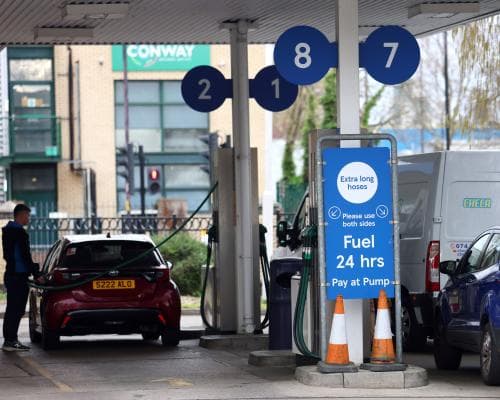
The 10.7p Signal: Why the Ultra-Wealthy Are Watching UK Inflation More Closely Than Their Portfolio Returns