The Last Stand That Wasn't: How a £14 Billion Hostile Bid Just Rewrote London's Property Power Map
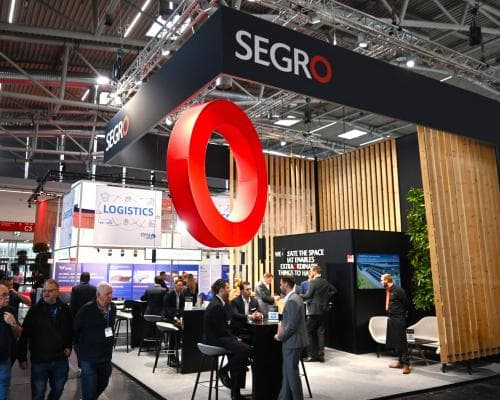
For a few electric hours on Wednesday, London's financial district held its breath. A rare beast was on the loose: a FTSE 100 company, armed with a visionary CEO and a portfolio of prime European land, was actually fighting back against a hostile American raider. It was David versus Goliath, corporate-style. The champagne was on ice. Then, minutes before the final bell, the white flag went up.
This is the story of Segro—once known as Slough Estates, a name that sounds like a sleepy commuter town—and its abrupt, humbling surrender to Prologis, the San Francisco-based behemoth. The price tag: £14 billion, or £10.32 per share. The deal, if finalized by August 12, will be the largest Footsie takeover of the year. But for anyone who understands the language of power, location, and legacy, it's far more than a line item on a balance sheet. It's a signal.
Here's what happened. David Sleath, Segro's long-serving chief executive, had a compelling argument. He wasn't just selling sheds. He was selling the future. Sleath pointed to a near-£18 billion valuation—£13 a share—within a few years, fueled by the explosive demand for AI data centers and massive logistics hubs for online retailers. His pitch to shareholders was elegant: be patient, let us develop these supply-constrained European markets, and reap the rewards. He had the better of the arguments. The company's assets were valued at 905p per share, yet the bid came at a 14% premium to that figure. But the raiders had a sharper blade.
Prologis, with its $135 billion market capitalization, had a simpler, colder message: your vision is beautiful, but you lack the financial muscle to execute it. Take our money—or rather, take our shares. The deal is mostly a share swap, with only 25% cash. And here's the rub: the shareholders who mattered most, led by Norway's sovereign wealth fund with an 8% stake, were already holding Prologis stock too. For them, this wasn't a battle of independence versus conquest. It was a spreadsheet exercise. A portfolio optimization. The calls for 'engagement' grew louder, and Sleath's fight became a losing one.
This is the part that will haunt London's real estate elite. Segro was the last of a breed—a pure-play listed vehicle offering direct exposure to UK and European data center and logistics development. Post-Segro, that exposure vanishes. The London market is now denuded of its most distinctive commercial landlord. What remains is a landscape where the biggest players are American, and the local champions are absorbed into global portfolios. It's a reminder that in the world of serious capital, sentiment is a luxury few can afford.
For the ultra-wealthy, this deal whispers something important. The real action in prime industrial real estate isn't in owning the buildings—it's in owning the companies that own the land. But as this saga shows, even the most visionary management can be outgunned by patient, diversified institutional capital. The message is clear: if you want to play at this level, you need either a fortress balance sheet or a very, very patient family office. The days of the standalone, mid-tier European landlord fighting off a US giant are likely over. The next wave of wealth creation in this sector will belong to those who can build, borrow, and hold at scale.
So what comes next? Look for more consolidation. The AI data center boom is real, but it requires capital on a scale that only the largest players can muster. Prologis now owns the keys to Europe's most constrained markets. For the rest of us, the lesson is to watch where the big money flows—and to remember that in the end, even the best story can be outbid by a spreadsheet.
The Experience
For a private briefing on how family offices and UHNW investors can gain exposure to European logistics and data center assets through direct ownership or club deals, contact our concierge desk.
Explore
More in BUSINESS