The Price of the Needle: Ozempic’s Rare Eye Risk and the New Calculus of Wellness
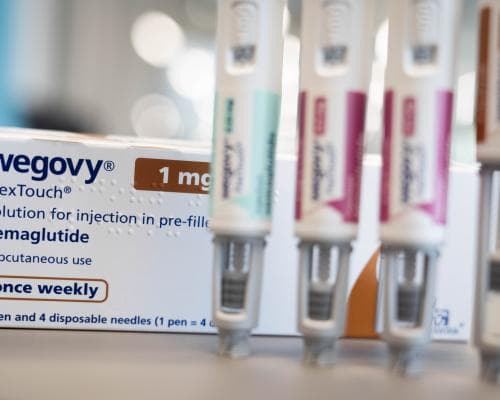
You know the scene. The private club in Mayfair, the terrace in St. Barts, the dinner table in Bel Air — someone leans in with a conspiratorial smile and says, “Have you tried it?” They’re not talking about a new Bordeaux or a bespoke suit. They’re talking about Ozempic, Wegovy, Mounjaro. The little injectable pens that have become the unofficial uniform of a certain kind of wealth: lean, disciplined, ageless. But now, the Australian Therapeutic Goods Administration has issued a warning that lands like a stone in a crystal glass. These drugs are linked to a rare eye disorder called non-arteritic anterior ischaemic optic neuropathy — NAION, for short. It’s a condition that can cause sudden, permanent vision loss. And there is no cure.
The TGA’s warning is not a panic. It’s a meticulous, data-driven alert based on 36 reported cases in Australia. NAION occurs when blood flow to the optic nerve is blocked, starving the nerve of oxygen. The result? A painless but devastating loss of sight, often partial but sometimes complete. The regulator has updated product information for Ozempic, Wegovy, and Mounjaro to include this risk. They’ve urged patients to seek “urgent medical attention if they experience sudden vision loss.” But here’s the nuance that matters for the discerning reader: the TGA does not recommend stopping treatment without consulting a doctor. This is not a ban. It is a recalibration of risk.
Let’s talk about rarity. Professor Helen Danesh-Meyer, from the Royal Australian and New Zealand College of Ophthalmologists, puts it plainly: “It’s a very rare condition.” In a world where the wealthy are accustomed to managing risk — from private jet safety to the provenance of a vintage — this is a statistical whisper. Yet the whisper carries weight because of what it touches: eyesight, the most precious of senses. For the collector who spends six figures on a Leica lens or a first-edition Ansel Adams print, the idea of compromised vision is not an abstract medical footnote. It’s a direct threat to the very apparatus of appreciation.
The market context is telling. GLP-1 drugs have become a status symbol as potent as a Patek Philippe. They promise not just weight loss but a kind of metabolic aristocracy — the ability to say no to the table, to control appetite with chemistry. The global market for these drugs is projected to hit $100 billion by 2030. But with that scale comes scrutiny. The NAION link, first flagged in a 2024 peer-reviewed study, is now part of the fine print that the ultra-wealthy read with the same care they apply to a wine label or a real estate contract. The question is no longer just “How much will this cost?” but “What am I really paying?”
This signals a shift in luxury taste. The old markers — the car, the watch, the house — are being joined by something more intimate: the curated biology. The wealthy have always sought longevity, from stem-cell clinics in Switzerland to hyperbaric chambers in the Hamptons. But now the tool is a prescription. And with that comes a new kind of discernment. The connoisseur of fine living must also become a connoisseur of risk. Ozempic is not just a drug; it’s a choice that sits alongside the decision to fly private rather than commercial — a trade-off of convenience for a margin of control. The NAION warning adds a line to that ledger.
What comes next? The TGA’s move will likely be followed by regulators in Europe and the United States. The conversation will intensify at the dinner tables where these drugs are discussed with the same reverence as a first-growth Bordeaux. The smart money — and the smart doctors — will advise vigilance, not fear. For the editors of *The Curated Life*, the story is clear: the pursuit of the perfect life has always required a steady hand and a clear eye. Now, more than ever, both are needed.