The Art of the Entrée: How Margo Leadbetter Defined 1970s Aspirational Dressing
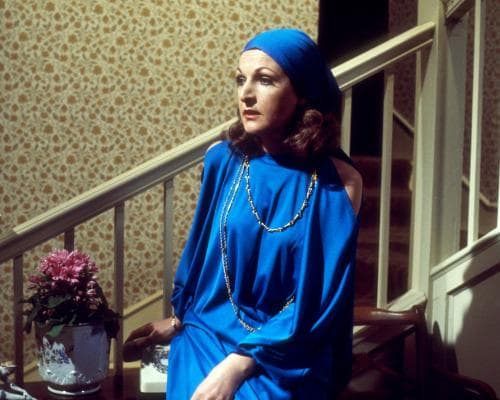
The telephone rings in a Surrey hallway. Before the receiver is even lifted, a flash of electric blue silk announces her arrival. This is Margo Leadbetter, the woman who understood that true luxury is not about being seen—it is about being remembered before you speak. Penelope Keith, who died this week at 86, gave us a character whose command of a room depended as much on her diva-level wardrobe as on those pristine home-counties vowels. For the ultra-wealthy, Margo was not a caricature. She was a mirror.
Here was a woman who refused to accept the concept of being overdressed, even when answering the hallway telephone. The Good Life, which celebrates its 50th anniversary this year, was built on a visual contrast: glitzy Margo versus humdrum Barbara. But while Barbara (Felicity Kendal) wore jeans and her husband’s old shirts, Margo dressed for tradesmen as if they were Buckingham Palace footmen. The numbers tell the story: most of the series’ costume budget went to Margo because of her frequent outfit changes. People tuned in not just for the comedy, but to see what she would wear next. In the new documentary The Good Life: Inside Out (now on Apple TV), Keith revealed she spent her only day off—Mondays—at Harrods, and occasionally Harvey Nichols, trying on pieces. “All those hours in there I spent, trying on those lovely floaty clothes,” she said. That was not acting. That was research.
The craftsmanship behind those looks was no accident. Margo’s signature silhouette—whether you call it a maxidress or a kaftan—required fabric that moved like liquid. An electric blue dress, used for a single hallway scene, was by Frank Usher, a label that understood the drape of silk charmeuse. Many others were Harrods’ own label, designed for women who understood that a garment’s true value lies in how it makes an entrance. One dress, at least, was Keith’s own: a white silk kaftan with a pink print. The acid brights—tangerine, yellow, turquoise, amethyst—were not just colors. They were a bet on the future. The BBC and ITV only began broadcasting in full color in 1969, and many families still watched in black and white. Margo’s wardrobe worked on both: the clash of hues made a splash on color sets, while the sheer drama of silhouette and texture carried the signal for those in monochrome. That is the definition of timeless design—it communicates regardless of the medium.
What Margo signaled, then and now, is a specific kind of wealth: the kind that refuses to apologize for its own existence. She was brittle, status-obsessed, and utterly unapologetic. In a world where the ultra-wealthy often dress down to blend in, Margo dressed up to stand out. She understood that exclusivity is not about hiding your means—it is about broadcasting your taste. Her wardrobe was a declaration: I am not here to be comfortable. I am here to be remembered. That philosophy resonates today in the resurgence of maximalist dressing among the global elite, where a single custom caftan from a Parisian atelier can cost more than a compact car. The difference is that Margo did it with a telephone in one hand and a tray of cheese-and-pineapple bites in the other. She made aspiration look effortless, even when it was anything but.
Looking forward, Margo Leadbetter’s legacy is a reminder that luxury is not about the price tag—it is about the performance. The best-dressed people in any room are not necessarily the richest; they are the ones who understand that clothing is a language. Penelope Keith gave us a masterclass in that language, and she did it with a warmth and humility that belied the character’s sharp edges. For the modern collector of rare style, the lesson is simple: never let the occasion dictate your outfit. Let your outfit dictate the occasion. And if you must answer the phone, do it in silk.
The Experience
To channel Margo’s spirit, book a private styling session at Harrods’ personal shopping suite, where you can commission a bespoke silk kaftan from their in-house atelier. Then, host an intimate dinner party where the dress code is strictly ‘overdressed’.