The Power of Three Minutes: Why Wimbledon’s Walk-On Fits Are the New Armor of the Ultra-Wealthy
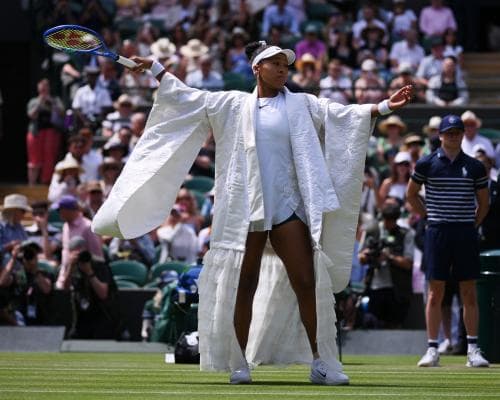
Imagine spending six figures on a couture piece you’ll wear for exactly three minutes. That’s the math behind the most talked-about accessory at Wimbledon this year. It’s not a watch. It’s not a bag. It’s the walk-on fit — the outfit a player wears from tunnel to baseline, then sheds like a butterfly’s cocoon before the first serve.
Naomi Osaka owns this moment. This week, she stepped onto Court 1 in a confection of frills, a bustle, outsized bows, and extended sleeves — a piece that looked like it walked out of a Kabuki theater via a Quentin Tarantino fever dream. Designed by Hana Yagi, the all-white ensemble debuted on Vogue before it ever touched grass. It was armor. It was theater. It was a signal: I am here, I am different, and I am not afraid to spend serious capital on a look that lasts less time than a champagne toast.
Osaka is the queen of the walk-on fit. At the Australian Open in January, she went viral for a jellyfish-inspired mega-pleat creation that had fashion editors scrambling for their notebooks. But she’s not alone. Frances Tiafoe pulled a surprise reveal — dramatically ripping off his trousers to reveal shorts underneath, a stunt that screamed both confidence and brand savvy. Jannik Sinner sent shockwaves through the All England Club in 2023 when he dared to carry a beige Gucci bag, a direct violation of Wimbledon’s all-white dress code. And Serena Williams? This week she wore a mesh, semi-sheer Nike jacket that turned the walk to the baseline into a runway moment.
The craftsmanship here is obsessive. Each piece is custom-made, often by a single designer, and worn for mere moments before the match begins. Marty Harper, who collaborated with Osaka on her looks, calls it “armor” — a psychological shield that transforms the player before they even strike a ball. Sunita Kumar Nair, author of the new book *Ace: The Times & Style of Tennis*, compares it to nature: “Animals enlarge their bodies, their coloring, their feathers to ward off predators.” The walk-on fit is the human equivalent. It’s a peacock’s display, but with a price tag that could buy a small car.
Claire-Marie Roberts, a sports psychologist, says wearing such an outfit is “the single biggest predictor of your ability to attain your goals.” If you can afford to commission a couture piece for a three-minute walk, you’ve already won the mental game. But Coco Gauff, who debuted her girly, retro collaboration with New Balance and Miu Miu this week, plays it cool: “Once the match starts, I’m focused on the game.” Still, even she knows the walk-on fit is a photo op that brands pay millions for. It’s not just about winning — it’s about being seen winning.
What does this signal about wealth and taste? It says that the ultra-wealthy no longer buy things to own them. They buy moments. A three-minute walk-on fit is the ultimate ephemeral luxury — a flash of exclusivity that disappears into the ether, captured only by cameras and memory. It’s the same logic behind a $50,000 bottle of wine you drink in an evening, or a private jet charter for a weekend. The value isn’t in the object; it’s in the story it tells. And for the ultra-wealthy, the story is always about power.
Look ahead. As Wimbledon evolves, the walk-on fit will only grow more extravagant. Designers will compete for the chance to dress a player for those three minutes. Brands will pay seven figures for the exposure. The line between sport and fashion will blur until it disappears. For the collector who already owns every Patek Philippe and every Hermès Birkin, the next frontier is not a thing — it’s a three-minute performance. And the price of admission is nothing less than audacity.
The Experience
Book a private consultation with a London-based couturier who specializes in walk-on fits — starting at £25,000 for a single, bespoke piece. Contact our concierge for an introduction.