The Last Darkroom: What a 1993 Photo Lab Reveals About the Price of Privacy
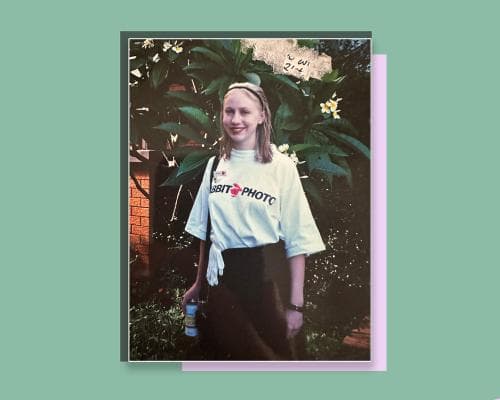
In 1993, a teenager in white cotton gloves stood behind a counter in a suburban shopping centre, holding the most intimate secrets of strangers. There were no NDAs. No encrypted servers. No private deletion. Just a yellow envelope, a ticked box for glossy prints, and the quiet trust that a minimum-wage employee would not look too closely at the man in the Santa hat standing next to a naked woman on a unmade bed.
That teenager was me. And those envelopes contained the pre-digital equivalent of a private jet manifest: the moments people paid real money to preserve, and the ones they prayed no one else would ever see.
Let me explain. In 1993, film was expensive. You did not waste a frame on avocado toast or a gym mirror selfie. You saved your 24 or 36 exposures for weddings, first days of school, backyard barbecues — the official highlights of a middle-class life. But alongside those blurry toddlers and demon-eyed holiday snaps came a parallel stream: the photographs no algorithm would ever recommend. Sternum-to-zipper compositions. Lacy underwear on unmade beds. The full, unfiltered catalog of human desire, handed over at the counter like dry-cleaning.
Rabbit Photo, wedged into the corner of Westfield Figtree like a forgotten Tetris piece, had a protocol for these. We wrote NFR — "Not For Rabbit" — in thick black marker on the envelope. It was a small act of discretion, a firewall between the customer and the teenage clerk who might otherwise flash the top print at the counter to confirm the order. No one wanted to make eye contact with their own naked girlfriend in a Santa hat, or with the person holding her image.
Today, that entire world has been inverted. The ultra-wealthy no longer drop off film canisters at a mini-lab. They hire private archivists, negotiate digital-rights clauses in prenuptial agreements, and pay six figures for cybersecurity teams to scrub metadata from their lives. The cost of a single indiscretion has skyrocketed — not because the photos are more explicit, but because the distribution network is infinite. A leaked image in 1993 meant one set of prints, maybe a photocopy. A leaked image today means a permanent place on a server in a jurisdiction with no extradition treaty.
But here is the irony the billionaire class understands better than anyone: the real luxury is not encryption. It is not the private server or the burn phone. The real luxury is the ability to forget. To hand over a roll of film, walk away, and never wonder where those negatives ended up. To trust that the person on the other side of the counter values their minimum-wage paycheck more than your reputation.
That trust no longer exists. And so the wealthy have built a parallel economy of discretion. Private photo labs in nondescript industrial parks, staffed by employees who sign lifetime NDAs. Film developers who work in windowless rooms with no internet connection. Archivists who specialize in the art of the permanent deletion. The price of a single roll of 35mm developed in total secrecy now costs more than a weekend in St. Moritz.
What that teenager behind the counter learned — in a shopping centre, on a Thursday night, wearing white gloves — is that the most valuable currency in the world is not money. It is the quiet certainty that your secrets will remain yours. That is the lesson every billionaire already knows. And it is the reason the last darkrooms are not closing. They are just moving to places you will never find.
The future of photography is not sharper lenses or higher megapixels. It is the return of the envelope. The black marker. The silent nod that says: I saw nothing. And I will remember nothing.
The Experience
For those who value absolute discretion, a growing number of bespoke archival services now offer off-grid film development with bonded, NDAd staff. One call to a private concierge can connect you with a lab that has no website, no address, and no memory of your face.