The Midnight Glide: Why Lime Bikes Have Become the Ultimate Luxury of London's Summer Nights
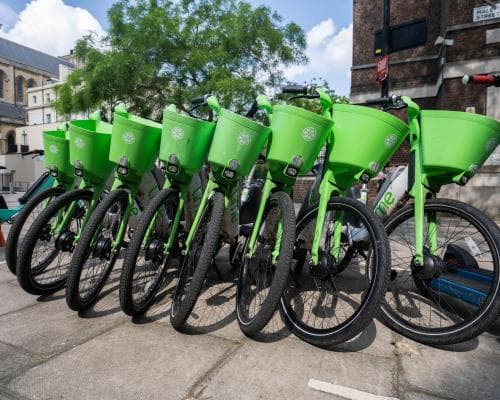
There is a moment in every great city evening when the heat becomes too much, the pavement too sticky, and the last tube feels like a distant, impossible dream. In London this summer, that moment is being solved not by black cabs or chauffeurs, but by a fleet of bright green electric bikes that hum through the night like luminous insects. The Lime bike—once dismissed as a nuisance, a hazard, a toy for the reckless—has become the quiet rebellion of a generation that refuses to be trapped by the city's crumbling infrastructure. And for the ultra-wealthy, who could easily summon a car, there is something almost decadent about choosing to glide instead.
The revelation is not about the destination; it's about the sensation. As Annie Lord, the dating columnist and author, writes in her new book *Freewheeling: Essays on Cycling*, 'My favourite part of a night out is Lime biking home. As I ride up a hill, the bike's electrics click… And, for a little while, I'm free.' That freedom is the real luxury. In a city where every minute is accounted for, where private members' clubs and five-star hotels promise exclusivity, the Lime bike offers something rarer: the ability to improvise, to change course on a whim, to feel the wind on your face as you weave past the gridlocked cars and the sweating pedestrians. It is the antithesis of the chauffeur-driven limousine—and that is precisely its appeal.
For the average London rider—34 years old, according to the company—this is not just transport; it is a lifestyle statement. The city is becoming warmer and drier, and the streets are alive with possibility. Social media has made every corner of the capital feel instantly accessible, and the Lime bike is the key that unlocks it all. A dinner in Shoreditch, a drink in Hackney, a late-night wander through the quiet streets of Islington—all are now connected by a web of electric assist and spontaneity. The bikes have transformed the geography of the night, making previously out-of-the-way places feel close, and making women feel safer than they might walking alone. In Hackney, once an isolated borough and now one of Lime's busiest markets, pub landlords are reporting a bike-driven boom on summer nights, with the bright green machines glowing outside like lurid cocktails before their riders wobble home, tipsy and triumphant.
But there is a darker narrative, one that the luxury traveller might find oddly refreshing. Since Lime's arrival in 2018, the story has been dominated by complaints: riders running red lights, bikes dumped on pavements, a general sense of urban chaos. Yet this friction is precisely what makes the Lime bike feel like a secret. It is not a sanitized, managed experience; it is raw, unmediated, and gloriously imperfect. For the wealthy, who are used to seamless, curated journeys, the Lime bike offers a frisson of the unplanned. It is the thrill of navigating the city on your own terms, without a concierge or a fixed itinerary. The bikes are cheap—a few pounds for a ride—but the experience is priceless, a rare moment of genuine, unscripted joy in a world of over-planned luxury.
This is the new signal of status: not the private jet, but the ability to choose the bike. It is a quiet flex, a nod to sustainability and spontaneity that speaks louder than a chauffeur. The ultra-wealthy are increasingly seeking experiences that feel authentic, that connect them to the raw energy of a place. A Lime bike ride through London at midnight is the ultimate insider's move—it says, 'I know this city, and I can navigate it with nothing but my wits and a rented e-bike.' It is the same impulse that drives them to trek through Patagonia or sail the Galápagos: the desire to be tested, to feel alive, to escape the bubble of privilege.
And so, as the summer nights stretch on, the Lime bike has become a symbol of a generation's revenge—not against the city, but against the old ways of moving through it. It is a rejection of the stuffy, the predictable, the air-conditioned. It is a declaration that the best way to experience a city is not from behind a tinted window, but with the wind in your hair and the stars above. For the luxury traveller, the next great journey might not be to a far-flung island, but to the streets of London, where the hum of an electric motor is the sound of freedom itself.