The Quiet Power of a Well-Tended Green: Why the World’s Sharpest Investors Are Betting on Gardeners
In the rarefied circles where net worth is measured in nine figures, the true luxury is not a marble foyer or a private helipad—it is the ability to step outside and feel the world has been deliberately, beautifully arranged for your senses. For the ultra-wealthy, a manicured estate is a given. But what about the green spaces that define a city’s soul—the parks, the allotments, the community gardens that make urban life breathable? A quiet revolution is underway, and it is not led by architects or tech moguls. It is led by a handful of gardeners who understand that the most valuable asset in any metropolis is not glass and steel, but living, breathing soil. And for those with the foresight to see it, this movement is redefining what it means to invest in the future of a city—and to live well within it.
At the heart of this shift is John Little, a man who has spent decades proving that a single skilled gardener can outperform a hundred grand designs. His community interest company, Care Not Capital—co-founded with garden designer Susanna Grant—is training a new elite corps of public-space gardeners, not just to prune and plant, but to think like ecologists, community diplomats, and climate strategists. The numbers are stark: Public Health England confirms that regular exposure to green space reduces stress and boosts physical fitness, while the Natural History Museum points to greenery as a crucial cooling mechanism for urban heat islands. Yet local authorities, strapped and short-sighted, continue to slash funding for these non-statutory services, leaving volunteers to pick up the secateurs. Little’s argument is simple and devastating: “Green spaces are not sustainable unless you have someone looking after them.” He sees the irony—cities will spend millions on an architectural statement, but starve the very living systems that make those statements habitable.
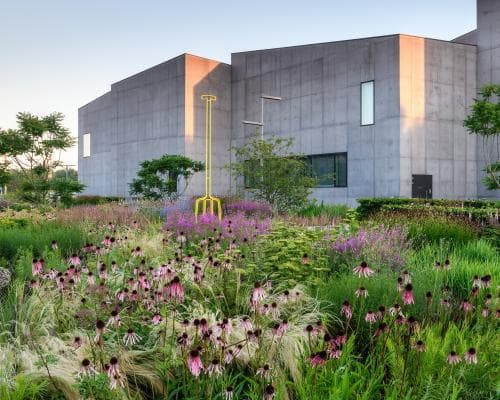
What Little and Grant are doing is not charity; it is a masterclass in high-yield stewardship. Their inaugural 2025 course at Hilldrop—Little’s celebrated Essex garden, a living laboratory of biodiversity—welcomed 18 professional public-space gardeners for free training in habitat creation, biodiversity surveying, and community engagement. The curriculum is less about horticulture and more about asset management: how to make a patch of land deliver returns in the form of cleaner air, lower crime, and deeper social cohesion. Little learned this lesson in the early 2000s, when he and his brother were contracted to maintain a neglected social housing estate in Hackney, east London. They started simply by making the place look cared for. Then they listened—to the residents, a diverse mix of cultures—and planted medlars and grape vines, trees and shrubs that held meaning for people from different homelands. They created 60 new food-growing allotments. The result? A transformation that no luxury development could replicate: reduced antisocial behavior, increased interaction, and a community that felt seen and valued. “If a space is cared for, everything improves,” Little says, and he means it as a universal law, applicable to a council estate or a billionaire’s compound.
For the luxury market, this is a profound signal. The wealthiest among us have long understood that a home is only as good as its surroundings. But the new paradigm goes beyond property values. It is about the quality of life that money can buy when it is channeled into stewardship rather than spectacle. A garden that is actively tended—by someone with the knowledge to coax biodiversity from a patch of urban dirt—becomes a living asset that appreciates in emotional and ecological value. It is the difference between a painting on a wall and a gallery that breathes. As Little notes, the investment in skilled gardeners yields “positive outcomes far beyond good horticultural upkeep,” from climate mitigation to community engagement. For the discerning few who can afford to commission such care, the message is clear: the ultimate status symbol is not a private island, but a public garden that thrives because you had the wisdom to support it.
Looking ahead, the future of urban luxury is green—but not in the superficial sense of a green roof or a vertical garden installed by a contractor. It is about the invisible infrastructure of care, the daily attention that turns a plot of land into a sanctuary. As Care Not Capital completes its second year of training, the ripple effect is already visible: a growing network of gardeners who are not just workers but stewards, not just laborers but leaders. For those who can afford to, the next great investment is not in a new penthouse or a rare vintage—it is in the people who make the world around us worth living in. Because, as Little reminds us, when a space is cared for, everything improves. And in a world of finite resources and infinite desires, that is the rarest luxury of all.
The Experience
To experience this philosophy firsthand, book a private tour of John Little's Hilldrop garden in Essex, where you can witness the art of ecological stewardship in action—and perhaps commission a bespoke training day for your own estate's grounds team.