Longevity's Uneven Dividend: Why the North-South Life Expectancy Gap Is a Billion-Dollar Blind Spot
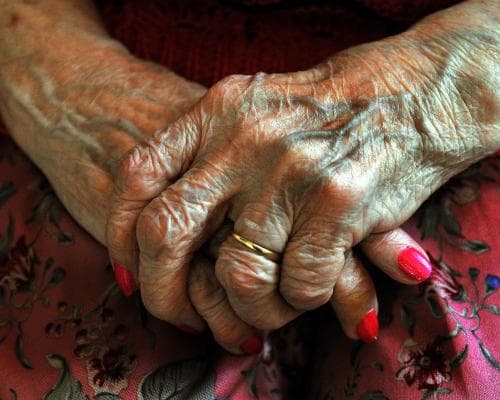
England just hit a historic milestone: average life expectancy of 80 years for men and nearly 84 for women. But that headline number hides a brutal truth. The gains are almost entirely a southern story. Londoners now live three years longer than people in the north-east. In Blackpool, a man dies a full decade earlier than his counterpart in Hart, Hampshire. Ten years. That's not a gap. That's a chasm.
The King's Fund data, released in 2025, shows that half of England's population—everyone living in the north-west, north-east, Yorkshire, the Humber, the West Midlands, and East Midlands—experienced virtually no rise in life expectancy over the past decade. Meanwhile, the south-east, south-west, and east of England all recorded gains. This isn't a blip. It's a decade-long divergence that accelerated after the pandemic. Covid hit the north hardest, but even as London bounced back, the north stayed flat.
The drivers are familiar but stubborn: heart disease, cancer, suicides, alcohol and drug misuse. Yet framing this as just a public health failure misses the deeper story. The longevity boom—the one that billionaires like Bryan Johnson and tech investors are pouring billions into—is a luxury good. It's being built for people who can afford continuous glucose monitors, personalized mRNA vaccines, and AI-driven health coaching. The north's stagnation is a warning: if longevity tech scales only for the wealthy, the divide will become a biological caste system.
Consider the numbers that matter. In the most deprived 30% of areas, life expectancy either fell or didn't improve. In the least deprived 30%, it rose by half a year. That's not random. Deprivation concentrates in the north: lower incomes, worse housing, less access to green space, and a healthcare system that's been stretched thin. The NHS is a safety net, but it's not designed to reverse a decade of systemic neglect. As Veena Raleigh of the King's Fund put it, "This isn't just a question of fixing the health service. It requires a cross-government approach."
Here's where the innovation angle sharpens. The same technologies that are extending life in labs—epigenetic clocks, senolytics, GLP-1 drugs—could be deployed to close this gap. But they're not. The market is chasing the wealthy, the worried well, the biohackers. The north represents a different kind of opportunity: a population-scale dataset where the variables are poverty, pollution, and policy failure. Startups that figure out how to deliver longevity interventions to deprived communities—through community health workers, digital twins, or low-cost diagnostics—will unlock a market that's both moral and massive.
The competitive context is brutal. The UK's life sciences sector is world-class, but it's concentrated in Cambridge, Oxford, and London's 'Golden Triangle'. The north has world-leading universities in Manchester, Newcastle, and Sheffield, yet the spinouts and venture capital flow south. The government's 'levelling up' agenda was supposed to reverse this, but the data shows it hasn't. The gap is growing, not shrinking. That's a failure of policy, but also a failure of imagination.
What this signals for the sector is a pivot. The next wave of longevity innovation won't be about adding years to the richest lives. It will be about adding life to the years of the poorest. That means rethinking distribution: not just better pills, but better public health infrastructure. Not just personalized medicine, but personalized prevention at scale. The billionaires funding the anti-aging revolution should pay attention. Because if they don't, the most valuable longevity data set of the next decade—the one that maps how deprivation accelerates aging—will belong to the public sector, not the private market.
The forward-looking close is this: the north-south divide is not a problem to be solved by the NHS alone. It's a signal that the longevity economy is broken. The next great biotech bet won't be a molecule. It will be a model for how to deliver the future of health to the people who need it most. The clock is ticking—unevenly.