Trump's 'Total Surrender' Ultimatum Is a Market Signal: The Iran Risk Premium Isn't Done Repricing
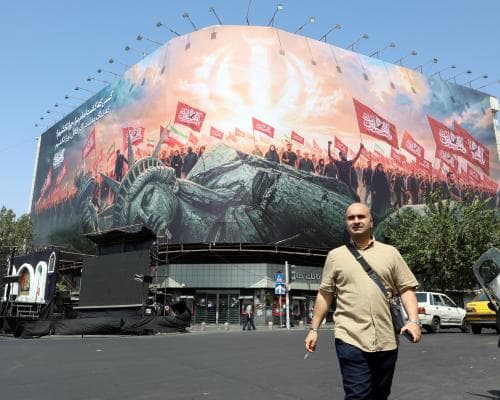
There's a moment in every geopolitical standoff when the market stops listening to the diplomats and starts listening to the generals. That moment arrived this week in Islamabad, where Pakistani intermediaries confirmed that no direct US-Iran talks are scheduled in the next 24 hours—contradicting Donald Trump's insistence that negotiations would begin Monday afternoon. The gap between Washington's rhetoric and on-the-ground reality isn't just a diplomatic wrinkle. For anyone managing serious capital, it's a pricing signal.
Trump's characterization of Iran as 'unbelievably duplicitous'—coupled with his vow that the US blockade will continue until 'a deal or total surrender'—has effectively removed the soft landing scenario from the market's probability matrix. That's not hyperbole; it's a shift in the put-call skew of geopolitical risk. When a US president uses the word 'surrender' in the context of a nuclear-armed adversary in waiting, the risk premium embedded in crude, gold, and even the dollar's safe-haven bid doesn't just stay elevated—it reprices higher with each passing hour of silence from Tehran.
Here's the mechanics that matter. Pakistan's army chief, Field Marshal Asim Munir, has been in direct contact with Vice President JD Vance and US special envoy Steve Witkoff, while simultaneously holding hours-long talks with Iran's foreign minister, Abbas Araghchi. That's the classic structure of a backchannel—and backchannels are the market's canary. When they exist, there's hope for de-escalation. When they're described as 'substantive' but produce no date, no venue, and no public commitment, the market hears one thing: the window for a negotiated exit is narrowing, not widening.
For the wealth set, this isn't about predicting the next headline. It's about understanding the asymmetry. The downside of a deal is a modest oil pullback and a gold dip—maybe 5-8%. The upside of a breakdown is a 20-30% spike in crude, a surge in shipping rates through the Strait of Hormuz, and a flight into gold that could push prices into uncharted territory. That asymmetry is exactly why sophisticated allocators have been adding to energy and defense positions since late February, and why the recent consolidation in gold hasn't shaken out the long-term holders.
The broader signal is more structural. The Trump administration's approach—maximum pressure with a binary outcome—is forcing the market to price a world where the US is willing to accept a period of chaos to achieve a strategic objective. That's a regime shift for anyone who built a portfolio on the assumption that geopolitical friction would remain manageable. It's not just Iran; it's the template. If the US is willing to blockade a major oil producer over a nuclear program, what does that say about Taiwan, Venezuela, or the Red Sea? The risk premium isn't just for this crisis—it's for the entire era of American assertiveness.
For the ultra-wealthy, the playbook isn't to chase headlines but to own the assets that benefit from volatility itself. That means infrastructure, commodities, and select private credit funds that thrive on dislocation. It also means recognizing that the 'peace dividend' trade—long global growth, short volatility—has been quietly unwinding for months. The fact that gold has held above key technical levels despite a stronger dollar tells you the bid is real. The fact that oil hasn't collapsed despite OPEC+ production increases tells you the geopolitical premium is sticky.
So where does this leave the wealthy investor? Not in cash, not in complacency, but in a deliberate barbell: defensive assets that pay you to wait, and asymmetric bets on the sectors that benefit from the US's new willingness to brandish its economic weapons. The next 48 hours will tell us whether the backchannel delivers a surprise—or whether the blockade rhetoric becomes operational reality. Either way, the market has already made its judgment: this isn't a blip, it's a regime. Position accordingly.