Trump's $1.8B Slush Fund Dies — and Wall Street's Quiet Victory Lap
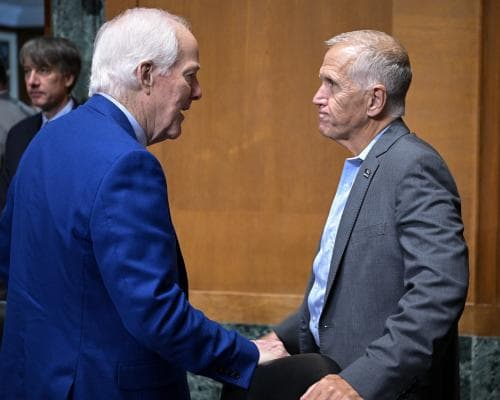
Here's a sentence you don't hear often in Washington: a $1.8 billion slush fund for the president's political allies is dead — and it died on paper, in writing, with a signature that binds. That's the quiet bombshell dropped late Sunday, when acting Attorney General Todd Blanche released a formal order terminating the so-called "anti-weaponization fund" that had been negotiated as part of a settlement in Donald Trump's lawsuit against the IRS over the leak of his tax returns. For two Republican senators — John Cornyn and Thom Tillis — that piece of paper was the price of their vote. And for anyone who manages money in this town, it was a reminder that even the most loyalist legal machinery can hit a wall when the optics get too expensive.
The deal itself was always a bit of a Frankenstein. As part of settling Trump's claim that the IRS improperly leaked his returns, the Justice Department agreed to set up a $1.8 billion fund, ostensibly to cover legal costs for Trump's allies who might face federal scrutiny. The same settlement also handed the president and his family an unusually broad shield from future tax audits — not just for the original leak, but indefinitely, unless the IRS could prove cause. A federal judge overseeing the case was blunt: the DOJ didn't even try to defend the government, and the whole thing smelled like a collusive effort to engineer a beneficial result for the president. That's not a good look for a department that's supposed to enforce the law, and it's an even worse look for a president who campaigned on draining the swamp.
Enter Cornyn and Tillis — two Republicans who've clashed with Trump more than most, and who suddenly found themselves holding the swing votes on the Senate Judiciary Committee. They weren't about to block Blanche's nomination outright, but they made it clear they'd hold the line unless the fund and the audit immunity were killed. And they did it in a way that matters: not with a handshake, not with a promise, but with a "legally enforceable document" released late Sunday. The document formally ends the fund and explicitly limits the audit settlement to the plaintiffs in the original case — meaning no blanket immunity for the first family. The senators were quick to claim victory, saying the DOJ had "issued a formal order terminating the anti-weaponization fund" and acknowledged the scope of the audit deal in binding writing.
Now, why should a wealth builder care? Because this is a rare moment where the machinery of checks and balances actually clicked — and it happened in a context that's deeply financial. The $1.8 billion figure isn't just a number; it's a pool of money that would have been spent on legal defense for political loyalists, effectively a private war chest funded by taxpayers. Institutional investors and market participants have been quietly watching this saga, because it's a stress test of how far executive power can stretch when it comes to spending and legal protection. If that fund had survived, it would have set a precedent that the DOJ could be weaponized not just for prosecutions, but for payouts. That's the kind of thing that makes bond traders nervous and equity strategists rethink their political risk models.
The audit immunity piece is arguably even more significant for the wealthy. Tax audits are the great equalizer — everyone from a mid-level hedge fund manager to a family office patriarch knows the IRS can come knocking. The idea that a president and his family could be effectively audit-proof, indefinitely, would have created a two-tier system of tax enforcement. It would have signaled that political power can buy procedural protection, which is precisely the kind of signal that undermines confidence in the fairness of the system. The fact that Cornyn and Tillis forced Blanche to put limits in writing is a reminder that even in a polarized era, there are still procedural guardrails that can be enforced — if senators have the spine to use them.
So what does this mean going forward? Blanche's nomination now moves to a full Senate vote, and with the holdouts satisfied, it's likely to pass. But the real story isn't the confirmation — it's the precedent. The anti-weaponization fund is dead, but the idea behind it isn't. Political legal-defense funds are becoming a standard tool in Washington, and the wealthy are taking note. For family offices and institutional allocators, the lesson is simple: political risk isn't just about elections and policy — it's about the legal infrastructure that can be built around a president. The fact that two Republicans killed a $1.8 billion slush fund is a bullish signal for those who believe in institutional guardrails. It says the system can still self-correct, even when the pressure comes from within the party. For now, the markets can breathe easy — but the precedent of audit immunity, even if limited, is a reminder that the rules can bend. The question is how far, and who gets to bend them next.
More in MONEY

Trump's 'Total Surrender' Ultimatum Is a Market Signal: The Iran Risk Premium Isn't Done Repricing
The Missing Chapter: How 'Generationally Wealthy' Operatives Became the Democrats' Untouchable Asset Class

London Broncos' 20-Win Streak Can't Buy a Super League Spot: The New Math of Rugby's Richest Prize