The 30-Minute Halftime: How FIFA Turned a Football Pause Into a Luxury Spectacle
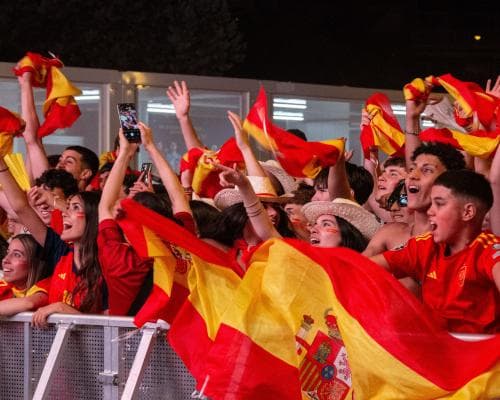
The final whistle blows. The crowd exhales. But instead of the usual fifteen-minute scramble for a drink and a bathroom break, the stadium holds its breath for thirty. That’s right: FIFA has confirmed that for the 2026 World Cup final, halftime will stretch to a lavish half-hour—long enough for a Super Bowl-style medley from Shakira, Justin Bieber, and Madonna, and long enough for the discerning spectator to reconsider what, exactly, they’re doing with that extra quarter of an hour.
For the rest of the world, this is a logistical quirk. For the readers of *The Curated Life*, it’s an invitation. Thirty minutes is an eternity in live sport—a temporal luxury that demands a companion as refined as the occasion. This is not a pause for a second tub of popcorn. This is a pause to glance at your wrist and appreciate the engineering that measures such a moment. Because if you’re in the stands—or, more likely, the private suite—watching Spain dismantle France with the kind of possession play that feels like choreography, you’re not checking your phone. You’re checking your Patek Philippe Grand Complications, its perpetual calendar ticking through the half-time show as if it, too, were waiting for the second half.
Let’s talk about that half-time show. The names are big: Shakira, Bieber, Madonna—artists who command stages the size of small countries. But here’s the twist: they might go rogue. Word has it they could play experimental unreleased tracks instead of the hits. For a collector, that’s the equivalent of a watchmaker unveiling a prototype at a private dinner—an unreleased caliber, a new tourbillon layout, a dial that catches the light in a way no production model ever will. The risk is part of the thrill. And thirty minutes gives you time to savor it, to debate the audacity of a pop star abandoning “Hips Don’t Lie” for a dissonant synth loop, all while the second hand sweeps across a Grand Seiko Spring Drive, its glide so smooth it feels like the watch is holding its breath too.
Then there’s the game itself. Spain’s midfield—Fabián Ruiz and Rodri—played with a mesmeric precision that made France look listless. Pedro Porro, scoring the second goal, has become an unlikely hero. But for the watch collector, the real story is timing. Spain’s rhythm was metronomic, their passes as deliberate as the beat of a regulator escapement. The final against either England or Argentina—a possibility that has Philippe Auclair claiming the world is backing England for the first time—will be a clash of tempos. England’s counter-attacks versus Spain’s possession. It’s a horological paradox: the watch that times the match must be both a chronograph for sprints and a dress piece for the long, patient build-up.
The market for such moments is clear. Limited-edition pieces tied to major sporting events—like the Audemars Piguet Royal Oak Offshore for the America’s Cup or the Hublot Big Bang for the World Cup—already command premiums. But the 30-minute halftime creates a new niche: the “interval complication.” Imagine a watch with a subdial that counts down from 30:00, its hand sweeping through a miniature pitch, the final ten minutes marked in red. Or a minute repeater that chimes the half-time show’s opening riff. This is not fantasy; this is where luxury meets live entertainment. The ultra-wealthy don’t just watch the game—they curate their experience of it. And a watch that acknowledges the pause is the ultimate conversation starter.
What does this signal about luxury taste in 2026? It says that the old rules of time—that a match is 90 minutes, that halftime is a blur—are obsolete. The new elite want to stretch moments, to savor them, to own them. A 30-minute halftime is a gift: it forces you to slow down, to appreciate the craftsmanship of a show or the silence of a stadium settling. The watch on your wrist becomes a talisman of that appreciation. Whether it’s a vintage Heuer Carrera that once timed a Grand Prix or a modern Richard Mille that weighs less than the popcorn you’re not eating, the point is the same: time is the ultimate luxury, and now there’s more of it.
Looking ahead, expect watchmakers to lean into this. Boutique collaborations with FIFA, limited runs of 2,026 pieces, dials that map the stadium’s floodlights. The halftime show’s experimental setlist might even inspire a watch that plays a melody on demand—a musical complication for the post-match dinner. And as Spain prepares for a potential fourth consecutive major tournament final against England—following the women’s World Cup in 2023 and the men’s Euros in 2024—the narrative writes itself. This is a golden era of football, and its timepieces should be golden too. So set your watch to thirty minutes. The show—and the second half—is about to begin.