The Datacentre Capital of the Globe: A Minister’s Groundwater Gambit
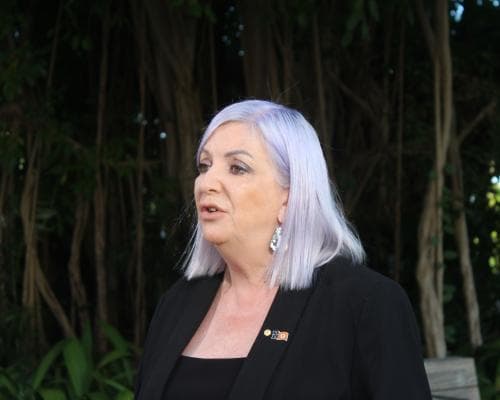
The Northern Territory minister for trade and business, Robyn Cahill, stood before a podium in Darwin last week and delivered a proposition so audacious it could have been lifted from a sci-fi novel. She argued that the Territory’s vast subterranean water reserves—if left untouched during a heavy wet season—might actually tip the Earth off its axis, causing the magnetic poles to flip. The solution? Use more groundwater. Preferably for datacentres.
Cahill’s remarks were made in service of a grander vision: positioning the Northern Territory as “the datacentre capital of the globe.” For the crowd of investors, developers, and tech futurists gathered in the tropical humidity, it was a pitch that blurred the line between frontier boosterism and geological fantasy. But for the rest of us—especially those of us who collect rare-earth minerals or hedge against geomagnetic risk—it was a delightful, if alarming, piece of luxury-world theater.
Let’s be clear: the Earth’s magnetic poles are not, in fact, at risk of flipping because of a few extra inches of rain in the Top End. The most recent major geomagnetic reversal, the Brunhes-Matuyama event, occurred some 780,000 years ago and took roughly 7,000 years to complete. Dr. Dylan Irvine, a groundwater hydrology expert at Charles Darwin University, told ABC Darwin that the idea is scientifically baseless. “We’re not at risk of the poles flipping … I’m not concerned about the Earth tipping or flipping of poles,” he said, with the kind of understated calm that only a hydrologist can muster.
Yet the episode reveals something fascinating about the intersection of luxury, technology, and resource scarcity. The datacentre industry—which powers everything from crypto mining to AI training to high-frequency trading—is notoriously thirsty. A single hyperscale facility can consume millions of litres of water per day for cooling. In arid regions like Arizona or the Middle East, water rights have become a new form of currency, traded among the ultra-wealthy with the same intensity as blue-chip art or vintage Bordeaux. The Northern Territory, with its monsoon-fed aquifers, offers a rare bounty: a place where water is abundant enough to cool the servers of a connected world.
But the minister’s claim also underscores a deeper tension. For the ultra-high-net-worth individuals and family offices now scouting the Territory for datacentre investments, the allure is not just the water—it’s the land, the tax incentives, and the promise of sovereign data sovereignty. Darwin sits at the crossroads of Southeast Asia and the Pacific, a strategic node for undersea cables and satellite ground stations. The idea that the region’s water supply could be weaponized—or, in this case, mythologized—into a geopolitical selling point is precisely the kind of narrative that resonates in boardrooms from Singapore to San Francisco.
What does this signal about luxury taste in the 2020s? It signals that the truly discerning collector no longer contents themselves with a stable of vintage Ferraris or a private island in the Maldives. The new frontier is infrastructure: datacentres, fibre-optic networks, and the natural resources that sustain them. Owning a piece of the digital backbone is the ultimate status symbol—a quiet, humming monument to the fact that you can afford to play the long game. And if that game occasionally involves a minister invoking the Earth’s magnetic poles to justify a water permit, well, that’s just part of the charm.
As for the poles? They’ll stay put. But the conversation around groundwater, datacentres, and the Northern Territory’s place in the global luxury ecosystem is just beginning. Watch this space—preferably from a private jet, circling above Darwin’s wet-season floodplains, where the water table runs deep and the stories run even deeper.