The Nolan Pilgrimage: Where Cinema’s Elite Book Time Itself
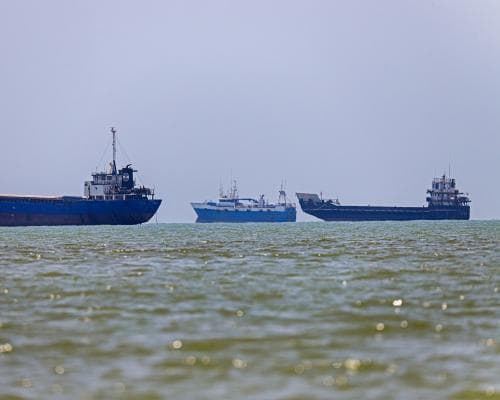
The call came at midnight from a hedge fund principal in Geneva. He wanted to stand exactly where the Protagonist stood — on the deck of the *Freeport*, in the middle of the Indian Ocean, at the precise moment the world inverted. Not a set. Not a replica. The actual steel, salt, and silence. He had already chartered a superyacht. He just needed the coordinates.
This is the new frontier of luxury travel: the cinematic pilgrimage. Not to a premiere, not to a red carpet, but to the raw geography of a director’s vision. And for a certain breed of ultra-high-net-worth individual, no filmmaker inspires this devotion quite like Christopher Nolan.
The phenomenon began quietly after *Dunkirk*, when a private-jet broker noticed a spike in requests for flights to the beaches of northern France — not for the war memorials, but for the specific stretch of sand where Nolan’s cameras had captured the endless wait. It accelerated with *Tenet*, whose seven-country shoot created a kind of treasure map for the wealthy: the Oslo Opera House for the inverted car chase, the abandoned city of Victorville, California, for the final battle, the Amalfi Coast for that vertiginous yacht shot. Suddenly, a Nolan location was not a film set. It was a pilgrimage site.
Now, with *Oppenheimer* having cemented his status as the architect of time itself, the demand has become a discreet industry. The most exclusive travel designers — the ones who never advertise — report being asked to craft itineraries that are less about luxury and more about *proximity to genius*. One client wanted to spend a week in Los Alamos, New Mexico, not in a hotel, but in a restored adobe house where the Manhattan Project scientists once lived. Another requested a private tour of the California Institute of Technology, where Nolan spent months researching quantum mechanics, followed by dinner with a physicist who consulted on the film. The price for such access? Easily six figures. The real cost is the network.
What makes these journeys so rare is that Nolan himself guards his process like a state secret. He gives no location tours. He does not license “Nolan Experiences.” There is no official map. The coordinates come from former crew members, from location scouts who now work in private aviation, from the quiet sharing of NDA-bound photographs. For the ultra-wealthy, this secrecy is the draw. They are not buying a vacation. They are buying entry into a closed world — the world of a man who bends time for a living.
The experience itself is almost monastic. One client described standing on a frozen lake in the Swiss Alps, where a scene from *Tenet* was filmed, at 4 a.m., in complete silence, with only a guide who had been the film’s second assistant director. No champagne. No Instagram. Just the cold, the dark, and the knowledge that Nolan had stood there, too, waiting for the light. “It was the most expensive hour of my life,” the client later said. “And I would do it again tomorrow.”
This trend signals a deeper shift in luxury travel. The old markers — the five-star suite, the Michelin-starred meal, the private villa — are no longer enough. The new currency is *origin*. The wealthy no longer want to see where a film was shot; they want to feel why it was shot there. They want the intellectual friction. They want to stand in a place that forced a director to solve a problem, to invent a new camera rig, to wait for a specific cloud. It is travel as archaeology of the creative mind.
Where do they go next? The whispers are already circling Nolan’s next project — a rumored adaptation of a dense, non-linear novel that will require locations in Southeast Asia and the Arctic Circle. The private-jet brokers are already on standby. The superyacht charter companies are studying tide charts. And in a dozen hushed conversations, the coordinates are being exchanged. Because for the true Nolan pilgrim, the journey is never about the destination. It is about being there *before* the rest of the world knows to look.