Fendi’s Roman Empire: How Maria Grazia Chiuri Is Rewriting Fashion’s Place in Culture
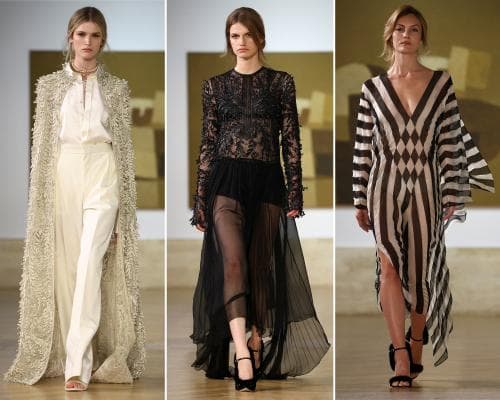
A cape that sweeps the floor like a Vatican procession. Black lace so sheer it dares the light. And a 95-year-old Fendi sister, Paola, still calling Rome “our great love.” This was the scene at Maria Grazia Chiuri’s first haute couture show for Fendi—a homecoming that felt less like a fashion week slot and more like a state dinner. But Chiuri had a bigger agenda than silk and embroidery. She wanted to force Italy to answer a question the ultra-wealthy have always understood: Is fashion art? Or just very expensive commerce?
Chiuri is not shy about wielding her platform. At Dior, she turned T-shirts into feminist manifestos and brought local writers to global runways. Now, she’s using Fendi’s Roman roots to challenge her own country’s cultural blind spot. Italy takes fashion seriously as a business—it’s a multibillion-euro engine. But as an art form? The museums don’t agree. Chiuri pointed out that London has the V&A, Paris has the Musée des Arts Décoratifs, New York has the Met’s Costume Institute. Italy has… nothing permanent. So she created her own. She bookended her catwalk with two exhibitions: a revival of Karl Lagerfeld’s 1985 Fendi show at the Galleria Nazionale d’Arte Moderna e Contemporanea, and a second retrospective of the house’s haute couture since 2015. She remembered that 1985 show as life-changing—and controversial. Now she’s betting that the same city that criticized it will finally embrace it.
The collection itself was a masterclass in power dressing with a Roman accent. Chiuri said she loves capes “probably because in Rome, we have the Vatican.” That full-length ivory caped coat, embroidered silk dragging behind it, captured the grandeur of the Eternal City. But it also whispered red carpet—a different kind of power corridor. The silhouette was loose, suspended from the shoulder, a deliberate break from the corseted “New Look” she left at Dior. Chiuri cited kimono-inspired draping, shapes that wrap the body rather than compress it. Real fur appeared too, but only upcycled from Fendi’s own archive. “Fur is durable,” she said. “We should use it up.” It’s a quiet statement in an industry that has all but banished the material.
For the collector who already owns a Birkin and a Patek, this is the next frontier: owning a piece of a cultural argument. Chiuri is not just selling clothes; she’s selling a thesis. She’s saying that a couture gown belongs in a museum as much as a Caravaggio. That the five Fendi sisters—who took over a fur and leather boutique in the 1940s and turned it into a global empire—deserve a gallery wall. That Rome, with its stories on every corner, should be the permanent home of fashion’s highest craft. This is wealth as patronage, not just consumption. It’s the difference between buying a dress and buying into a legacy.
What comes next is the real story. Chiuri has planted a flag. If Italy’s cultural institutions fail to respond, she has shown that a luxury house can build its own museum—one exhibition, one runway, one ivory cape at a time. For those who can afford a front-row seat, the invitation is clear: You’re not just funding a collection. You’re funding a movement to redefine what belongs in the halls of power. And in Rome, that’s always been the point.
The Experience
Book a private appointment at Fendi’s Palazzo della Civiltà Italiana to view the archival Lagerfeld pieces and preview the spring couture collection by appointment only.