The New Wagarchy: How Football’s Noughties Glamour Became the Ultimate Status Signal for a Generation
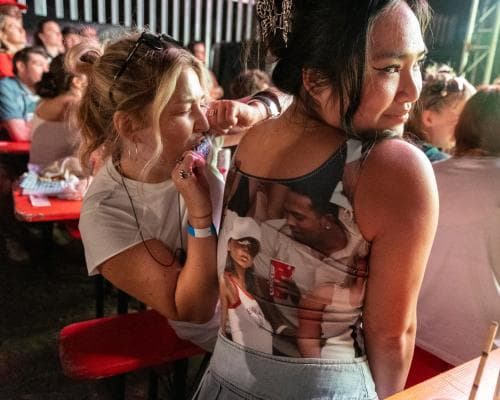
The bass wasn’t coming from the DJ booth. On a Saturday night in Peckham, the roar was for a penalty shootout—but the real obsession was what everyone was wearing. At The Carpet Shop, a sold-out crowd of England fans had gathered for the 2026 World Cup quarter-final, and the energy in the room was split between the big screen and the outfits. This wasn’t your father’s match-day pub. This was a runway disguised as a fan zone.
Take Mattia Guarnera and Luke Grandon, both 27. They’re “massive” football fans, but their game-day prep has nothing to do with scarves or replica kits from the megastore. Guarnera wore a white polo from Lyle & Scott’s limited-edition World Cup collaboration with British artist Reuben Dangoor—a piece so rare it’s practically a collector’s item. Grandon’s jersey was even more exclusive: a custom spray-painted three lions shirt designed by Guarnera himself, featuring a woman’s face. This is football fashion as bespoke art. The numbers? Limited runs, sold-out drops, and prices that climb faster than a counterattack. For the ultra-wealthy, scarcity is the only score that matters.
But the real story here isn’t just the shirts. It’s the return of noughties Wag culture—the infamous 2006 Baden-Baden aesthetic of Victoria Beckham’s sunglasses, Coleen Rooney’s blow-dry, and tiny dogs in oversized handbags. Priya Patel, 31, wore an authentic vintage Michael Owen jersey she’d cropped herself. “I love it,” she said. “The little dogs in the big bags, the fake tan—this is nostalgic.” And she’s not alone. Sophie Whilby, 27, doesn’t even follow football; she tunes in for “the atmosphere and the built environment.” She wore an England jersey from FreePLTN, a Palestinian streetwear brand that sells out in hours. For this crowd, the match is a backdrop. The real event is the cultural signal you send by what you wear.
What does this tell us about wealth and taste? That exclusivity has shifted from the boardroom to the terrace. The new status symbol isn’t a box seat—it’s a vintage shirt that no one else has, paired with a story. Martyna Kaczynska and Indiana Meager, both 19, were toddlers during the 2006 World Cup, yet they’re obsessed with the Wags of that era. “I saw a photo of Declan Rice’s girlfriend on Instagram, and she looked amazing,” Kaczynska said. “Sometimes women get laughed at for being big supporters,” Meager added. “It’s nice to have a part that’s cool, that is for the women.” They’re rewriting the rules of fandom: it’s no longer about knowing the offside rule. It’s about knowing which artist collab dropped last week.
This is the luxury market’s next frontier. Forget diamond-studded watches—the true connoisseur now hunts for an authentic 2002 England top or a limited-run Palestinian streetwear jersey. The craftsmanship lies in the hunt, the heritage in the nostalgia, and the price in the story. Brands like Lyle & Scott, FreePLTN, and independent artists are the new ateliers. The courtyard at The Carpet Shop felt like a portal to 2006: selfies with pocket-sized cameras, blow-dried hair, and the kind of effortless cool that money can’t buy—unless you know where to look.
So what’s next? The 20-year trend cycle has landed on the noughties, and the ultra-wealthy are already ahead of it. The Wags of 2026—Tolami Benson and others—are the new influencers, and their style is being reverse-engineered by designers and collectors alike. For those who understand that status is a language, the message is clear: the most exclusive accessory you can own this season isn’t a Birkin. It’s a story about where you found your shirt, and who wore it before you.
The Experience
To curate your own match-day wardrobe from the world’s rarest vintage and artist-collab jerseys, book a private consultation with our luxury streetwear concierge—access drops before they sell out.