The Tesla Manslaughter Charge That Exposes Autonomy's Achilles' Heel
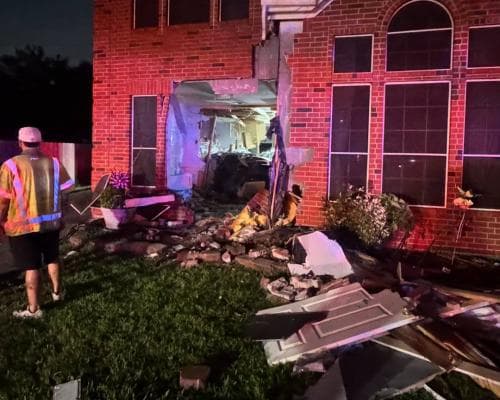
On a warm June evening in Katy, Texas, a 76-year-old woman named Martha Avila was pinned against the wall of her own home by a Tesla Model 3 traveling at high speed. The driver, Michael Butler, survived. He told deputies he was using the car's self-driving technology. Now he faces a manslaughter charge—not Tesla, not its software, not Elon Musk. That charge, filed by Harris County Sheriff Ed Gonzalez, is a watershed moment for the autonomous-vehicle industry. It forces a brutal question onto the table: When a machine is in control, who goes to jail?
Butler's arrest is the first of its kind in the United States for a crash involving a Tesla operating in self-driving mode. The case has already drawn federal investigators and a wrongful death lawsuit from Avila's family. But the legal theory here is old-school: Texas law defines manslaughter as recklessly causing death. Prosecutors are arguing that Butler—not the car—was reckless. The twist? Tesla's own AI VP, Ashok Elluswamy, posted on X that the driver "manually overrode self-driving by pressing the accelerator all the way to 100%." Musk amplified the message: "This was a high speed crash!" The implication is clear: the human intervened, and the human is responsible.
This is where the technology narrative gets uncomfortable. Tesla's Full Self-Driving (FSD) suite is not a true autonomous system—it's a driver-assist feature that requires constant human supervision. But the marketing, the name, and Musk's own bravado have blurred that line for years. Drivers treat it as a chauffeur. They take hands off the wheel, check their phones, or, as Butler allegedly did, override the system with a full-throttle stomp. The semiconductor stack powering FSD—a custom chip designed by Tesla's own silicon team—is brilliant at perception and decision-making. It can't, however, stop a driver from flooring the accelerator. That's a human problem, not a hardware one.
The capital flowing into autonomy is staggering. Tesla's market cap alone sits above $500 billion, built partly on the promise of a robotaxi future. Waymo, Cruise, and a dozen Chinese startups have raised tens of billions. But the liability question is the uncracked nut. If a Waymo van hits a pedestrian, the company's insurance pays. If a Tesla in FSD mode kills someone, who pays? The driver? The automaker? The chip designer? This case will set a precedent. It tells investors that the human-machine handoff is the most dangerous interface in mobility. And it tells regulators that the current framework—where drivers are legally responsible but technologically disempowered—is a ticking bomb.
The competitive context is equally fraught. Tesla's approach—selling FSD as a $12,000 option and gathering real-world data from millions of cars—is radically different from the geofenced, lidar-heavy strategies of Waymo or Cruise. Those companies accept liability because they control the entire operational domain. Tesla offloads risk to the driver. That model works until a crash like this one makes national headlines. The market is now watching whether Tesla will be forced to accept more liability, or whether regulators will mandate driver-monitoring systems that make it impossible to override autonomy. Either outcome reshapes the semiconductor demand: more sensors, more compute, more safety-critical silicon.
What this signals for the sector is a sobering pivot. For years, the autonomy narrative has been about technology—better sensors, faster chips, smarter algorithms. This case rewrites the story as a human factors parable. The next frontier isn't just building a car that can drive itself. It's building a system that can prevent a human from sabotaging it. That means new silicon for driver monitoring, new software for override detection, and new legal frameworks that assign liability before the crash, not after. The trillion-dollar bet on autonomy depends on solving this, not just the driving.
Look ahead five years. Every new EV will have an interior camera watching your eyes, your hands, your foot pressure. The chip inside will run a real-time model of your attention, and if you override the autonomy, the car will log it, report it, and possibly refuse to engage. That future is being born in a Harris County jail cell. Michael Butler's case is the canary. The coal mine is the entire autonomous-vehicle industry. And the question for every billionaire, every engineer, every investor is simple: Are you betting on the machine, or on the human? The answer will determine who wins—and who goes to prison.