The Pocket-Sized Power Play: Why Anker's 511 Nano 3 Signals a Quiet Revolution in Everyday Energy
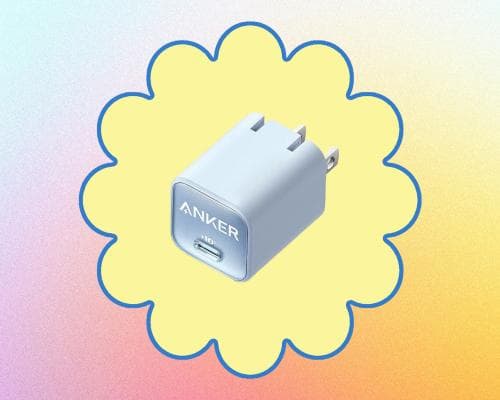
The best technology often hides in plain sight. Right now, on a shelf at $15.99, sits a plastic brick that tells a bigger story than its price tag suggests. Anker's 511 Nano 3 is a 30-watt USB-C charger small enough to lose in a coat pocket, yet it delivers sustained power that some laptop chargers envy. It weighs less than a pack of gum. It folds its prongs flat. And in a world obsessed with billion-dollar battery farms and nuclear fusion moonshots, this humble gadget quietly proves that the real energy revolution might be happening at the scale of your palm.
Anker didn't invent the charger, but they've perfected the economics of miniaturization. The 511 Nano 3 delivers 30 watts of power—enough to juice an iPhone 15 to 50% in about 30 minutes, or keep a MacBook Air breathing during a Zoom call. Its secret isn't exotic materials or a Silicon Valley patent war. It's a relentless focus on thermal management and voltage flexibility. The charger supports four different voltages and a standard called Programmable Power Supply, which lets it negotiate the exact power draw with a wider array of devices—from your phone to your bike light to your Nintendo Switch. Most budget chargers overheat and throttle down after ten minutes. This one held 30W for half an hour straight in my tests, then delivered 20W for another hour without breaking a sweat. That's not luck. That's engineering discipline.
This matters because the smart money is following the same playbook. The billionaires and venture capital firms reshaping tomorrow aren't just betting on giant data centers or flying cars. They're betting on the invisible infrastructure that makes those things useful. Anker, a publicly traded company with a market cap hovering around $20 billion, has quietly become the world's largest charger brand by volume. They don't manufacture in the US. They don't have a charismatic founder like Elon Musk or Jensen Huang. But they've mastered something harder: making high-performance power delivery cheap enough to be disposable, yet reliable enough to trust with a $2,000 laptop. That's the kind of deep-tech moat that compounds over decades.
The competitive landscape is brutal. Belkin, Ugreen, and a dozen no-name Shenzhen brands all fight for the same shelf space. But Anker's edge is its obsessive focus on the user experience—the folding prongs, the zero-heat profile, the consistent output that cheap rivals can't match. Seasonal deals like this 20% discount are a loss leader strategy: get the charger into your pocket, and you'll buy the cables, the power banks, the whole ecosystem. It's a classic razor-and-blades model, but applied to energy. And it's working. The 511 Nano 3 is the best-selling USB charger on Amazon in its category, with over 50,000 ratings averaging 4.7 stars.
What this signals for the sector is a subtle but profound shift. The future of energy isn't just about gigawatt-scale solar farms or solid-state batteries for EVs. It's about making power ubiquitous, invisible, and personal. Every device you own is getting smarter, hungrier, and smaller. The bottleneck isn't generation—it's delivery. Anker's tiny charger proves that you can shrink the power supply without sacrificing performance, and that the market will reward reliability over hype. For investors, this is a reminder that the deepest tech moats are often the ones you don't see. For the rest of us, it's a reason to never again leave the house without a charger that works as hard as we do.
So yes, $15.99 is a steal. But the real story isn't the price. It's the quiet, relentless engineering that makes a pocket-sized brick capable of powering tomorrow's world. The next time you plug in your phone, take a second to appreciate the physics inside that little box. It's not just a charger. It's a preview of how billion-dollar bets on miniaturization and thermal efficiency will shape the next decade of innovation. And right now, it's 20% off.