From a Wine Bar to Wembley: The Goalkeeper Who Leapt from the Welsh League to an FA Cup Semi-Final
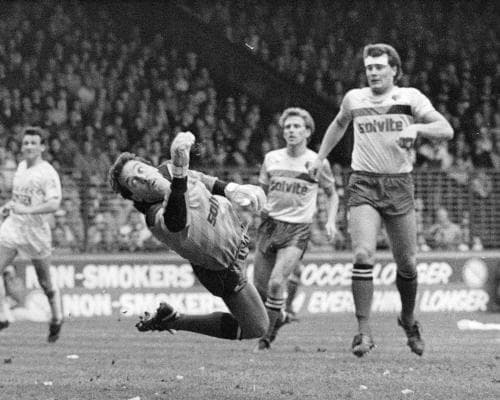
Imagine this: you are pouring a customer a glass of Chablis in your own wine bar, the evening rush a distant hum, when the phone rings. It is your father, the chief executive of a First Division club, and he has a question that sounds like a prank: can you play in the FA Cup semi-final on Saturday? That is precisely what happened to Gary Plumley in 1987, a goalkeeper who had spent a decade as a Newport County stalwart, only to find himself swapping a corkscrew for goalkeeper gloves at the most storied stage in English football. His leap from the Welsh League to the semi-final at Villa Park is not just a trivia answer—it is a parable of football's beautiful unpredictability, and a reminder that class, in every sense, can surface when you least expect it.
Plumley's career had been a steady, respectable arc: nearly 200 appearances for Newport County over four separate spells, a decade of service that earned him a place in the club's folklore. But by 1987, he had effectively retired, trading the penalty box for a wine bar in the Welsh valleys, with only occasional appearances for Ebbw Vale in the Welsh League to keep the competitive itch alive. The Welsh League, for the uninitiated, is a semi-professional circuit where crowds are measured in hundreds, and the dressing rooms smell of liniment and damp. It is a world away from the floodlights and terraces of the FA Cup, where the semi-final is a national event, broadcast to millions and played on hallowed turf.
The story hinges on a remarkable confluence of circumstance and nepotism, in the best sense of the word. Watford, then a top-flight club under the charismatic Graham Taylor, found themselves in a goalkeeping crisis of biblical proportions: first-choice Tony Coton had broken his thumb, and his deputy Steve Sherwood had fractured a finger in training. With no fit senior keeper, the club scrambled for options. Enter Eddie Plumley, Gary's father, who happened to be Watford's chief executive. A phone call was made, a contract signed, and Gary—who had not played at a professional level in years—was thrust into the starting XI for the semi-final against Tottenham Hotspur at Villa Park. The Guardian's archive describes the scene: a 32-year-old wine bar proprietor, kitted out in Watford colours, facing the likes of Glenn Hoddle and Chris Waddle, with a place in the FA Cup final at stake.
What followed was not a fairy-tale ending in the conventional sense. Watford lost 4-1, and by all accounts, Plumley did not cover himself in glory—reports suggest he was at fault for at least one goal, perhaps more. But the beauty of the story lies not in the result, but in the sheer audacity of the leap. Plumley's reward was a cheque for expenses, which he used to buy a fridge—a domestic appliance that became a family legend, affectionately known as 'the Watford Fridge'. In an interview with The Guardian, Plumley recalled the surreal experience with a mixture of humour and humility, noting that he had not trained with a professional squad in years, and that the pace of the game was a shock to his system. Yet he also admitted that he would not have traded the experience for anything, and that the fridge remains a cherished memento of his brief, glorious return to the big time.
For collectors and connoisseurs of football ephemera, Plumley's story is a gem—a reminder that the sport's most valuable artefacts are not always trophies or medals, but the improbable human moments that defy logic. In the same week that Erling and Alf-Inge Haaland made headlines for purchasing the only surviving copy of Snorri Sturluson's medieval history of Norwegian kings and donating it to their hometown, Plumley's tale offers a more modest, but equally resonant, form of heritage: the story of a man who went from pouring pints to facing a Wembley-bound Spurs side, all because his father knew a thing or two about crisis management. It is a story that could only happen in football, where the gap between the Welsh League and the FA Cup is not just a matter of leagues, but of worlds—and where a fridge can become a family heirloom.
What does this tell us about luxury and taste? In the world of the ultra-wealthy, we often chase exclusivity and rarity—the limited-edition watch, the private island, the first-edition folio. But true luxury, as Plumley's story reminds us, is the ability to transcend one's circumstances, to be plucked from obscurity and placed on a grand stage, if only for ninety minutes. It is the thrill of the improbable, the beauty of a second act, and the quiet satisfaction of a well-earned fridge. For the modern collector, the lesson is this: the most valuable possessions are not always the most expensive, but those with the richest stories. And in a world where footballers now buy medieval manuscripts and rare books, Plumley's fridge stands as a humble counterpoint—a relic of a time when the game was less about millions and more about moments.
Looking forward, the story of Gary Plumley is a reminder that football's romance is not confined to the elite. As the Champions League qualifiers begin and the world's best players leap from domestic leagues to continental stages, we should spare a thought for the journeymen, the wine bar keepers, and the fathers who make impossible calls. The leap from the Welsh League to an FA Cup semi-final may never be repeated—the game has changed too much, the stakes too high—but the memory of that afternoon at Villa Park, and the fridge that followed, will endure. For those of us who curate our lives with care, the lesson is clear: the best stories are often the ones you never saw coming, and the best investments are the ones that make you smile, decades later, when you open the freezer door.