Australia's $20B Airport Bet: Why Western Sydney International Is the Ultimate Infrastructure Play
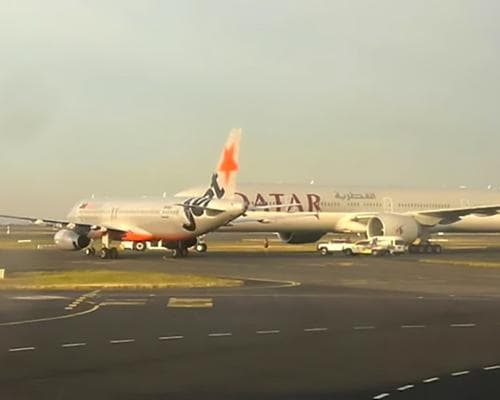
If you've been stuck on a tarmac at Sydney Airport recently, you know the chaos. Flights cancelled, near-misses in the sky, and air traffic controllers stretched thinner than a leveraged balance sheet. But here's the plot twist: the city is about to double its aviation capacity with a brand-new airport—and that's not just good news for frustrated travellers. It's a wealth event in disguise.
Western Sydney International Airport opens to passengers in October, and New South Wales Premier Chris Minns is cautiously optimistic. 'We've got another airport opening soon, which will massively increase capacity in Sydney,' he told ABC's Afternoon Briefing. 'We are about to effectively double capacity soon.' That's not hyperbole. This is the largest public infrastructure project in the state's history, and it's arriving at a moment when the existing airport is choking on its own success.
The numbers tell the story. Sydney Airport handles around 42 million passengers a year—near its operational ceiling. Western Sydney International is designed to handle 10 million passengers annually in its first phase, with a runway long enough to accommodate the Airbus A380, the world's largest passenger jet. By 2060, the airport is expected to serve 80 million passengers a year. That's not just an airport; that's an economic engine. For investors, it's a signal: land values in Western Sydney are about to get a serious repricing.
The immediate crisis, though, is air traffic control. The weekend's cancellations were blamed on staff shortages, and Minns admitted he didn't realise the severity until two aircraft nearly collided. 'We will need to skill up and recruit a whole bunch of air traffic controllers to increase capacity,' he said. That's a bottleneck that could delay the airport's full potential—and a reminder that even the boldest infrastructure bets can stumble on human capital. For the wealthy watching this space, the play isn't just in airline stocks; it's in the logistics hubs, the commercial real estate, and the skilled-labour pipeline that will determine whether this airport delivers its promised returns.
But let's zoom out. This is a rare case of government-led infrastructure that could actually move the needle on wealth creation. Unlike toll roads or private equity-backed ports, this airport is a public asset with a clear mandate: ease congestion, boost the economy, and make life 'a lot easier for Sydney-based travellers,' as Minns put it. The ripple effects are massive. Western Sydney has long been the city's affordable frontier; now it's becoming a logistics and employment corridor. Property prices in areas like Badgerys Creek and Luddenham have already started to climb, and savvy investors are eyeing the industrial land near the airport's freight precinct.
There's also a geopolitical angle. Australia is positioning itself as a critical node in Asia-Pacific supply chains, and a second major airport in Sydney strengthens that case. For family offices and institutional capital, this is a long-game play. The airport's success will hinge on whether the government can fix the air traffic controller shortage—a labour issue that could be as consequential as the concrete and steel. If they pull it off, the airport could become a template for other cash-strapped states looking to build their way out of congestion.
The market's reaction so far has been muted—infrastructure stocks haven't surged, and there's no immediate IPO to chase. But that's the point. This isn't a trade; it's an allocation. For the ultra-wealthy, the move is to look at the secondary effects: the housing supply around the airport, the logistics companies that will service it, and the aviation training academies that will need to ramp up. The Premier's admission that the state needs to 'skill up and recruit' is a direct call to action for anyone in the education-to-employment pipeline.
As October approaches, the real test will be operational. Can Sydney handle the transition from one crowded airport to two? The chaos of the past weekend is a warning shot. But for those with capital to deploy, Western Sydney International isn't just a construction project—it's a generational shift in how Australia's largest city moves people, goods, and money. The wealthy who position early will be the ones laughing all the way to the gate.