The Ultimate Privilege: Why the Ultra-Wealthy Are Paying to Endure a Victorian Workhouse
Imagine this: you step into a stone cell. The air is thick with the sound of someone coughing—a wet, desperate hack. You are handed a coarse nightshirt, one size fits none. The bathwater ahead of you has already been used twice. This is not a nightmare. It is the hottest ticket in Yorkshire this season.
The Ripon Workhouse Museum, one of Britain’s most complete surviving Victorian workhouses, has just reopened after a £2.8 million redevelopment. And if you think this is just another heritage site for school groups and history buffs, think again. For the ultra-wealthy, this is the rarest of luxuries: a chance to experience the one thing money cannot buy—genuine hardship.
The numbers tell part of the story. The National Lottery heritage fund backed the restoration. The roof was leaking. The wiring was, in the director’s words, “like spaghetti junction.” The building was technically unsafe. But the real investment was not in dry rot repair. It was in immersion. Curator Laura Allan has designed an experience so visceral that visitors are asked, upon entry, a single question: “Could you survive the Victorian workhouse?”
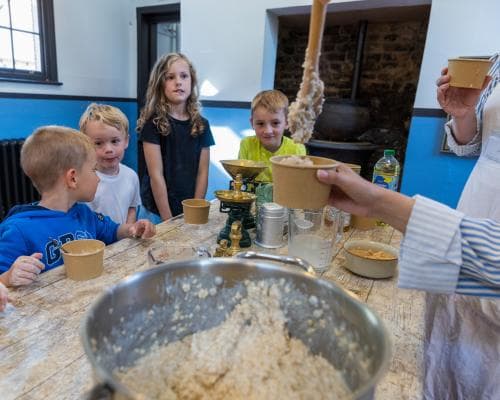
You are stripped of your possessions. You are fumigated in a reproduction “de-infestor.” You pick oakum from old ropes—a task so painful it makes papercuts feel like a spa treatment. You sweep the yard. You hunt for mice. Volunteers, dressed as schoolmasters, scold you for breathing too loud. The walls are painted in original taupes, pinks, and greens—colors that look like they were chosen by someone who hated joy.
This is not a theme park. It is a mirror. And for the one percent, it is a mirror that reflects something they rarely see: fragility. The reasons people ended up in workhouses in the 19th century—alcoholism, mental health, family breakdown, veterans returning from war—are, as Allan notes, “very similar today.” The only difference is the safety net. And the net, for the wealthy, is woven from gold.
But here is the twist. In a world where the wealthy pay for everything—private jets, personal chefs, cryotherapy chambers—they are now paying for perspective. And perspective, as any billionaire will tell you, is the most expensive commodity of all. The museum’s immersive approach, complete with the sounds of coughing, the smell of gruel, and the clang of a mangle, offers something that no five-star resort can: the knowledge that you are lucky.
This signals a shift in the luxury market. The old markers of status—diamonds, yachts, hypercars—are still there, but they are no longer enough. The new currency is scarcity of experience. And what could be more scarce than a night in a workhouse cell? The ultra-wealthy have climbed every mountain, dined at every three-star restaurant, slept in every presidential suite. Now, they want to feel the cold stone floor against their bare feet. They want to know what it is like to be the third person in the bathwater.
What does this say about taste? It says that true sophistication is not about accumulation. It is about understanding. The Victorian workhouse was a brutal solution to poverty—bed and food, but made as grim and rules-bound as possible. To walk through it, as director Alexa Vernon puts it, is to “literally walk in the footsteps of people who have experienced this place.” For the wealthy, that footstep is a reminder that the line between comfort and catastrophe is thinner than a thread of oakum.
The future of luxury is not about more. It is about meaning. And meaning, sometimes, smells like gruel. The Ripon Workhouse Museum is not a cautionary tale. It is an invitation: come see what you have escaped. Then go home, pour a glass of something expensive, and never complain about your Wi-Fi again.
For the ultra-wealthy, this is the ultimate flex: the ability to afford the experience of having nothing—and the wisdom to know the difference.
The Experience
Book a private, after-hours tour of the Ripon Workhouse Museum for you and a small party, complete with a tailor-made Victorian-era meal (gruel optional). Contact the museum’s concierge service for availability.
More in ENTERTAINMENT