When a Dog Steals the Spotlight: The Unscripted Power Move That Defined a Political Scandal
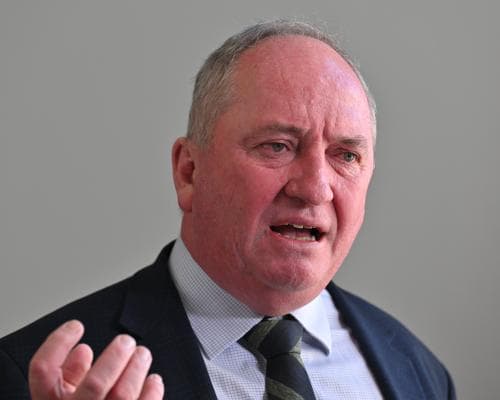
The moment was pure, unscripted theater. Barnaby Joyce, former deputy prime minister of Australia and newly minted recruit of Pauline Hanson’s One Nation party, sat on his deck in rural New South Wales, eyes darting off-camera. Then, mid-sentence, he bellowed: “SIT DOWN!” The nation gasped. Was it a security threat? A political meltdown? No. It was his dog. And in that single, startling command, Joyce did something few politicians can pull off: he hijacked a live interview, deflected a question about racial intolerance, and turned a potentially career-ending line of inquiry into a viral meme. For the ultra-wealthy, this is not just a funny clip. It is a case study in the art of distraction—a skill worth billions when the stakes are reputation, influence, and legacy.
The context is everything. Joyce had agreed to appear on ABC’s 7.30 program to defend his leader, Pauline Hanson, whose European “working holiday” had become a PR disaster. She had met convicted far-right agitator Tommy Robinson in the UK, attended a Dolce & Gabbana fashion show in Italy, and lounged by a hotel pool with mining billionaire Gina Rinehart. When host Sarah Ferguson pressed Joyce on whether his defection to One Nation was dragging him “into a place of intolerance and racial discrimination,” he had no answer. Instead, he yelled at his dog. The dog, of course, was a prop—a furry, four-legged escape hatch. Joyce later apologized, but the damage was done. The serious questions about Hanson’s comments on Muslims, the White Australia policy, and her cozying up to extremists were buried under a mountain of puppy memes. For the elite, this is a reminder that in the game of public perception, a well-timed distraction is worth more than a thousand policy papers.
But let’s talk about the craftsmanship of the moment. It wasn’t just a yell; it was a performance. Joyce’s eyes, the pause, the sudden bark of a command—it had the timing of a seasoned stage actor. The dog, a silent co-star, never even appeared on screen. That’s the kind of invisible orchestration that luxury brands spend millions to achieve: making the audience focus on the interruption, not the substance. In the world of high-net-worth individuals, this is a transferable skill. Whether you’re deflecting a hostile boardroom question or redirecting media attention from a tax scandal, the ability to create a memorable, non-controversial diversion is priceless. Joyce’s dog was his Birkin bag—an unexpected, status-laden object that shifts the narrative without saying a word.
This incident signals something deeper about the luxury market and the psychology of wealth. The ultra-rich don’t just buy objects; they buy control. A private jet isn’t about getting from A to B; it’s about controlling your schedule. A yacht isn’t about the ocean; it’s about creating a private world. Joyce’s dog was his yacht—a small, furry declaration that he, not the interviewer, set the terms. In a world where every public appearance is a risk, the ability to command the room with a single, unexpected gesture is the ultimate status symbol. It’s the difference between being questioned and being quoted. For the billionaires reading this, the lesson is clear: never let them see you sweat. Let them see the dog.
Looking forward, this viral moment will be studied in communications seminars from Sydney to Silicon Valley. The takeaway? Authenticity is overrated. What matters is the ability to own the room, even if that room is a deck in Tamworth and the roommates are a barking dog and a hostile journalist. For the ultra-wealthy, the next time a crisis looms, remember Barnaby Joyce. Don’t answer the question. Redirect. And if all else fails, find your dog. Or your helicopter. Or your private chef. The prop doesn’t matter as long as it’s yours.
In the end, the dog didn’t just interrupt an interview. It exposed the fragile art of power. And for those who can afford to write their own rules, that’s a lesson worth every cent.
The Experience
To master the art of narrative control, book a private media-training session with our curated team of crisis communications experts—available exclusively to our Platinum subscribers.
More in ENTERTAINMENT
The Uranium Glow: Why Anna Friel Carries a Suitcase of Lightbulbs
The $5,000 Flight That Could Save Your Life: Why Black American Women Are Bypassing U.S. Healthcare for Seoul’s Diagnostic Elite
The Only Director Who Makes Studios Flee the Battlefield: Christopher Nolan’s ‘The Odyssey’ and the New Currency of Cinematic Power