The $300 Billion Diplomat: How a Holocaust Survivor's Daughter Became the UN's Unexpected Power Broker
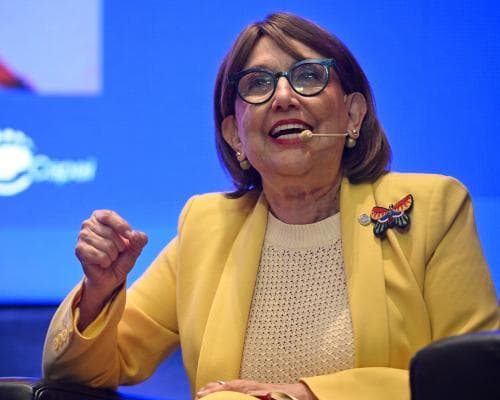
Forget the usual suspects in the race to lead the United Nations. The name now on every capital allocator's lips in New York and Geneva is Rebeca Grynspan — a Costa Rican economist whose parents fled the Holocaust and who has quietly become the frontrunner to become the first female secretary-general of the UN. The first straw poll of the Security Council just delivered a thunderclap: Grynspan secured 10 'encourage' votes, four 'no opinion' votes, and only one 'discourage' vote. That's a stronger opening position than any recent candidate has managed, and it's sending shivers through the corridors of global finance.
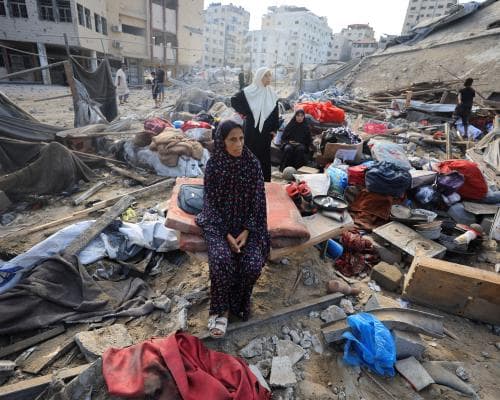
This isn't just a diplomatic story — it's a wealth story. Grynspan currently runs UNCTAD, the UN body that has exhaustively tallied the economic damage from Israel's occupation of Palestinian territories, and she's been a vocal advocate for rethinking how global capital flows are taxed and regulated. Her rise comes at a moment when the UN is pushing for a 'Global Tax Convention' that could impose minimum taxes on multinationals and billionaires — a direct threat to the offshore structures that many ultra-wealthy families have spent decades perfecting. If she ascends to the top job in January 2027, her agenda could accelerate the redistribution of trillions in cross-border assets.
The mechanics of this race are fascinating. The UN's informal rotation system means the next secretary-general should come from Latin America — and Grynspan, a former Costa Rican vice-president, fits that bill perfectly. But the real action is in the numbers. Her closest rival, Carolyn Rodrigues-Burkett of Guyana, managed nine encourages and two discourages. At a Bloomberg-sponsored debate last month, Grynspan actually lost to Rodrigues-Burkett in a straw poll of attendees — 49% to 14% — but the Security Council's secret ballot tells a different story. The key unknown is who cast that single 'discourage' vote. As one western diplomat told The Guardian, 'If the discouragement is coming from Russia, China, or the US, there's a risk of deadlock.' But with only one objection, Grynspan has room to negotiate.
What makes Grynspan particularly intriguing for the wealth desk is her heritage — and what it signals about her likely priorities. Her parents emigrated from Poland to Central America, and her maternal grandparents were killed by the Nazis. That personal history has forged a deep commitment to human rights and economic justice. At UNCTAD, she's overseen reports that have been scathing about Israel's occupation, but she's also been a pragmatic dealmaker, pushing for debt relief for developing nations and climate finance mechanisms that would require rich countries — and rich individuals — to pay more. Her appointment would be a clear signal that the era of voluntary corporate social responsibility is over, replaced by a hard-nosed push for mandatory global taxation.
For investors, the implications are concrete. A Grynspan-led UN would likely accelerate the push for a global wealth tax — an idea that's already gained traction with the G20 and the OECD. That means family offices and private banks should start stress-testing their structures for a world where 2% wealth taxes on billionaires become the norm. It also means the UN's development agenda, which currently oversees over $300 billion in annual development assistance, could become more assertive in directing private capital toward climate and infrastructure projects in the Global South. The market signal is clear: the era of frictionless offshore wealth is drawing to a close, and the smartest allocators are already repositioning.
The timing is also critical. Guterres completes his second term on 31 December 2026, and the election process will conclude in October. That gives the wealthy roughly 18 months to lobby, hedge, and adapt. But Grynspan's lead is not a done deal — the Security Council's permanent members hold veto power, and any of the P5 could still block her. Yet her strong first-round showing suggests she has broad support, and her experience as a diplomat who has navigated both Washington and Moscow's corridors gives her a unique ability to bridge divides. The next six months will be a diplomatic knife-fight, but the probability is rising that the world's most powerful bureaucratic job will go to a woman who has spent her career championing the very policies that the ultra-wealthy have long feared.
For wealth builders, the takeaway is simple: watch Geneva. If Grynspan secures the role, expect a coordinated push for global tax transparency, digital service taxes, and wealth taxes that will make the current patchwork of national rules look like a relic. The smartest money is already moving toward jurisdictions that embrace transparency — places like Singapore and Switzerland are quietly updating their tax treaties. The rest will be caught flat-footed. Grynspan's rise is not just a diplomatic milestone; it's a financial inflection point. The question is not whether the UN will change under her leadership, but whether your portfolio is ready for it.