The $2.5 Billion Lesson From Suffolk's Smoldering Heaths: Climate Risk Is Now a Balance-Sheet Issue
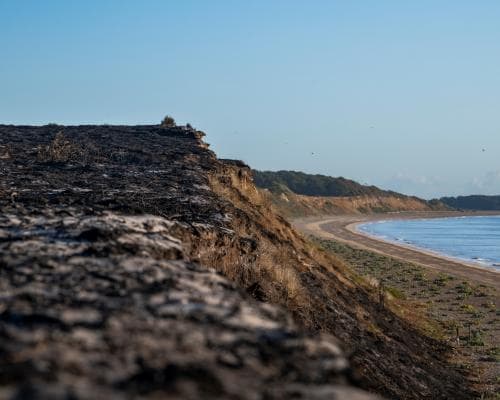
There's a smell that hangs over Dunwich Heath a week after the flames—not just of charred gorse and scorched earth, but of something far more unsettling for anyone with skin in the game of land, wealth, and preservation. This wasn't a wildfire. This was a human fire, as locals are quick to correct you. A fireball 40 meters high, racing across 277 acres of protected heathland at a 'ferocious pace,' driven by hot winds, dry sand, and the kind of weather that makes insurers reach for their actuarial tables and wealthy landowners reach for their lawyers.
Let's put a number on it. The National Trust, which manages Dunwich Heath alongside the RSPB's Minsmere reserve, hasn't released a damage estimate yet, but the math isn't hard. Conservation land in East Suffolk runs anywhere from £10,000 to £25,000 per acre, depending on the covenants. That's £2.8 million to £7 million in land value alone—gone up in smoke. But the real cost is in the biodiversity ledger. Nightjars, nightingales, and Dartford warblers have lost their nesting grounds. The rare invertebrates that make this heath a global hotspot? 'Decimated,' say reserve staff. For the wealthy donors and conservation trusts that pour millions into these habitats, that's not just an ecological tragedy—it's a portfolio loss that won't show up on any quarterly statement, but will hit hard when the next grant round comes due.
The mechanics of this fire read like a case study in climate-adjusted risk. Suffolk Fire Service says temperatures below ground hit 600°C—that's hotter than a pizza oven, and it's still smoldering a week later. Surface temps are running at 60°C. The fire exposed unexploded World War II ordnance, which means the site is now a no-go zone for locals, tourists, and the fire crews themselves. More than 100 firefighters from 18 services have been on the ground. The cause is still unknown, but the conditions—hot weather, dry vegetation, shifting winds—are exactly what climate models have been warning about for a decade. This isn't a freak event. It's a preview.
For the wealth desk, the signal is unmistakable. Land has always been the ultimate store of value—the thing you buy when you want to park money for a century. But Dunwich is showing that 'land' is no longer a passive asset. It's an operating risk. The National Trust, which holds over £1.5 billion in assets, now faces a choice: spend millions on firebreaks, controlled burns, and water infrastructure, or watch its conservation portfolio go up in smoke—literally. The same logic applies to private estates, golf courses, and even data centers in rural areas. The wealthy are quietly moving from 'buy and hold' to 'buy, manage, and insure against fire.'
And here's the kicker: the insurance market is already pricing this in. Premiums for rural properties in high-risk zones are up 20-30% year over year in parts of the UK, and some carriers are simply refusing to write new policies for heathland-adjacent properties. That's a direct hit on liquidity for anyone who needs to sell. You can't sell a property if you can't get insurance. You can't get insurance if the fire risk is 'unacceptable.' So the asset becomes stranded—beautiful, but worthless. That's the real wealth destruction, and it's happening quietly, under the smoke.
But there's a flip side. The same forces that are burning Dunwich are creating a new asset class: natural capital. Carbon credits, biodiversity offsets, and conservation easements are becoming tradeable instruments. The RSPB and National Trust are already exploring how to monetize the 'ecosystem services' that heathlands provide—carbon storage, flood mitigation, and species habitat. If they can get that right, Dunwich's ashes could fund a new model of conservation finance. The question is whether the market will move fast enough to save the next heath, the next rare bird, the next £5 million patch of scrub that's suddenly worth more dead than alive.
So what do you do if you're a wealthy landowner or a fund manager with rural exposure? First, get a fire risk audit—not just a walkaround, but a real climate-stress test. Second, talk to your insurer before they talk to you. Third, start thinking about 'fire-resilient' land management as a cost of doing business, not a nice-to-have. The 40-meter fireball at Dunwich wasn't an anomaly. It was a market signal. And for anyone who thinks natural capital is a soft topic, the smoke says otherwise. The smart money is already moving—not out of land, but into better-managed, fire-adapted, climate-proofed assets. The rest will be left with ashes and an insurance claim that never comes.
More in MONEY