The Forever Chemical Reckoning: How a Lancashire Factory's Closure Signals a Global Cleanup Crisis
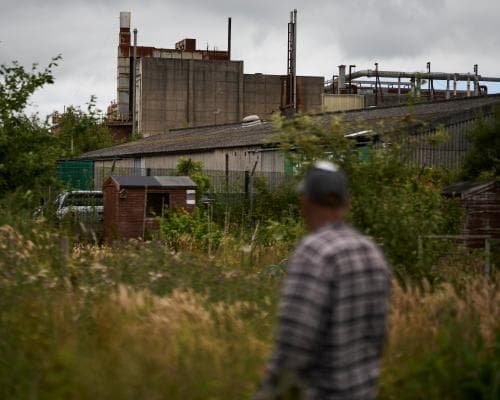
Liz Hurst was planning her wedding when the kidney cancer diagnosis hit. Fifteen years later, sitting on a Blackpool beach, she told me the hardest part isn't the treatment — it's the not knowing. Not knowing if the 49 tonnes of PFOA that drifted from the AGC Chemicals Europe factory, just a kilometer from her home, seeded the tumor in her kidney. This week, the company announced it will shut the plant, citing 'financial and operational challenges.' But for Hurst and her neighbors, the real challenge is just beginning.
This isn't a story about one factory. It's a story about a class of molecules — per- and polyfluoroalkyl substances, or PFAS — that chemists invented to be indestructible. They make non-stick pans slick, raincoats waterproof, and firefighting foam effective. But that very stability means they don't break down in the environment or the human body. They accumulate. In soil, in water, in blood. And now, a growing body of international research links them to kidney cancer, testicular cancer, thyroid disease, and immune suppression. The AGC plant, which produced PFOA (a specific PFAS) from the 1950s until 2012, is just one of thousands of industrial sites worldwide that have been quietly leaking these compounds for decades.
The technology to detect PFAS has advanced dramatically in the last five years. We can now measure parts per quadrillion — that's a single drop in an Olympic-sized swimming pool. But detection is not cleanup. The UK Environment Agency's investigation, launched in 2024, found contamination so severe that residents near the Thornton-Cleveleys plant were told to wash and peel homegrown vegetables, avoid local eggs, and two allotments were closed entirely. The science is clear: these chemicals are in the food chain, and they're not leaving. What's not clear is who pays for the remediation. AGC's closure announcement effectively passes the bill to the taxpayer, or leaves it unpaid entirely.
This is where the innovation gap yawns wide. We have world-class analytical chemistry to find PFAS, but we lack scalable, cost-effective destruction technology. Incineration can work at extreme temperatures — above 1,000°C — but it's energy-intensive and risks releasing the compounds into the air if not perfectly controlled. New approaches are emerging: supercritical water oxidation, plasma reactors, and even microbial degradation. But none are ready for the scale of contamination we're facing. The US Environmental Protection Agency estimates that cleaning up PFAS in drinking water alone could cost $1.5 trillion over the next 20 years. That's not a cost problem. That's a technology problem waiting for a breakthrough.
The market is starting to pay attention. Venture capital is flowing into PFAS remediation startups, and multinationals like 3M and DuPont are facing class-action lawsuits that have already yielded billion-dollar settlements. But the regulatory landscape remains a patchwork. The EU is moving toward a near-total ban on PFAS production. The US is setting enforceable drinking water limits. The UK, meanwhile, has no binding PFAS standards for soil or water — only advisory guidelines. The AGC closure may be a canary in the coal mine for a wave of factory shutdowns as companies preempt liability rather than face cleanup costs. For investors, the signal is clear: PFAS exposure is a systemic risk that balance sheets are only beginning to price in.
What happens next in Thornton-Cleveleys will set a precedent. If the government steps in to fund remediation, it signals that industry can externalize these costs. If it doesn't, residents like Liz Hurst will be left with contaminated land, unanswered health questions, and a closed factory that no one wants to touch. The deeper question is whether we can invent our way out of this. We need better detection sensors for real-time monitoring. We need chemical destruction technologies that work at scale and low cost. And we need a regulatory framework that forces producers to internalize the full lifecycle cost of their molecules.
Liz Hurst doesn't know if her cancer came from the factory. No study can prove causation for a single person. But she knows that 49 tonnes of a carcinogenic compound were released into her community's air and water. She knows that the company is leaving. And she knows that the forever chemicals will remain — in the soil, in the groundwater, and in her body — long after the plant is gone. The question for the rest of us is whether we'll wait for our own diagnosis before we demand the technology to clean up what we've already made.