The Old Money Index: Why the FTSE 100’s Record High Is a Quiet Signal for Discerning Capital
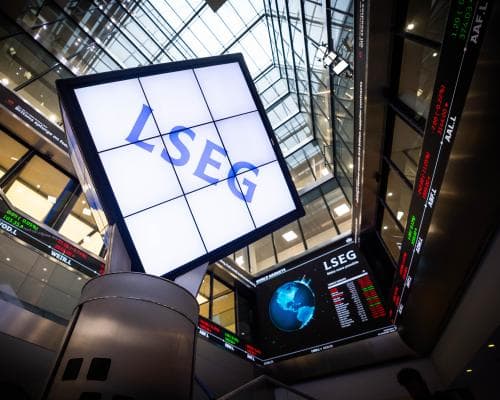
Here is a scene that would make a Silicon Valley venture capitalist choke on his kale smoothie. On a Wednesday morning when Seoul’s Kospi index was in freefall—trading halted, circuit breakers tripped, AI darling SK Hynix down 20% in a single session—London’s staid, blue-blooded FTSE 100 quietly touched an all-time high. Not with a bang, not with a press release about the next frontier of machine learning. It crept up to 10,951 points on the back of a miner, a bank, and a barrel of crude. For those who measure wealth not in hype cycles but in centuries, this was the most telling market move of the year.
The numbers tell a story of rotation. The FTSE 100 closed at 10,908, just a whisper below its record closing level of 10,910 from February. Meanwhile, the Nasdaq bled, the Nikkei sank to a two-month low, and South Korea’s semiconductor-heavy index lost nearly 40% from its peak a month ago. The trigger was a single earnings miss: SK Hynix reported record profits, but in today’s AI casino, record is no longer enough. Investors wanted miracles, not results. They didn’t get them. So capital fled the chips and sought shelter in the tangible. Standard Chartered, the Asia-focused bank, and Rio Tinto, the mining giant, both announced higher shareholder payouts on the same day. That is the sound of old money collecting its rent.
What makes this moment so exquisite for the connoisseur of wealth is the sheer unfashionability of the winners. The FTSE 100 is not a tech index. It is weighted toward finance and energy—sectors that smell of diesel, mahogany, and nine o’clock meetings in brass-and-leather boardrooms. Brent crude rose above $90 a barrel, a 7% jump, after the US military downed an Iranian missile barrage and coordinated strikes with Saudi forces. In a world of AI anxiety, the market’s safest bet was a barrel of oil. The FTSE 100’s climb was a quiet vote for the things that cannot be disrupted by a better algorithm: energy, infrastructure, and the steady hand of a dividend aristocrat.
This is not a story about a single index. It is a signal about taste. The ultra-wealthy have always understood that the greatest fortunes are built not on the next big thing, but on the things that endure. The AI sell-off is a correction of expectations, not a collapse of technology. But it reveals something deeper: the market is growing tired of infinite promises. When SK Hynix’s shares plunged 20% despite record earnings, it told us that the bar for “strong” has become absurd. For the family office with a multi-generational horizon, that is a warning. They do not chase parabolic curves. They buy the assets that pay you to hold them. The FTSE 100’s record, born of a tech rout, is a reminder that the most exclusive portfolio is often the least exciting one.
What comes next? The oil price may keep climbing, and the FTSE could test new highs as capital continues to rotate out of overpriced growth and into value. But the deeper truth is this: the era of easy AI money is over. The winners will be those who built real things—banks that lend, miners that dig, energy companies that fuel the world. For the reader of this magazine, the takeaway is not to panic or to chase. It is to watch where the smartest capital is going. Right now, it is going to London. It is going to dividends. And it is going to the quiet satisfaction of owning something that has been tested by war, by volatility, and by time.
For the private client who wants to align with this shift, the move is clear: look at the FTSE 100’s financial and energy heavyweights—not as a trade, but as a position. Consider a concentrated portfolio of British blue chips with strong dividend histories and global exposure. And keep a close eye on the price of crude: when the world gets nervous, it buys oil. The truly wealthy have known that for generations.
The Experience
To position your portfolio alongside this rotation, request a confidential consultation with our private wealth desk, specializing in FTSE 100 income strategies and energy-commodity allocation.