The Billionaire’s Blind Spot: When Cutting Costs Costs Lives
Imagine spending your fortune on rockets that pierce the stratosphere, electric cars that redefine speed, and a social media platform that amplifies your every thought. Now imagine that same fortune being tied to a single, quiet decision that lets a virus slip through the cracks — and children die. That is the paradox at the heart of Elon Musk’s latest legacy battle.
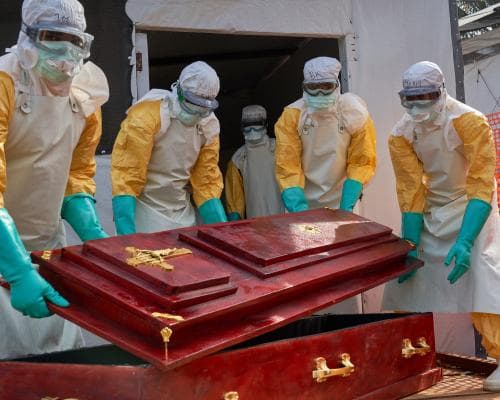
Last year, Musk helped dismantle the U.S. Agency for International Development (USAID) — or, as he put it, fed it “into the woodchipper.” Through his short-lived Department of Government Efficiency (DOGE), he slashed global health programs, including Ebola detection and response. He later admitted it was “accidental.” But accidents, in the world of the ultra-wealthy, are rarely without consequences. In the Democratic Republic of the Congo, an Ebola outbreak is now unfolding. Experts like Jeremy Konyndyk, who led USAID’s Ebola response in 2014-2015, say the cuts made it inevitable. “If global health programs hadn’t been slashed, the outbreak would have been detected much earlier,” he told me. “I’m very confident about that.”
Here’s where the numbers get cold. A study in The Lancet estimates that if USAID were abolished entirely, 14 million people could die — 4.5 million of them children. When Congressman Ro Khanna cited that study, Musk threatened to sue. He called a journalist who named the dead children “an utter piece of shit and a liar.” He claimed, without evidence, that U.S. tax dollars went to arming militants. But the science is stubborn. Davide Rasella, one of the Lancet study’s authors, put it plainly: “Musk uses science for launching rockets. When we speak about public health, we use the same statistical mathematical tools.” The difference? A rocket that fails is a spectacle. A health program that fails is a funeral.
This is not a story about politics. It is a story about taste — the taste of power. For the ultra-wealthy, disruption has long been a badge of honor. Break things, move fast, ignore the noise. But disruption has a shadow. When you cut a program that monitors for Ebola, you are not just saving a few million in taxpayer dollars. You are betting that a virus will stay in its lane. That bet, as the Congo outbreak shows, is losing. The craft of global health is unglamorous: surveillance, lab techs, community health workers on motorcycles. It is not a rocket launch. It does not make headlines. But it keeps the world safe for people who fly private, buy islands, and fund art foundations.
What does this signal about wealth in 2025? That the old rules of noblesse oblige — the quiet duty of the rich to protect the vulnerable — are being replaced by a new doctrine: efficiency at any cost. Musk is not alone. A generation of billionaires views government as a competitor, not a partner. They see cutting programs as a game. But the game has real stakes. “People are absolutely dying,” Konyndyk said. “They’re dying in significant numbers.” Rasella estimates millions of deaths over the next several years. “This is really unquestionable.”
So what is the forward-looking question? Not whether Musk will apologize — he won’t. Not whether DOGE was a good idea — it wasn’t. The question is whether the ultra-wealthy can learn that some things are too precious to be optimized. A rocket can be redesigned. A car can be recalled. But a child lost to a preventable outbreak is gone forever. For those who shape our world, the true luxury is not speed — it is foresight. And foresight, unlike a tweet, cannot be deleted.
The Experience
To understand the full scope of global health philanthropy, schedule a private briefing with the Global Health Impact Assessment Group — a service that connects high-net-worth individuals with the data behind life-saving programs.