The Last Believers: A Private Island Where the End of Days Is Just Another Ritual
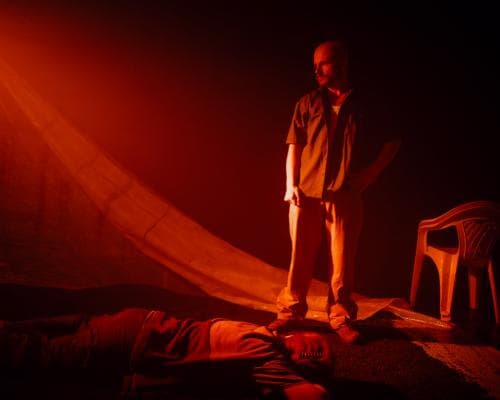
The South Pacific has long been a canvas for dreamers—and for those who wish to disappear. But on the sparsely populated island of Saint John, a fictional British Overseas Territory, the dream has curdled into something stranger. Here, under a sky that feels perpetually bruised, a community of islanders gathers each night in a modest church, led by a man they call only 'the prophet.' They are not singing hymns of hope. They are rehearsing for the end of the world.
This is the setting of Jack MacGregor's new play, Prophets, now running in a taut, unsettling production directed by Fraser Scott. MacGregor, a playwright with a restless global imagination, has previously taken audiences to a deserted Russian research base in Svalbard, to the militias of Mali, and to Cambodia under Pol Pot. With Prophets, they turn their gaze to the South Pacific—not to the postcard lagoons of Bora Bora or the overwater villas of the Maldives, but to a place where luxury travel rarely ventures: a remote, rain-lashed island where the only five-star amenity is the unsettling quiet.
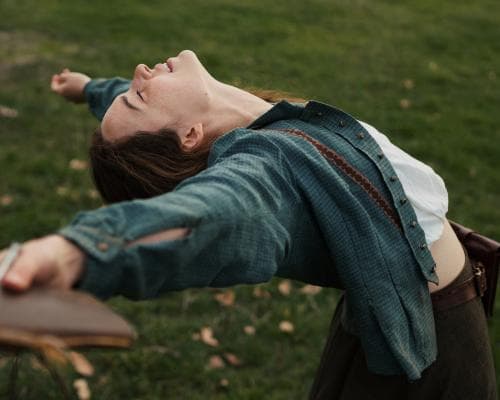
The play opens with the arrival of Kerris, a Scottish researcher played with wary intelligence by Rebecca Wilkie. She is ostensibly there to study the island's archaeological record of plant life—a mission that feels almost absurdly academic in a place where the soil seems to hold more secrets than seeds. But Kerris is as curious about the islanders' fervent nightly rituals as she is about the flora. Welcomed by Joe, a former merchant seaman played by a multitasking Xander Cowan, she quickly senses that something is amiss. The church services are not merely devout; they are obsessive, choreographed, and directed toward a singular, terrifying goal: the end of days.
What makes Prophets so compelling for a travel-minded audience is its portrait of isolation as a luxury—and a curse. Saint John is the kind of place that only appears on the itineraries of the ultra-wealthy as a private charter stop, a dot on the map where the wifi is unreliable and the nearest concierge is a hundred miles away. But MacGregor inverts that fantasy. Here, the isolation is not a selling point; it is a pressure cooker. The island's small population, cut off from the administrative machinery of the British empire, has turned inward. The prophet's rewritten Bible is not a tourist attraction but a survival manual. And Kerris, the outsider, is left to navigate a community that has already decided the future is not worth waiting for.
As the play unfolds, the real drama becomes less about the cult and more about Kerris herself. She has a personal history with charismatic religious leaders—a backstory that MacGregor reveals with frustrating, deliberate slowness. We catch only fleeting glimpses of the trauma she left behind in Scotland, and for much of the play, we remain at one remove from the island's internal tensions. This is both the play's strength and its limitation. It leaves us with the uncontroversial message that cults are bad—but it also reminds us that the most dangerous places on earth are often the ones that look, from a distance, like paradise.
For the luxury traveler, Prophets offers a different kind of voyage. It is a reminder that the most exclusive destinations are not always the most comfortable. The ultra-wealthy increasingly seek out places that challenge them—not just physically, but psychologically. The South Pacific, with its scattered territories and forgotten histories, is ripe for this kind of exploration. Saint John may be fictional, but its archetype is real: a place where the past and the future collide, where the only luxury is the truth, and where the end of the world is just another evening's entertainment.
What signals does Prophets send about the future of luxury travel? It suggests a shift away from curated perfection toward what one might call 'existential tourism'—journeys that confront the traveler with questions of faith, mortality, and empire. The wealthy have already conquered the Alps and the Serengeti. The next frontier is the inner world, and the remote islands of the Pacific, with their layered histories of colonialism and isolation, are the perfect stage. Whether it's a real atoll in the Cook Islands or a fictional territory in a playwright's imagination, the draw is the same: the chance to stand at the edge of the world and feel, for a moment, that the end is near—and that it might be beautiful.
In the end, Prophets is not a travel brochure. It is a warning, wrapped in a mystery, set on an island that will never appear in a glossy magazine. But for those who read between the lines, it is also an invitation: to seek out the places that resist easy categorization, where the locals are not performers and the rituals are not for show. The ultra-wealthy are always looking for the next undiscovered destination. MacGregor suggests that the most undiscovered places are not on any map—they are in the minds of those who believe the world is ending, and who have already booked their front-row seats.