The Great Punt: How the AFL Is Courting India’s Billion-Dollar Imagination
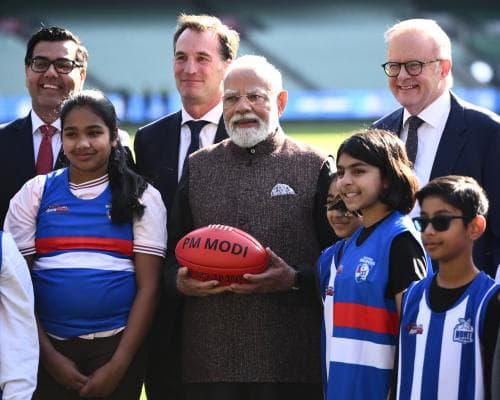
Imagine the scene: a Sherrin football, that distinctive oval of hand-stitched leather, spinning through the dust of a Delhi schoolyard. It’s a vision the AFL is betting millions on—and one that, if it succeeds, will rewrite the map of global sport. This isn’t a corporate press release. It’s a quiet declaration of war on the familiar. The AFL, that great Australian institution of mud, guts, and impossible marks, has set its sights on the world’s most populous nation, and the stakes are as much about diplomacy as they are about drop punts.
AFL boss Andrew Dillon stood alongside Prime Minister Anthony Albanese and India’s Narendra Modi to announce a long-term plan to open a new frontier. The goal: 100,000 registered participants in India over the “coming years”—a deliberately fluid timeline, because this isn’t a sprint. It’s a marathon through Mumbai traffic. The move is as much about strengthening ties between two nations as it is about growing the game. For the ultra-wealthy, who often collect things that defy borders—a vineyard in Tuscany, a watch from Geneva, a private island in the Maldives—this is the ultimate intangible: the chance to be part of a story before it becomes a legend.
Since Australian rules football was introduced to India in 2008, more than 20,000 people have participated. That’s a start, but the AFL’s ambition is staggering. They’re shipping tens of thousands of Sherrin footballs—each one a handcrafted piece of Australian heritage, stitched with the same care as a bespoke suit—along with coaching kits, umpiring manuals, and equipment for schools. The plan includes establishing an AFL India talent academy, strengthening national competitions, and investing heavily in women’s and girls’ programs. The vision is for Australian rules to be played in every Indian state and every Indian school. It’s the kind of audacity that makes a collector of rare whisky nod with respect: you don’t buy a distillery; you build a culture.
The AFL has tried this before. China. New Zealand. Western Sydney. Each attempt taught a hard lesson: you can’t just drop a football into a foreign field and expect it to grow. But India is different. It’s a nation of 1.4 billion people, with a hunger for sport that rivals its appetite for gold. The AFL is not just selling a game; it’s selling a lifestyle—a rugged, egalitarian, sun-drenched identity that resonates with a young, aspirational population. For the collector of rare experiences, this is the ultimate hedge: a bet on a future where the roar of an MCG crowd is heard in Kolkata.
This isn’t about money—at least not directly. The AFL is a not-for-profit, and the returns here are measured in influence, not rupees. But for the ultra-wealthy, influence is the currency that matters most. The move signals a shift in luxury taste: away from the static and toward the kinetic. The new status symbol isn’t a penthouse in Sydney; it’s a seat at the table when a billion people start kicking a Sherrin. It’s the knowledge that you were there when the game crossed the Indian Ocean.
The next decade will tell the tale. But one thing is certain: the AFL’s India play is the kind of bold, long-term bet that separates the merely rich from the truly visionary. It’s a story of leather, hope, and the quiet certainty that the best things in life aren’t bought—they’re built, one schoolyard at a time.