The Last Sighting: Virat Kohli’s Final Bow in English Blue
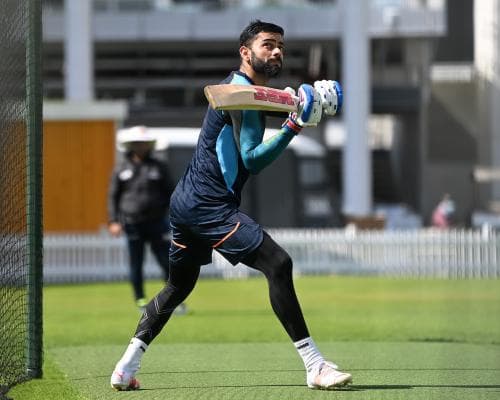
There is a certain hush that falls over Lord’s when Virat Kohli walks to the crease. It is not the roar of a crowd—that comes later—but a collective intake of breath, a knowing nod exchanged between strangers in the pavilion. This summer, as England and India lock horns in a one-day international series that might otherwise be dismissed as calendar filler, that hush will carry a sharper edge. Because this is likely the last time we will see Kohli bat in England. And if you have ever watched a master craftsman at his final exhibition, you know the feeling: you want to linger over every detail, commit every movement to memory.
Kohli, now 37, has spent the past year systematically retiring from the formats that made him a household name—T20 internationals in 2024, Test cricket last year. He has pared back his schedule with the surgical precision of a man who knows his own legacy. What remains is the 50-over game, the format he has redefined. With a record 54 ODI centuries, he is not just the king of this format; he is its most exquisite living artifact. For those who collect experiences rather than things, watching Kohli bat is like holding a Patek Philippe perpetual calendar in your hands—you are not just observing time; you are witnessing mastery over it.
The man himself has become something of a Londoner now, having relocated with his wife, the Bollywood star Anushka Sharma, and their young family to the city. It is a curious inversion: the world’s third-most-followed athlete (after Ronaldo and Messi, if Instagram counts as currency) seeking sanctuary in a city of nine million. London offers a relative anonymity that Mumbai cannot, a place where he can walk his daughter to school without the paparazzi forming a scrum. But even here, the aura follows him. Last month, at the Oval, a young debutant named Jordan Cox was so starstruck by Kohli’s presence in the nets that he could barely focus on his own innings. That is the gravitational pull of true greatness.
For the collector of rare sporting moments, this series is a vanishing opportunity. Just as the auction world tracks the provenance of a vintage Rolex or a first-edition Hemingway, the cognoscenti are noting the dwindling number of Kohli appearances outside the IPL. His Royal Challengers Bengaluru have won the IPL twice in the past two seasons, but those are franchise affairs—loud, commercial, ephemeral. An ODI in England, under the grey skies of Manchester or the floodlights of Lord’s, carries a different weight. It is heritage. It is the last of its kind.
What makes Kohli compelling beyond the statistics is the way he inhabits the moment. He does not merely play cricket; he performs it, with the intensity of a lead tenor in the final act of an opera. Every cover drive is a declaration. Every glare at the bowler is a chapter in an ongoing dialogue. The market for such artistry is, of course, driven by nostalgia—the same force that sells out reunion tours for bands long past their prime. But athletes have a cruelly finite shelf life. Kane Williamson and Ben Stokes have already exited the stage this season. Kohli’s exit is not far behind.
And yet, he keeps getting better. That is the maddening, beautiful truth. Age has not dulled his blade; it has sharpened his focus. He has learned to conserve his energy, to pick his battles, to let the ball come to him. In a world of hyper-aggressive batting, he remains a classicist—a reminder that elegance endures. For those who understand that true luxury is not about excess but about rarity, this series is the equivalent of a private viewing of a Rothko before it disappears into a vault. Do not miss it. Because once Kohli walks off that field for the last time in England, the light will not come back the same way.