The Art of the Adversity: Inside Anthony Gordon’s £60.7m Move to Barcelona
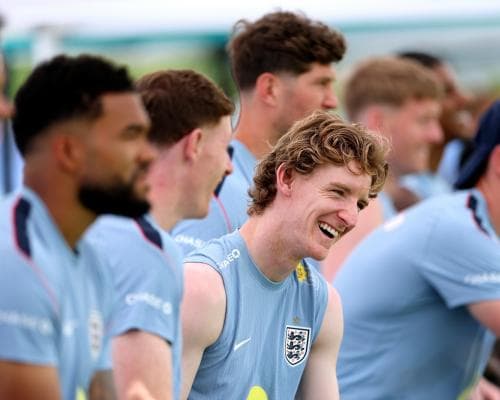
The moment arrived with 26 minutes on the clock at Mexico City’s Azteca Stadium. England were goalless against Mexico in the World Cup last 16, the air thin at 2,200 meters, the crowd a wall of noise. Then Javier Aguirre, the Mexico manager—a man who admits swearing is second nature—shouted Anthony Gordon’s name. When the winger turned, Aguirre delivered his tactical advice: “Fuck you.” He burst into laughter. Gordon did the same.
“I took it as a compliment,” Gordon says now, with the easy confidence of someone who has learned to weaponize disrespect. That moment—a curse, a grin, a penalty won minutes later—is the essence of why Barcelona paid Newcastle £60.7m for him at the end of May. It is also why, ahead of Saturday’s World Cup quarter-final against Norway in Miami, Gordon is the kind of asset that the ultra-wealthy covet: not just a player, but a story of resilience minted in Liverpool’s streets.
Gordon’s transfer fee places him among the most expensive English exports, a sum that would buy a fleet of Bentleys or a modest private island. But the price tag is only part of the allure. The real value lies in his provenance: a childhood in Liverpool’s Kirkdale district, where every tackle and taunt was fuel. “I have always been very intrigued to see who I can become,” he says. That curiosity, sharpened by adversity, is what separates a good player from a generational talent. At the Azteca, after England lost Jarell Quansah to a red card and fell behind, Gordon did not fold. He won the penalty that Harry Kane converted for 3-1, sealing a 3-2 victory that felt like a heist.
For collectors of elite human performance—the same people who commission bespoke timepieces or acquire rare Bordeaux—Gordon’s psychology is the true rarity. He is a player who almost needs something to go wrong. “I quite liked it,” he says of the tension, the altitude, the hostile crowd. This is not the polished PR of a modern athlete; it is the raw material of a competitor who thrives on friction. In the world of luxury, where every surface is polished to perfection, Gordon’s edge is the equivalent of a patina that cannot be faked.
The market for such players is brutally selective. Barcelona’s willingness to break the bank signals a shift: the club is betting on character as much as skill. Gordon’s move echoes the acquisition of a rare hypercar—a Pagani Huayra, say—where provenance and backstory elevate the price beyond mere engineering. His journey from Everton’s academy to Newcastle, then to Catalonia, is a narrative of grit that the discerning collector recognizes. It is the difference between a mass-produced Hermès bag and a one-off piece from a master artisan.
What does this tell us about luxury taste in 2025? That the ultra-wealthy are increasingly drawn to objects and people with a story of overcoming. Gordon’s £60.7m transfer is not just a sports headline; it is a case study in how adversity can be the ultimate luxury asset. As he prepares for Norway, one imagines he will find some fresh slight, some new curse, to turn into gold. For those who understand the art of the comeback, Gordon is the most valuable commodity of all.
Looking ahead, Gordon’s trajectory suggests a new paradigm: the athlete as a living artifact of resilience. Barcelona’s investment is a bet that his ability to convert friction into performance will endure. In a world of curated perfection, the ultra-wealthy are beginning to prize the unvarnished, the defiant, the player who laughs at a curse and then wins. That is Anthony Gordon’s legacy in the making—and it is worth every pound.