The Last Page: When Your First Edition Feeds the Machine
There is a moment every collector dreads: the phone call from your dealer, the email that begins with 'I'm afraid I have some difficult news.' For the world's most discerning bibliophiles, that news now arrives with a new and chilling twist. It's not just a flood, a fire, or a careless heir that threatens your first-edition Hemingway or a 17th-century cookery manuscript. It's a machine. A ravenous, invisible machine that buys books by the crate, slices off their spines, scans their pages, and then pulps the remains. This is the new reality of 'destructive scanning,' and it is quietly reshaping the rarefied world of rare books.
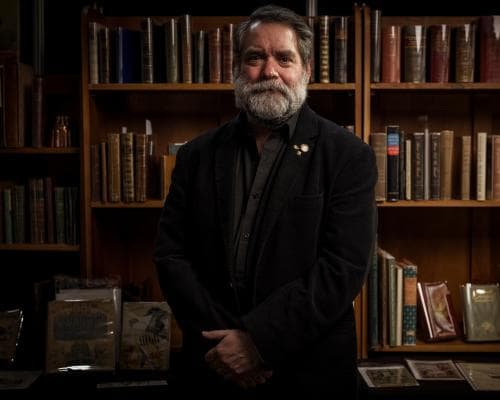
Tim White, the proprietor of Melbourne's Books for Cooks, knows the weight of a well-made object. As he sets up his stall for the Melbourne Rare Book Fair, he speaks of books as 'more than just objects'—they are vessels of human story, where food meets society, where a marginal note or a stained page tells you more than the printed text ever could. For White and his colleagues, the physical book is an artefact, a piece of history you can hold. But that very physicality has made it a target. In a US copyright case against Anthropic, unsealed court files revealed the company was buying physical books, guillotining off the spines for efficient scanning, and then discarding the husks. The judge ruled it 'transformative use,' and the floodgates opened. Now, intermediaries are stepping up to feed the AI supply chain, and Australian booksellers are finding themselves unwitting suppliers.
Consider the experience of Delfina Manor, who runs Good Reading Secondhand Books in rural Victoria. She received an order from a Canadian company called Zoom Books—three full boxes, paid in advance, no quibbling over postage. The titles were 'bottom-end,' random, decades-old stock. It was, she says, 'driving me nuts.' John Sainsbury of Melbourne's Sainsburys Books saw the same pattern: a slew of orders, price-insensitive, entirely random, shipping multiple boxes overseas. These are not collectors seeking a missing volume. These are procurers for the machine. They buy anything, because everything is fodder for training algorithms. And in that indiscriminate hunger, the rare and the irreplaceable are being swept away.
For the ultra-wealthy, this is not just a curiosity—it is a crisis of provenance. The first edition you bought at auction, the presentation copy inscribed by the author, the unique binding that makes your library the envy of your peers—all of it is now at risk. The AI companies don't care about condition, scarcity, or historical significance. They care about content. And so a 19th-century botanical folio, worth tens of thousands, can be destroyed for the sake of a few megabytes of data. The craftsmanship, the heritage, the very materiality that makes a book a treasure—these are meaningless to a machine. The market is already feeling the tremors. Dealers are tightening their vetting processes, and some are refusing to sell to known intermediaries. But the cat-and-mouse game is only beginning.
What does this signal about wealth and taste? It signals a shift in how we define value. The old guard—the Morgans, the Huntingtons, the Folgers—built libraries as monuments to human achievement. They understood that a book's worth lies not just in its words, but in its physical journey through time. The new elite, the tech titans, see the world as data to be extracted. They are not collectors; they are miners. And in their quest to build ever-more-intelligent machines, they are willing to destroy the very artefacts that preserve our cultural memory. It is a stark reminder that in the luxury market, scarcity is not just about supply and demand—it is about preservation. The more we lose, the more precious what remains becomes.
But there is hope. The rare book trade is a community of obsessives, and obsessives do not go down without a fight. Booksellers are banding together, sharing lists of suspicious buyers, and lobbying for legal protections. Auction houses are beginning to flag provenance red flags. And collectors are becoming more vigilant, demanding that their dealers guarantee no sale to known AI intermediaries. The future of the rare book may depend on this vigilance. As White says, 'We handle things that have a story.' That story is now at risk of being erased by a machine that cannot read between the lines. For those who understand the true value of a physical book—the smell of the leather, the weight of the paper, the ghost of a previous reader's hand—the time to act is now. Protect your library. Know your dealer. And before you sell that dusty volume from your grandfather's study, ask yourself: is it worth more than the machine will pay? Because in the end, the machine will pulp it, and the story will be gone forever.
The Experience
For the discerning collector, a private consultation with a leading rare book dealer can ensure your library remains untouched by the machine. Contact Sainsburys Books or Books for Cooks for a curated acquisition strategy that prioritises provenance and preservation.
More in INNOVATION