FIFA's $25B Fire Sale: Inside the Rebellion That Could Topple Infantino
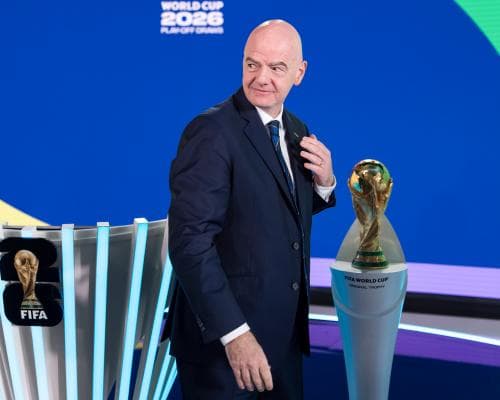
The walls came tumbling down on Gianni Infantino this week, and not even the marble corridors of FIFA's Zurich headquarters could muffle the sound. It started with a whisper — a plan to sell off chunks of the World Cup to private investors — and ended with his own senior adviser quitting in disgust and European football federations vowing to boycott the sport's crown jewel. For the man who has ruled football's governing body with an iron fist since 2016, this is not just a governance crisis. It's a wealth story gone wrong, and it's sending shockwaves through the billion-dollar business of global sport.
At the center of the storm is a proposal so audacious it would make a private equity baron blush: FIFA wants to monetize future World Cup commercial rights by selling them to outside investors, effectively turning the tournament's broadcast and sponsorship revenue streams into a tradeable asset. The numbers are staggering — the 2022 Qatar World Cup generated over $7.5 billion in revenue, and the expanded 2026 edition across the US, Canada, and Mexico is projected to blow past $10 billion. Selling a slice of that future cash flow could raise anywhere from $15 billion to $25 billion upfront, a war chest that would dwarf FIFA's current reserves and give Infantino unprecedented financial firepower. But at what cost?
Carlos Cordeiro, a former US Soccer president who joined Infantino's inner circle in 2021, didn't mince words when he resigned. "This is a bad deal for FIFA's member associations, a bad deal for football, and a bad deal for the long-term future of the game," he wrote, questioning the lack of transparency and oversight. His resignation came hours after UEFA's 55 member federations unanimously threatened to boycott FIFA competitions if the plan isn't shelved. Even FIFA's own chief operating officer issued a scathing rebuke, a rare public crack in the organization's usually impenetrable facade. The message is clear: the man who once promised to bring football into the modern financial age has gone too far.
The mechanics of the deal are worth dissecting, because they reveal a troubling pattern. FIFA is sitting on vast, debt-free reserves — estimated at over $4 billion — yet Infantino is pushing to sell future assets to outside investors. Why? The answer, insiders whisper, is about control and leverage. By bringing in private capital, Infantino could bypass the traditional power structure of confederations and member associations, creating a direct financial pipeline that doesn't depend on their goodwill. It's a classic power play, but it's backfiring spectacularly. The investors who would buy these rights aren't doing it out of love for the beautiful game; they're doing it for returns, and that means pressure to maximize revenue, which means more games, more commercial breaks, and more corporate branding. The fans know it, the federations know it, and the backlash is erupting.
This is where the story gets even more fascinating for wealth watchers. The rebellion against Infantino isn't just about football politics — it's a referendum on how the world's most valuable sporting assets are being handled. The World Cup is arguably the most valuable single-sport property on Earth, with a global audience that dwarfs the Olympics. Selling it to private investors would be like the US Treasury selling future tax revenue to a hedge fund — it might fill the coffers today, but it mortgages the future. And the timing couldn't be worse. With FIFA's election scheduled for next year, where Infantino was expected to cruise to a fourth term, the opposition is now actively recruiting candidates to run against him. UEFA and other confederations are in talks to field a rival, and the betting markets, if they existed, would be shifting fast.
For the wealthy and the powerful, this is a cautionary tale about the intersection of sports, money, and ego. Infantino's gambit reflects a broader trend of institutional asset owners seeking liquidity at any cost, from sovereign wealth funds to pension managers. But it also shows the limits of that approach when it clashes with deeply entrenched stakeholders. The European boycott threat is not an empty gesture — if they follow through, the World Cup loses its biggest TV markets, and the value of those investor contracts plummets. The investors, likely to be a consortium of private equity firms and sovereign funds, would be left holding a devalued asset. It's a risk that the smartest capital usually avoids, but the sheer size of the prize can blind even the most sophisticated players.
Where does this leave Infantino? He's doubled down on the proposal, a move that has historically been his survival strategy — confront the critics, outlast them, and consolidate power. But this time feels different. The resignations are personal, the rebukes are public, and the coalition against him is global. If he falls, it won't just be a political death; it will be a financial one, with billions in projected deals evaporating and his legacy reduced to a footnote in the story of how football nearly sold its soul. For investors, the lesson is simple: when the world's most powerful sports bureaucrat starts offering you a piece of the game, read the fine print — and check who's holding the pen. The next 12 months will determine whether the World Cup remains a crown jewel or becomes another leveraged asset in the portfolios of the ultra-rich. Either way, it's a story that will be told in boardrooms from New York to Riyadh, and the stakes have never been higher.
More in MONEY