The 93 Residents, 2,000 Visitors, and One Minute 29 Seconds of Celestial Silence
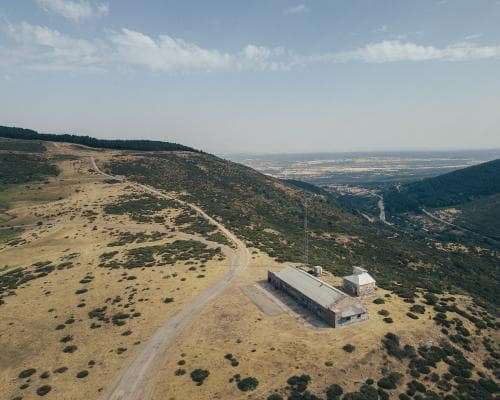
There is a particular kind of silence that lives at 1,440 meters above sea level, where the wind scrapes the flat peaks and the only audience is a squadron of vultures circling an abandoned aerodrome. That silence, thick as honey, will shatter on the evening of 12 August, when Somosierra—a village of 93 souls nestled where Madrid fades into Castilla y León—becomes the most coveted patch of earth for a celestial performance that hasn't graced these skies in over 120 years. The total solar eclipse, lasting precisely one minute and 29 seconds of pure, unobstructed totality, is about to turn this forgotten glider pilots' haunt into the ultimate VIP lounge for astrotourists.
Let's be honest: the ultra-wealthy have seen everything—the Northern Lights from a private icebreaker, the Great Barrier Reef from a submersible, the Serengeti from a hot-air balloon. But a total solar eclipse? That's the one spectacle that cannot be bought, only witnessed. And here's the twist: the best seat in the house isn't a penthouse in Madrid or a yacht off Mallorca. It's a wind-battered plateau where cows graze on parched grass and the only infrastructure is a cracked runway that once taught glider pilots to ride thermals alongside red kites. The irony is delicious. For a clientele accustomed to front-row access, the ultimate show demands standing on a patch of dirt, craning your neck, and surrendering to the cosmos.
The village's tourism manager, Irma López Muñoz, is the unlikely impresario of this celestial opera. As she surveys the observation site—a ten-minute drive up from the village—she's fielding calls from Madrid and beyond, because Somosierra offers something no other site near the capital can: a clear, unobstructed view of the corona, the sun's ghostly halo, for that precious minute and a half. The logistics are a masterclass in humble luxury. Where will 2,000 visitors park? Will there be enough water? How many batches of paella must the local restaurant prepare? These are the questions of a village that has suddenly found itself hosting a private viewing party for the heavens, and the answer, as with all great luxury, lies in the details.
For the collector of experiences, this eclipse is the rarest of commodities—a natural phenomenon that cannot be replicated, insured, or auctioned. The last time this particular alignment occurred, the Wright brothers hadn't yet flown, and the concept of the 'jet set' was a science fiction fantasy. The scarcity is intoxicating. The village's altitude, its clear skies, and its proximity to Madrid make it the equivalent of a first-edition folio or a Patek Philippe with a provenance that traces back to a forgotten count. The fact that it's free to watch is almost absurd; the real cost is the journey, the patience, and the willingness to stand among cows and glider ghosts for a moment of transcendence.
What does this signal about luxury taste? It signals a shift from the material to the ephemeral. The truly wealthy have moved beyond owning things—they now collect moments. A total solar eclipse is the ultimate limited edition: one per century, no resale value, and yet priceless in memory. Somosierra offers something that a private island cannot: the thrill of a cosmic event shared with a community of strangers, all united by a single, upward glance. The paella will be served, the cars will be parked in makeshift fields, and for 89 seconds, the wind will hold its breath.
As the sun's corona flickers into view, the vultures will circle, the cows will pause, and the 93 residents will stand shoulder-to-shoulder with 2,000 visitors, all of them equal in the face of the infinite. This is the new luxury: not to own the view, but to be present for it. For those who miss this eclipse, the next one over Spain will come in 2026—but by then, Somosierra will be a destination, not a secret. And the silence? It will be gone forever.