The Hugo Ascendant: How a Pale Elderflower Spritz Became the Season's Quiet Status Symbol
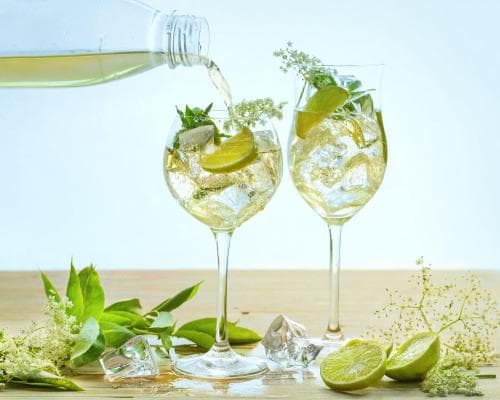
There is a moment, just before the golden hour, when the light turns honeyed and the terrace at any self-respecting Riviera outpost begins to hum with the clink of ice. For years, that sound was synonymous with a single, vibrant hue: the burnt-orange glow of an Aperol spritz. But this summer, a quieter, paler rival has slipped into the glassware of the well-travelled, and the numbers from Britain's bars tell a story that feels less like a trend and more like a quiet coup. The Hugo—a delicate blend of elderflower liqueur, prosecco, soda, and a sprig of mint—has nearly tripled its orders in the three months to June, while its more famous predecessor could only manage a 13% climb. The summer of spritz, it seems, has found a new sovereign.
To understand the Hugo's appeal is to understand a shift in the very architecture of leisure. This is not a drink for the 2 a.m. haze; it is a drink for the 5 p.m. pause, the 'daycap' that has become the ritual of a generation that prefers a long, light conversation to a short, heavy one. Millennials and Gen Z have redefined the cocktail hour, pushing it earlier and making it longer, and the Hugo—with its floral sweetness and lower alcohol presence—fits that rhythm like a linen suit. It is the liquid equivalent of a well-chosen piece of minimalist sculpture: understated, precise, and quietly expensive in its simplicity. The Aperol, with its bitter orange and its boisterous Campari base, now seems almost boorish by comparison, a relic of a more demonstrative era.
The drink's pedigree is as elegant as its flavour. Born in the Italian-speaking province of South Tyrol, in the shadow of the Dolomites, the Hugo was the invention of bartender Roland Gruber in 2005, a man who reportedly sought to create a cocktail that would appeal to his female patrons without sacrificing the ritual of the aperitivo. Its signature ingredient, St-Germain, is an elderflower liqueur made from hand-picked blossoms that are gathered in the French Alps each spring, a process so labour-intensive that the liqueur has earned the nickname 'the bartender's ketchup' for its ubiquity in craft cocktails. Bacardi, which owns St-Germain, reports that UK sales have doubled in the past year, outpacing every other market. This is not accidental; it is the result of a carefully orchestrated campaign to position the Hugo as the thinking person's spritz, a drink that rewards the palate with layers of honeysuckle and pear rather than a single note of bitter orange.
For collectors of taste—those who curate their cellars with the same care as their garages—the Hugo represents a fascinating market signal. The data from Square, gleaned from till receipts across bars, cafes, and restaurants, shows a 196% uplift in Hugo orders, a figure that would make any hedge fund manager blush. But this is not merely a statistical blip; it is a cultural marker. The rise of the Hugo parallels the ascent of the 'quiet luxury' aesthetic in fashion and design, where the logo is replaced by the cut and the fabric. In the world of superyachts and private villas, one does not announce one's wealth with a flashy label; one does so with a discreetly perfect Negroni or, now, a flawlessly balanced Hugo. It is a drink that says, 'I have been to the right places, and I know the difference between a trend and a timeless pleasure.'
What does this portend for the broader luxury palate? The spritz market, once a duopoly of Aperol and Campari, is now a crowded field, with limoncello variants up 31% and a host of artisanal elderflower liqueurs emerging from small-batch producers across Europe. The discerning drinker is no longer satisfied with the default; they seek provenance, story, and a certain quiet rebellion against the mainstream. The Hugo, with its Alpine origins and its delicate balance, offers all three. It is a drink that rewards the curious and punishes the indifferent, and in that sense, it is the perfect metaphor for the current moment in luxury—where the greatest statement is often the one you make without raising your voice.
As the summer stretches toward September, the question is not whether the Hugo will hold its ground, but what it will inspire next. Will we see a rush on elderflower cordials in the Hamptons and the Côte d'Azur? Will the mint sprig become the new garnish of choice on the decks of a 60-metre Feadship? The signals are already there, in the way a sommelier now suggests a Hugo before a meal, or the way a hostess plans a garden party around a carafe of it. The Aperol may still hold the overall volume crown, but the Hugo has won the more important battle: the one for the imagination of those who set the trends. In the curated life, that is the only crown that matters.