On the Banks of the Saône: Tim Merlier’s Masterclass in Controlled Chaos
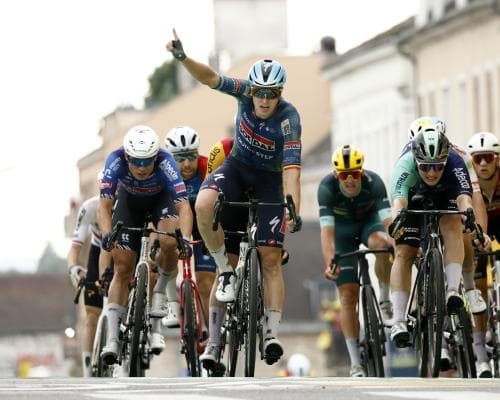
The final sprint stage of the Tour de France is not for the faint of heart — or the faint of wallet. Tim Merlier, the Belgian bullet of Soudal Quick-Step, knows this better than most. On stage 12, as the pack hurtled along the banks of the Saône, the air thick with tension and the scent of hot tarmac, Merlier did what the ultra-wealthy do best: he turned pandemonium into a statement. While rivals tumbled in the Tour’s first major sprint pile-up — stage 11 winner Søren Wærenskjold and Netcompany Ineos’ Dorian Godon left sprawled across the road — Merlier emerged from the wreckage, serene and untouchable, to take his third win of the race. It was a victory that felt less like luck and more like a lesson in controlled aggression.
This was not just a bike race; it was a masterclass in timing, composure, and the kind of nerve that separates the merely rich from the truly legendary. Merlier, now the fastest man in this year’s peloton, has eclipsed former multiple stage winner Jasper Philipsen, who seems a shadow of his former self. The win, added to his earlier triumphs in Bordeaux and Bergerac, cements Merlier as the sprinter to watch — a man who treats the final kilometer like a private gallery opening, where only the most discerning eye can spot the gap. His secret? A blend of raw power and tactical recalibration. “Yesterday, I was boxed in because I was too focused on the breakaway,” he admitted. “Today, I stayed in front. I found space, calmed down, and launched again.” It’s the kind of quiet recalibration that defines a collector who knows when to hold and when to strike.
The scene at the finish line was pure aspirational theater. Merlier was joined on the podium by his young son, a moment that softened the razor-edge of competition into something almost tender. “He is still young,” Merlier said, grinning. “But maybe he will remember it, and can watch it later. It’s extra motivation to win for them.” This is the human thread that makes the Tour more than a sporting event — it’s a family legacy, a story of fathers and sons played out at 70 kilometers per hour. For the ultra-wealthy, who often build dynasties around shared passions, this is the sort of authenticity that no amount of sponsorship can buy. Merlier’s joy was unscripted, raw, and utterly compelling.
Yet the race was not without its technical drama. Radio problems plagued the peloton, with Merlier among those struggling to hear his team’s instructions. “My radio was broken,” he explained. “I was busy because the other guys were all coming to me.” In an era where communication is king — whether in a boardroom or on a bike — this breakdown forced Merlier to rely on instinct, the kind of split-second decision-making that makes a Sotheby’s auctioneer or a hedge fund manager invaluable. It’s a reminder that the best tools are useless without the human will to use them. Merlier’s ability to read the race without a digital crutch is a luxury in itself, a throwback to a time when intuition was the only currency.
For the discerning collector of experiences, the Tour de France is not a race; it’s a moving gallery of human endurance and mechanical precision. The bikes — carbon-fiber masterpieces costing upwards of $15,000 — are the canvases. The riders are the artists. And Merlier’s hat-trick is a triptych of speed, courage, and grace under fire. As the Tour enters its final week, the sprinters’ opportunities are dwindling, but Merlier has already etched his name into the 2026 edition. He has done so not with flash, but with the quiet authority of a man who knows that true class is never loud. It simply arrives, on time, and takes what it wants.
What does this say about luxury taste? That the finest things in life — a perfect sprint, a rare vintage, a hand-built yacht — are not about the price tag but the story behind them. Merlier’s win is a story of resilience, family, and the art of the comeback. It’s the kind of narrative that the ultra-wealthy seek: not just an object, but a moment that transcends the ordinary. As the sun set over the Saône, Merlier’s son clutched a bouquet, and the crowd roared. For a few glorious seconds, chaos became order, and speed became poetry. That, in the end, is the ultimate luxury.