The Headset That Cost Six Points: When Motorsport’s Rulebook Becomes a Collector’s Item
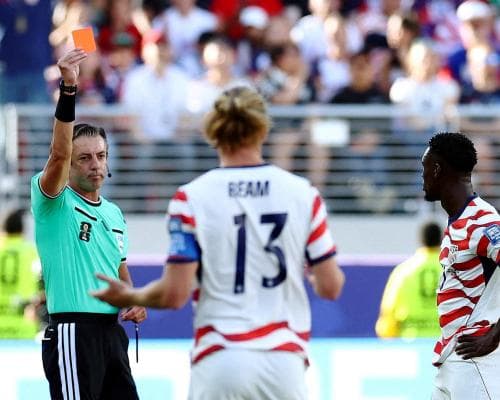
Noel León drove a brilliant race at Spa-Francorchamps, carving through the field to seventh place, earning six championship points. Then he left the circuit to nap, drink Belgian beer, or simply admire his own palindromic name. Three hours later, the FIA called a meeting and erased his result. The crime? A guest in the Campos garage wore a headset with a microphone — upturned, unused, silent. But appendix 5 of the F2 Sporting Regulations is not a forgiving text.
This is not a story about racing. It is a story about the strange, invisible world that orbits speed: the rulebook as luxury object, the penalty as collector’s token. For the ultra-wealthy who fill the paddock clubs and own the teams, the real drama happens off-track, in windowless rooms where stewards parse language like medieval theologians. León’s disqualification is a perfect specimen of this hidden sport — a penalty so pure in its absurdity that it becomes almost beautiful, like a Fabergé egg of bureaucracy.
Consider the craftsmanship of the ruling. The FIA cited appendix 5 and article 21.5 with the precision of a watchmaker. Only listening devices are permitted for non-team personnel. This headset had a microphone, though it was physically inverted and never used. Never mind that León had no knowledge, no control, no advantage. The rule is the rule. In the world of high-end collecting, we admire such rigor. A Patek Philippe perpetual calendar does not bend to your schedule; you bend to its mechanics. The FIA, too, is a mechanism of perfect indifference. It does not care about fairness or outcome. It cares about compliance. That is its purity.
For collectors of motorsport ephemera, this incident is already being framed as a landmark. Think of the signed penalty notice, the stewards’ report, the headset itself — each a relic of a system where the smallest deviation yields the largest consequence. In the same way that a mis-stamped Rolex Submariner becomes more valuable to certain connoisseurs, a disqualification on a technicality elevates a driver’s story. León now belongs to a lineage: Schumacher losing a championship at Adelaide 1994 for a plank of wood, Hamilton stripped of a podium at Monza for a rear wing. The rulebook is the great equalizer, and also the great curator.
What does this signal about luxury taste? That the true connoisseur no longer collects only cars or watches or trophies. They collect stories of power — the moment when a rule becomes more real than the race. In the paddock, the wealthiest guests now ask not about lap times but about the stewards’ mood. They commission leather-bound copies of the FIA Sporting Regulations. They host dinners where guests discuss appendix 5 with the same reverence reserved for Bordeaux vintages. The headset incident is a conversation piece for those who understand that the ultimate luxury is not speed, but the ability to navigate — or exploit — the labyrinth.
Looking forward, expect more of this. As F1 and F2 grow into global luxury spectacles — with ticket packages starting at €15,000 for a weekend — the governing body will lean harder into its role as arbiter of minutiae. Every penalty becomes a collector’s item, every rule a talking point. León’s six lost points are now part of a larger archive: the sport no longer ends on the field of play. It ends in a conference room, with a headset on a table, and a verdict that has nothing to do with driving. For those who can afford to watch from the best seats, that is precisely the point.